Lemon Juice Yield Calculator
Estimate fresh lemon juice from lemon count or total weight with size, variety, juicing method, fruit temperature, zest choice, pulp level, and recipe target.
🍋Lemon Presets
Pick a kitchen scenario, then adjust fruit count, weight, method, pulp, and target volume for your recipe.
⚖Yield Inputs
Your Lemon Juice Estimate
Medium lemons with a hand reamer usually cover a small recipe target.
Input Breakdown
Yield Math
Recipe Use Plan
📌Fast Yield Reference
📊Method Comparison Grid
Best for wedges and very small batches.
Balanced home yield with moderate pulp.
Fast juice with tidy seed control.
Best for large prep or freezer cubes.
🍋Lemon Size Yield Table
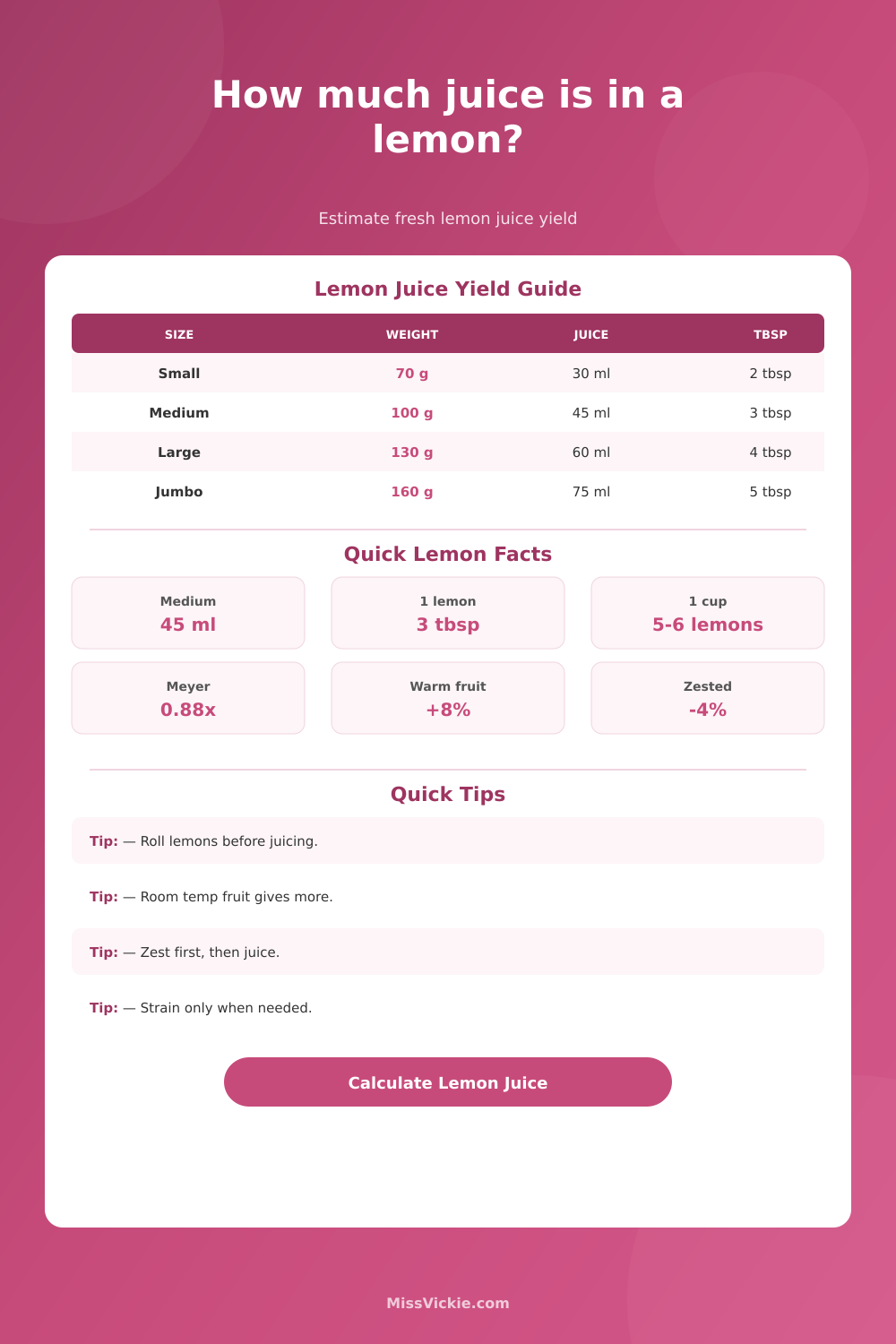
| Lemon Size | Typical Weight | Expected Juice | Tablespoons | Best Use |
|---|---|---|---|---|
| Small | 2.5 oz / 70 g | 1 fl oz / 30 ml | 2 tbsp | Tea, fish wedges, quick sauces |
| Medium | 3.5 oz / 100 g | 1.5 fl oz / 45 ml | 3 tbsp | Dressings, baking, everyday cooking |
| Large | 4.6 oz / 130 g | 2 fl oz / 60 ml | 4 tbsp | Lemonade, curd, marinades |
| Jumbo | 5.6 oz / 160 g | 2.5 fl oz / 75 ml | 5 tbsp | Batch prep and freezer cubes |
🧪Variety And Condition Table
| Variety Or Condition | Yield Factor | Taste Cue | Planning Note | Best Recipe |
|---|---|---|---|---|
| Eureka | 1.00x | sharp, classic tartness | Baseline for most recipes | Lemon bars, dressings, lemonade |
| Lisbon | 1.03x | bright and firm | Often a touch juicier when heavy | Cocktails and savory sauces |
| Meyer | 0.88x | floral, sweeter, softer acid | Use more fruit for the same tartness | Curd, cakes, syrup |
| Organic unwaxed | 0.97x | fragrant peel | Great when zest and juice are both used | Marmalade and preserved lemon |
| Thick rind | 0.90x | mild juice, more peel | Weigh fruit when possible | Roast chicken and wedges |
| Aged or dry | 0.80x | flat aroma, less juice | Buy extra for strict volume targets | Cooked sauces only |
🥄Common Recipe Target Table
| Recipe Target | Juice Needed | Medium Lemons | Large Lemons | Helpful Buffer |
|---|---|---|---|---|
| Vinaigrette bowl | 45 ml / 3 tbsp | 1 | 1 | 1 tsp extra |
| Pie or curd | 120 ml / 1/2 cup | 3 | 2 | 1 tbsp extra |
| Lemonade pitcher | 240 ml / 1 cup | 5 to 6 | 4 | 2 tbsp extra |
| Cocktail batch | 360 ml / 1.5 cups | 8 | 6 | 1/4 cup extra |
| Catering prep | 960 ml / 4 cups | 22 | 16 | 1/2 cup extra |
🔧Yield Adjustment Table
| Adjustment | Low Setting | Standard Setting | High Setting | What Changes |
|---|---|---|---|---|
| Fruit temperature | cold: 0.93x | room: 1.00x | warm: 1.08x | Membranes soften as fruit warms |
| Pulp level | strained: 0.96x | light: 1.00x | heavy: 1.05x | More pulp raises measured volume |
| Zest use | none: 1.00x | light: 0.98x | strips: 0.93x | Deep peel removal can dry fruit |
| Buffer | none: 0% | standard: 10% | party: 15% | Extra covers seeds, spills, tasting |
💡Kitchen Tips
Fresh lemons vary by season, rind thickness, storage time, and tool pressure, so use the estimate as a planning range for buying and recipe prep.
The same is true for lemons: They’re all different when it comes to juice. Some have more; some less. Some recipes will call for juice from several lemon, but by the time you reach that final squeeze there’s nothing left but seeds. Lemons aren’t created equal. Not all sizes yields the same volume of juice: Three tablespoons of juice from one lemon can come from a medium-sized one… Or maybe just two. Temperature of fruit, its thick rind and even the season affect how juicy your lemon becomes.
To calculate your crop, the calculator takes into account such variables as lemon weight (you should of weigh to get an accurate number; though counting lemons is also fine), plus the number of fruit per bag (which can vary in size) and thickness of their skins (thicker-skin lemons will require fewer). It factors in which type of lemon you’re using: tart Eureka? Floral Meyer? Are they thick-rinded? How hot is it? That matters.
Why Lemons Have Different Amounts of Juice
“Cold lemons are tough; their membranes won’t squeeze easily.” Soaking cold fruit in warm water will soften the inner sacs of the lemon and release more juice, as will letting them hang out on counter to adjust to room temperature. Our calculator accounts for this with an added percentage bonus to warm fruit. You can also get better extraction by rolling the lemon between your palms gently (but firmly) prior to slicing to break open some of those internal juice sacs. You can even gets better results if you do it different than before.
How do you get it out? That’s part of the story. A hinged citrus press makes short work of several lemons and gets almost a tenth more juice out then hand-squeezing does. If you have only a few lemon, simply squeeze them by hand; if you’ve got a lot, a hinged press will make quick work of it. Depending on whether you’re pressing, using a reamer, or going electric, the tool adjusts its output based off the method used.
How much pulp is involved? That affects the volume, too. Strain the juice to get less. Leave some pulp intact to increase the volume so that a recipe like lemonade or a marinade can be measured. If you plan to juice as well as zest, zesting first will mean a bit less liquid in your end product. If you remove big strips of peel, that leaves behind dry fruit. To compensate for the lost water, I decrease the amount on the calculator (if required) when juicing and zesting together.
It makes a difference in precision baking scenarios, but less-so for casual vinaigrette use where a little variation doesn’t make or break anything. And because you know how many lemons you get, you can plan for it rather than reacting to it. You buy confidently by understanding how tools, temperature, and size works together. Not wondering if that final lemon will fill in the blank. When you get the math, trusting the process makes it simple. And when you squeeze, it’s not diluted but balanced.
Treat the fruit as an ingredient that changes and pay close attention to it first. Naturaly, things can vary.