
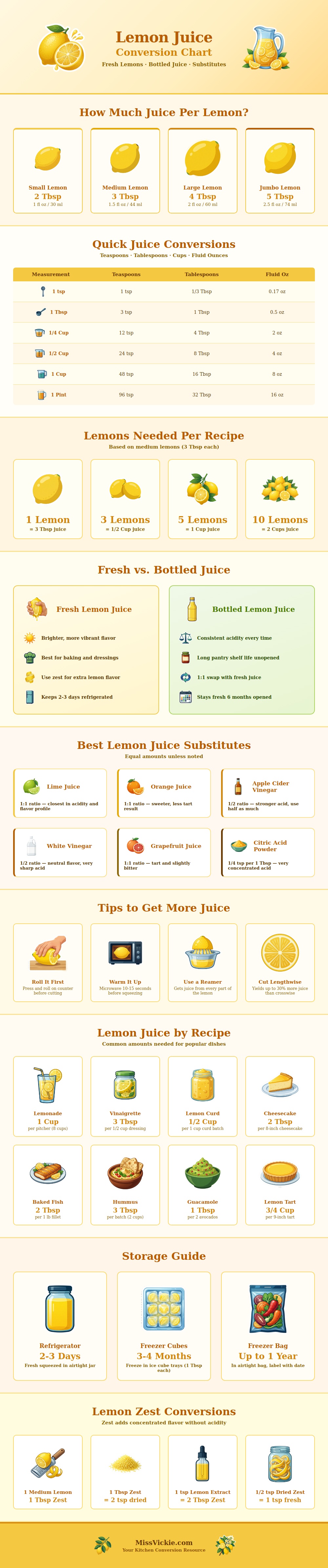
How much juice is in A LEMON? What does it mean when a recipe says “juice of 2 lemons”? Unless you happen to have a measuring cup nearby, there’s no way to know how much actual liquid that represents, until now. This can confuse even seasoned home cook because sometimes one lemon is big and juicy, while others are small and dry.
To prevent cooking mishaps, use this as a go-to guide: The chart (above) illustrates the impact of fruit size on yield (a small lemon will yield about two tablespoons juice; a jumbo could give you five). It’s important because an incorrect guess with your juice could result in flat-tasting dressing or overly tart baked good.
How Much Juice Is In A Lemon?
A medium-sized lemon contain roughly three tablespoons of juice, this is what most recipes expect, so it’s kind of the baseline when chefs create their formulas. But don’t blindly add more wedges if you’re working with bigger fruit; adjust accordingally.
To figure out how much juice is in each lemon, consult the infographic above (it tells you how many lemons equals certain volume marks). As it turns out, you’ll probably have to use roughly five medium lemon to get a whole cup of juice. In other words: next time you realize halfway through the recipe that all you have on hand are three lemons, this info comes in handy.
Consistency (not surprisingly) hinges on storage: “The flavor of freshly squeezed lemon juice deteriorates rapidly when exposed to air,” the guide notes. If you want peak flavor, keep your fresh lemon juice chilled and consume within a few days at most.
For those with extended needs, freezing works; pour into an ice cube tray so that each cube contains about a tablespoon of juice. It freeze well for months, and then you just pop out as many cubes as necessary to get the exact amount you need without having to thaw a big chunk of liquid first.
Bottled juice will provide steady levels of acidity, but none of the bright notes from fresh fruit itself. When life gives you no lemons at all, here’s what you’ll need to replace them with.
For most recipes, lime juice is your next best option because it has the same acidity and can be used in equal amounts. In a pinch, try vinegar… But beware: It’s a lot more sharp. To avoid ruining your dish, go easy on the vinegar and use only half as much white or apple cider vinegar. They’re not exact replacements but they keep chemistry of the recipe when fresh citrus isn’t an option.
There’s a technique to getting all the juice from lemons (not just cutting and squeezing), but slicing doesn’t do it alone either. First, roll the lemon around on your counter top, firmly but not so hard as to break it apart. This breaks up the internal membranes, releasing more juice with less work.
Second, a quick microwaving for 10 or even five seconds warm the lemon up slightly, softening its pulp and making extraction easier. Slicing down the middle instead of across is another big difference: You get much more juice from lengthwise cuts, since they expose more of the inner segments to the pressure of the knife. It’s a tiny mechanical advantage, but one that add up over time.
It is also noteworthy that zest contains oils not found in juice. A tablespoon of fresh zest extracted from one medium lemon contribute strong scent and flavor but no liquid volume. To get the same impact with dried zest, which is even more concentrated (per teaspoon), use less. As for extracts, they are extremely potent, and used in very small amounts relative to fresh ingredients. Knowing this can help you keep moisture levels balanced in such light treats as tarts or curds.
From basic vinaigrette dressings to elaborate dessert components, lemon juice can bring brightness to anything, and there’s nothing more frustrating than reaching for your fruit and realizing you don’t have enough lemons. Whether you’re squeezing onto some fillets of fish or mixing up a batch of lemonade, understanding the amount you’ll get means less guessing and more focus on creating great taste.
Next time you grab a dish of lemons, you’ll know precisely which ingredient you have in hand. And when you feel certain, you should of cooked confidently.