Lasagna Cooking Time Calculator
Estimate the bake time for fresh or refrigerated lasagna from pan size, depth, layers, noodle type, sauce amount, filling temperature, oven temperature, foil cover, cheese browning, rest time, and center temperature.
🍝Lasagna presets
Pick a familiar pan, then adjust the exact layering, sauce, filling temperature, and browning plan before baking.
⚖Units
🥘Pan, layers, noodles, and sauce
🔥Starting temperature, oven, cover, and browning
Lasagna bake estimate
Timing breakdown
Check the center with a thermometer before serving.
📌Quick lasagna timing markers
Best check for meat, chilled pans, and reheated portions.
Covered heat hydrates noodles and warms the center.
Uncovered heat bubbles sauce and browns cheese.
Resting sets the layers so slices hold together.
📋Fresh and refrigerated lasagna reference
| Lasagna setup | Typical covered phase | Typical uncovered phase | Center check |
|---|---|---|---|
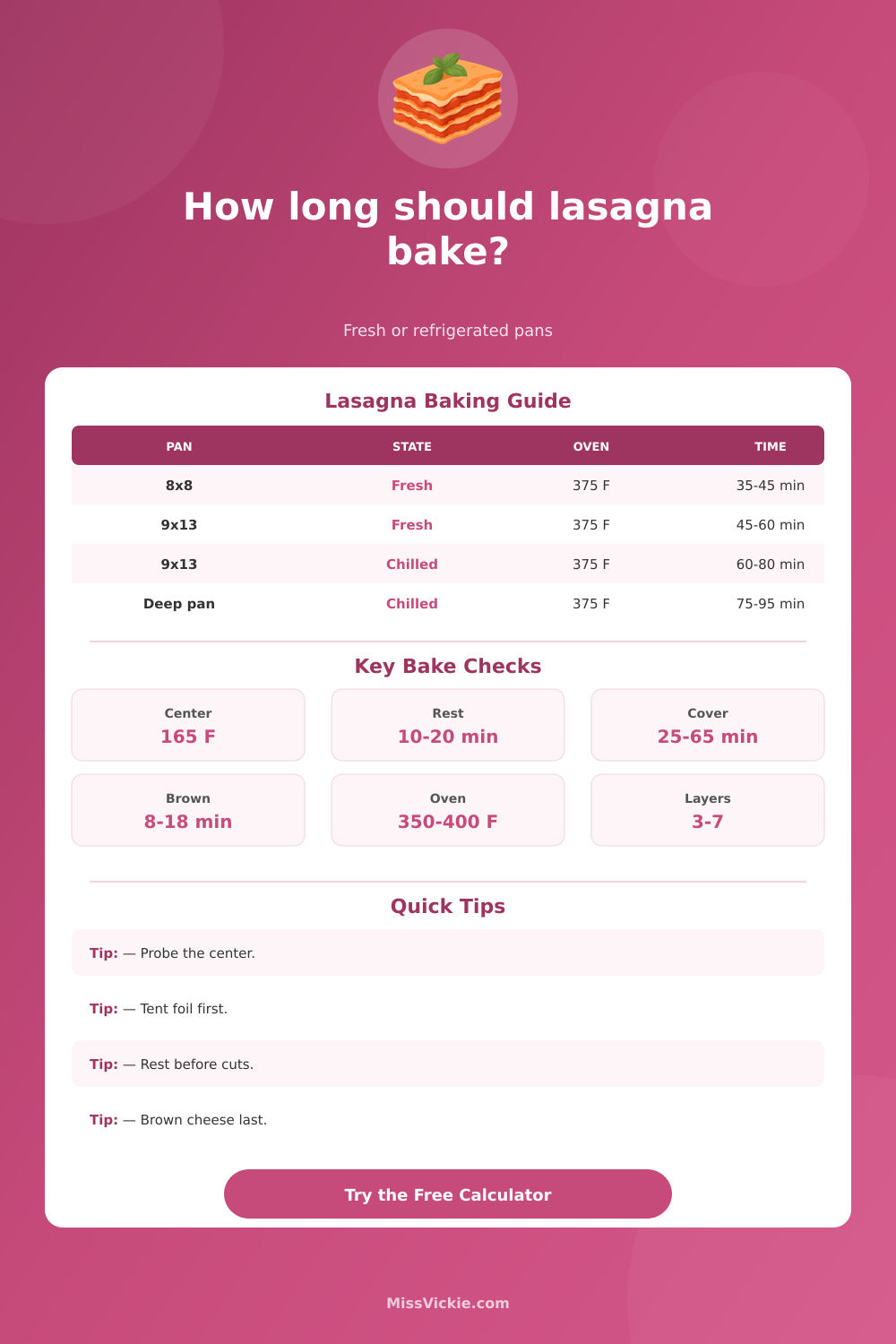
| Fresh 8×8, 3 to 4 layers, boiled noodles | 22 to 30 minutes | 8 to 12 minutes | 160 to 165°F |
| Fresh 9×13, 4 to 5 layers, room temperature filling | 32 to 42 minutes | 10 to 16 minutes | 160 to 165°F |
| Refrigerated 9×13, overnight, meat sauce | 48 to 62 minutes | 12 to 18 minutes | 165°F |
| Deep 9×13, 6 to 7 layers, dense cheese center | 58 to 75 minutes | 12 to 20 minutes | 165 to 175°F |
| No-boil noodle pan with generous sauce | 42 to 60 minutes | 10 to 16 minutes | 165°F and tender noodles |
🧀Pan, noodle, and browning adjustments
| Variable | Speeds baking | Slows baking | Best check |
|---|---|---|---|
| Pan material | Dark metal or shallow light metal | Thick ceramic, glass, or deep foil | Probe center, not edge bubbles |
| Noodle type | Fresh pasta sheets or boiled noodles | No-boil, whole wheat, or gluten-free noodles | Knife slides through center noodles |
| Sauce amount | Moderate sauce, hot filling | Very wet sauce or cold meat sauce | Edges bubble steadily |
| Cheese browning | Broiler finish or dark pan | Thick mozzarella layer or low oven | Top is golden but not dry |
| Rest time | Long rest does not replace baking | Short rest gives loose slices | 10 to 20 minutes before cutting |
💡Lasagna bake notes
Probe the true center. Edge bubbling can start long before the middle reaches a safe serving temperature, especially when the pan was refrigerated.
Brown cheese at the end. Keep the pan covered until the center is mostly hot, then uncover to melt, bubble, and brown the top without drying the noodles.
Putting lasagna in the oven seems easy. There’s just one problem: All sorts of things influence how long it takes, including whether dish is metal or glass, its depth, the initial temperature of ingredients inside, and how many layer you have. One forgotten element can result in an overdone surface while keeping the interior cool. No wonder so many cook stand guard at the oven clutching a thermometer.
Once your pan is hot, the main variable is its starting temperature, such as a new pan versus one pulled out of the fridge. It will take more time to get warm all the way through. And it will impact the length of time you leave it covered. Remove it prematurely and the top brown before the rest of filling has caught up.
How To Cook Lasagna Perfectly
Enter your planned oven setting, kind of covering, and actualy filling temperature into the calculator above. Let it crunch numbers for you so you don’t have to guess how much longer it should of be covered.
Noodle type also has an impact, more than most people expect! No-boil noodles should has enough steam trapped in them to completely soften. Regular boiled noodles just want some time to get up to temp and set. Fresh pasta sheets will cook faster but may gets too soft if left out long enough in the uncovered stage. You choose your noodle style on the tool, which makes sure drier noodles stays covered a bit longer before they are taken out to brown.
The nature of the pan (material and shape) and its depth have tradeoffs: Dark metal absorbs heat faster; glass and thicker ceramic do not. The edges gets warm first but then so does the middle. Because deeper pans require more distance for heat transfer, the duration of the covered phase are extended. The calculator accounts for all that, allowing you to compare two different depths or materials without having to memorize specific rules based off each combination.
It’s also tempting to skip the resting period after baking, but this completes the cooking process and allows layers to bond as you slice them up. Slices will be sloppy if you let them sit too briefly. To make up for more layers and deeper pans, the default recommended rest time lengthens accordingly.
You can tell when your pan is truly ready by reading output (which displays both a target and an estimated range). Most people go wrong when they watch the sides, not the center. Even if the pan is in the fridge, the edges might be bubbling far ahead of the middle getting to temp. A thermometer helps take the guess work out of it and avoids the risk of both under- and over-baking.
However, the art comes in when you can tell which inputs really move the needle on a particular pan and which ones is just minor tweaks. When you understand how cover style, noodle type, and starting temperature work together, the oven becomes less mysterious and starts to behave more consistantly.