
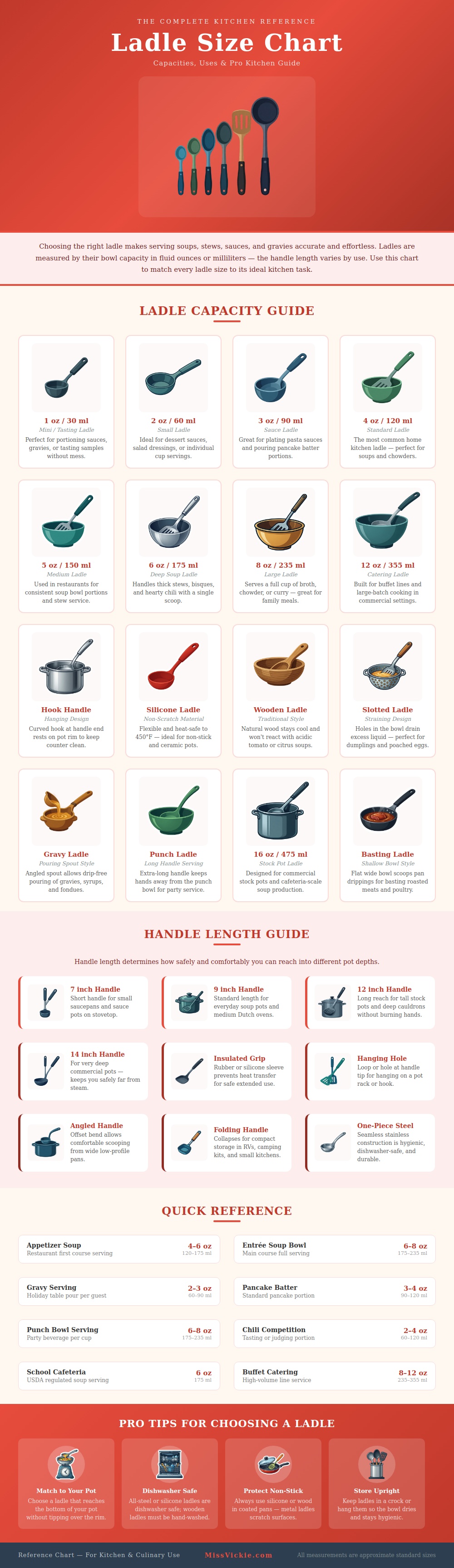
Have you ever stood over a boiling pot of chili with a ladle that was simply too big for the job, sending broth all over stovetop? That’s what goes wrong when we attempt to pour something into a regular bowl using an ill-fitting tool. Turns out, size does matter, but most of us don’t realize it, and many home chefs considers any old ladle just fine. Professional kitchens employ specialized tools for accuracy (which also prevents a messy countertop). The graph up top show the correct ladle/bowl combination for each job, taking the guesswork out of meal prep.
Tasting spoons aren’t just little spoons. They’re small ladles. If you have a one or two ounce ladle, you can portion out dessert coulis or drizzle some sauce with accuracy. Because these are such small bowls, they’ll prevent any overpowering of the dish by heavy sauces. It’s all about control, not volume.
Choosing the Right Ladle for Your Cooking
Three or four ounces is your best bet for regular home cooking tasks. The classic soup ladle fits most people’s hands and is perfect for those everyday chowders. For finishing pastas, you may want to use a smaller version like this sauce ladle. You won’t drown your noodles in butter and oil.
So what happens as we increase the size of the bowl? We transition from plating food to serve people. At restaurants the norm are a ladle holding 5-6 ounces of soup, allowing each person at the table to recieve an equal portion. For big families or events, like catering, you may find yourself using ladles in the 8-12 ounce range. With large portions like these, the scoop is about efficiency. It move lots of soup really fast. Perfect if you’re serving at a buffet. Consistency and speed is what matter most when you’re trying to feed people.
How do you lift that much weight without spilling? Enter the handle design. How long is the handle? How far will it extend, and how much will it affect safety when cooking? For shallow saucepans, a handle around seven inches may do. But if reaching into high-sided stockpots puts your fingers too near the steamy action, go longer. Twelve inches (or even more) keeps your digits away from fire and allow you to pluck out ingredients from depths of a deep pot without hanging unsteadily off the edge. If your work involve lots of big, heavy-duty Dutch ovens, springing for extra-long handles is not only a precaution… It is an asset. It alters how you wield the implement, and shifts the weight balance to minimize wrist fatigue through long use.
The second factor affecting a ladle’s performance in the kitchen have more to do with materials. For dishes that need to go into dishwasher or will be subjected to high heat, stainless steel is a great option, this material is durable and easy to sanitize! But, stainless steel can scratch your non-stick pots after repeated use. If you’re looking for an alternative, silicone is flexible, heat resistant, and won’t mar your precious pans. Wooden spoons are cool to the touch and don’t react with acidic foods, but they require hand washing to maintain their integrity. Certain models comes equipped with a hook on the handle end that allows you to prop the ladle on top of the rim of the pot rather than placing it on counter. This simple detail keeps your work area clean and clutter-free.
So which ladle is best? The answer depends on how far your own ladles fall short. If you spill, or pour out too little or too much, check the size and style of what you’re working with. For example, if your soup comes in mugs, match the ladle’s handle length to those; its capacity will take care of the rest. Most problems resolve immediately when you match the tool to the pot and the portion. Think about it before you buy, and then serving soup go smoothly. That simple change from mess to ease turns a stressful time in the kitchen into a stress-free one.