
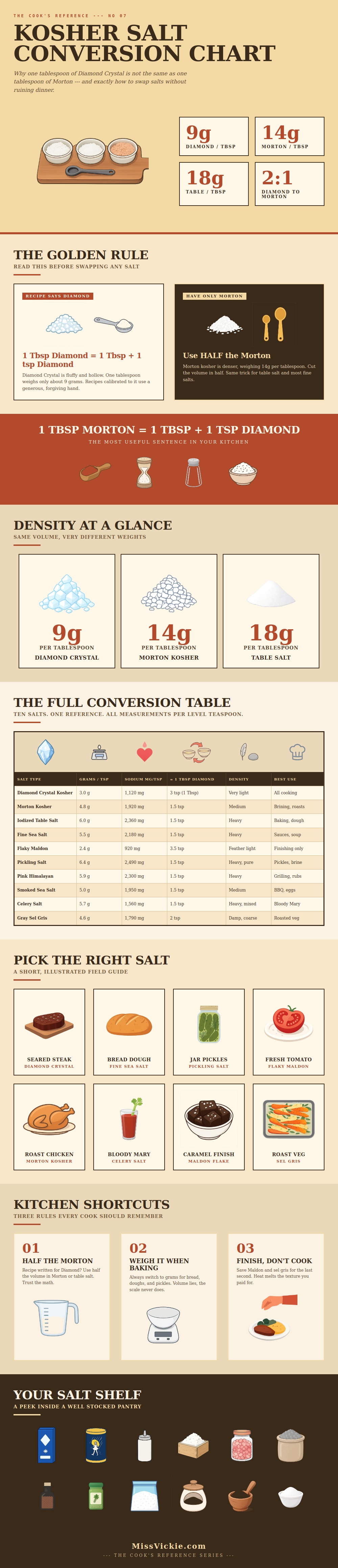
Salt density are one of the primary reason that different types of salt produce different results in the kitchen. Recipes may taste too salty or underseasoned due to the difference in density between the types of salt that is required by a recipe versus the density of the salt that is available in the kitchen. The density of salt is the mass of salt contained within a specific volume of that salt.
Different brands of kosher salt, for example, can have different densities; a tablespoon of one brand of kosher salt may weigh more or less than a tablespoon of another brand of kosher salt. Some brands of kosher salt contain lighter and airier crystals; others contain dense and heavy grain. If an individual use a dense brand of kosher salt instead of a light brand of kosher salt, they will add too much sodium into their dish.
Why Salt Type and Amount Matter in Cooking
If an individual uses a light brand of kosher salt instead of a dense brand of kosher salt, they will not add enough sodium to their dish. Therefore, it is crucial for an individual to understand the difference between volume and weight; volume indicate the amount of space that the salt occupies in a spoon, but the weight of salt is the mass of that salt. Because spoons measure the volume of salt added to a pot or pan, a spoon of a light salt will contain less sodium than a spoon of dense salt.
An individual can use a conversion chart for adjusting the salt that is used in a recipe. A conversion chart can tell an individual how much salt of one type can be substituted for another type of salt. For instance, if the salt in a kitchen is dense but the recipe require a light salt, then using approximately half the volume of dense salt will help the cook to achieve the same results as if they used the light salt.
Thus, a conversion chart can help an individual to match the type of salt in their kitchen to the requirements for the salt required by the recipe. Each type of salt have different uses in the kitchen based off the way that the salt behaves within the body of the food being cooked. Dense kosher salt, for instance, is useful for brining chicken because the salt is both dense and dissolves in the liquid; it pull moisture into the meat.
Fine table salt is useful for making doughs; it distributes easy throughout the dough. Flaky salt is useful for adding flavor and texture to the foods at the very end of the cooking process. Flaky salt should be avoided during the early stages of cooking; when exposed to heat, flaky salt melt.
Many cooks introduce mistakes in the kitchen. For instance, many individuals believe that all types of kosher salt are the same, which is not true; some brands of kosher salt may contain larger and denser grains than others. Additionally, many cooks use the salt shaker for all cooking tasks.
However, manufacturers manufacture salt shakers to dispense fine grains of salt. Finally, many cooks use finishing salts during the cooking process. However, an individual should of only use finishing salts at the end of the cooking process.
Using a digital scale will allow an individual in the kitchen to measure the salt with precision. Digital scales measure the mass of the items being weighed in gram. Therefore, weighing the salt as opposed to using a spoon to measure the salt is more accurate.
This precision in measuring salt is crucial for baking items like dough, which require each ingredient to have an exact mass to ensure that the dough will rise. Additionally, weighing the salt will ensure that each dish contain the same amount of sodium, regardless of the density of the salt that is used. There are various types of salt that should be stocked in an individual’s kitchen to prepare each type of recipe.
For instance, there should be both light and dense kosher salt brands that is stocked in the kitchen; light kosher salt may be used for cooking and dense kosher salt may be used for brining. Additionally, fine salt can be stocked for use in baking pastry. Finally, flaky salt should be stocked in the kitchen for dishes that are cooked to be finished with a dusting of salt.
Thus, if each type of salt is stocked and understood how to use each salt, and if that salt is matched to the requirements of the recipe that is being prepared, the flavor of food will be balanced.