Kombucha Fermentation Time Calculator
Estimate kombucha first ferment, second ferment, starter tea amount, sugar level, SCOBY strength, carbonation target, and bottle pressure timing from your real batch conditions.
🫖Kombucha presets
Start with a familiar brew situation, then adjust tea type, starter percentage, SCOBY activity, temperature, batch size, fizz target, and bottle timing.
⚖Batch inputs
Your kombucha timing plan
Adjust the batch inputs to estimate first ferment, second ferment, and pressure checks.
Fermentation breakdown
Bottling breakdown
Suggested schedule
🫖Batch planning grid
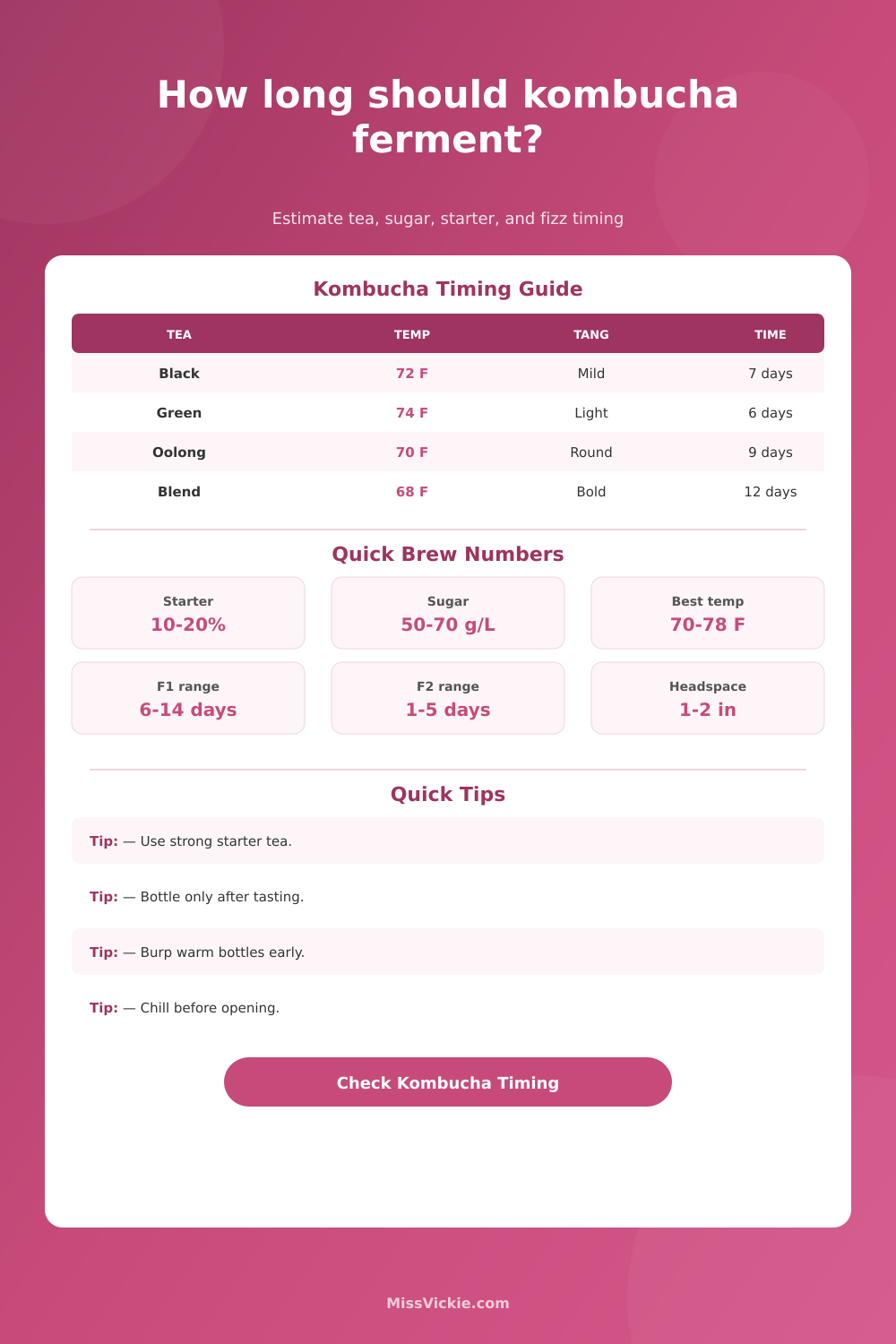
🍵Tea type fermentation table
| Tea Type | Ferment Speed | Flavor Direction | F1 Timing Note | Best Carbonation Use |
|---|---|---|---|---|
| Black tea | Medium | Classic, tannic, cider-like | Reliable 7 to 12 day household baseline | Most fruit and ginger bottles |
| Green tea | Medium-fast | Light, grassy, sharper when warm | Taste earlier because acidity feels brighter | Citrus, mint, berry, gentle fizz |
| Oolong tea | Medium-slow | Rounded, floral, less sharp | Often benefits from one extra day | Stone fruit, vanilla, mild herbs |
| White tea | Slow | Delicate and soft | Needs strong starter to avoid flat flavor | Light fruit and low fizz |
| Pu-erh or dark tea | Medium | Earthy and deep | Can taste tart before it smells fruity | Ginger, spice, apple, pear |
| Black and green blend | Balanced | Clean tea flavor with bright edge | Good beginner timing reference | Most normal second ferments |
| Herbal blend with tea | Variable | Depends on true tea percentage | Use enough real tea for the SCOBY | Low-risk light carbonation |
🌡Temperature and first ferment timing
| Room Temperature | Typical F1 Window | Fermentation Behavior | Texture Or Flavor Risk | Best Action |
|---|---|---|---|---|
| 60-64°F / 16-18°C | 12-18 days | Slow acid build and delayed aroma | Can taste sweet for a long time | Use more starter and be patient |
| 65-69°F / 18-21°C | 9-14 days | Clean but slower household ferment | Low risk, but carbonation may lag | Taste from day 8 onward |
| 70-74°F / 21-23°C | 7-11 days | Balanced acid and yeast activity | Most predictable flavor curve | Good default brewing zone |
| 75-79°F / 24-26°C | 5-8 days | Fast acid and faster bottle pressure | Can over-sour or over-carbonate | Taste early and burp bottles |
| 80°F+ / 27°C+ | 3-6 days | Very fast and yeast-forward | Pressure and flavor risk rise sharply | Move cooler if possible |
🍯Sugar, starter, and culture strength table
| Factor | Low Range | Balanced Range | High Range | What It Changes |
|---|---|---|---|---|
| Sugar level | 35-49 g/L | 50-70 g/L | 71-95 g/L | Low sugar can taste thin; high sugar may leave more fuel for F2 pressure. |
| Starter tea | 5-9% | 10-20% | 21-30% | More starter lowers pH sooner and shortens first ferment. |
| SCOBY strength | New or gentle | Steady household | Strong acidic hotel | Stronger culture speeds acidity and makes timing less forgiving. |
| Batch volume | Under 1 gal | 1-2 gal | 3 gal or more | Larger jars can lag slightly and need more even temperature. |
| Residual sweetness | Dry tart | Balanced tang | Sweet before F2 | Sweeter bottling kombucha usually carbonates faster. |
🍾Bottle pressure timing table
| Bottle Situation | First Pressure Check | Typical F2 Window | Pressure Warning | Best Practice |
|---|---|---|---|---|
| Swing-top bottles | 24 hours | 2-4 days | Loud hiss or rising foam | Chill a test bottle before opening |
| Reused commercial bottles | 18-24 hours | 1-3 days | Unknown glass strength | Use only bottles made for pressure |
| Plastic tester bottle | 12 hours squeeze test | 2-5 days | Bottle becomes very firm | Chill the glass bottles when tester is firm |
| Warm shelf above 76°F | 12-18 hours | 1-2 days | Fast pressure jump | Burp carefully or refrigerate early |
| Cool room below 68°F | 36-48 hours | 3-6 days | Slow fizz, then delayed surge | Do not forget bottles after day 3 |
📊Tang and fizz comparison grid
Short first ferment, sweeter taste, and no sealed bottle pressure step.
Moderate tang and reliable medium fizz after a short second ferment.
Longer first ferment with enough residual sugar for controlled bottles.
Sweet fruit raises pressure quickly, so check bottles earlier and chill sooner.
💡Kombucha fermentation tips
This calculator estimates timing for typical home kombucha. Discard batches with mold, rotten odors, damaged bottles, or unsafe storage conditions.
Kombucha can smell like sweet tea one day and vinegar the next, making it hard to know when to stop brewing at home. Because fermentation is not a mechanical but a biological process, there is no “one right number” that works for all. It depends on the strength of your culture, what type of tea you used, and what temperature it were fermented at. To make this more reliable than guessing based off someone’s blog post about their different climate zone, the calculator above will help estimate both your first and second ferment windows given your real-world kitchen conditions.
Temperature is the primary determinant. Bacteria love heat, yeast loves it too. So a jar placed close to warm oven will sour quicker then one stashed away in a cool pantry. Warmer rooms (e.g., seventy-five degrees Fahrenheit and up) speed up fermentation fast. That means there is less time to develop flavors and a higher chance of over-carbonating on bottling day. The reference table on the page spells that out nicely with how shorter ferment window match rising temps. What this also means is that if you live in a warmer space, you’ll have to taste sooner, since the gap from just right (tart!) to too far gone (vinegar-y) will be quite small.
What Changes Kombucha Taste
Cooler temps will slow things way down, giving you greater patience, but potentially increasing your chances at contaminating when waiting longer with weaker starter tea. The type of tea you choose will also impact its texture. Green tea is light, finishing quickly and offering a bright acidity, whereas black tea give a stronger tannic backbone suitable for longer ferments. White or oolong teas has less tannin and can drag out the process a little further.
Why does any of this matter? How full-bodied is your tea? The amount of residual sugar available for the second fermentation depend on the structure of the tea. Too sweet, and it’ll taste cloying in the final product; not sweet enough, and it won’t be able to provide enough sweetness to fuel the carbonation in the bottle. With the tool, they were able to adjust their estimates accordingly with how much sugar you add and what kind of tea (white vs. Green vs. This helps them avoid either an explosion of glassware or a flat liquid.
Other important factors matter too. The first is SCOBY strength. Many new brewers use insufficient starter culture, resulting in a higher-than-necessary pH that allows bad bacteria to establish themselves within the first couple of days. A robust starter rapidly drives down the pH to a safe zone where only the good microbes can flourish. Use an established SCOBY, and it’ll consume the sugar faster than a new one. Your batches will be finished sooner so you’ll end up with a tarter taste more quickly. Plan out your bottling schedule accordingly; remember that some cultures are more active than others. That’s the mistake people make most frequently, they just think that all jars behaves as theirs did on their first batch, when in reality, culture strength is a critical variable to account for.
The second fermentation is where you need to pay close attention to bottle pressure. That’s when it traps the gas produced from the yeast in closed containers to increase the carbonation. If left unattended, warm bottles will quickly pressurize, dangerously so at times. I use plastic test bottles which get firm as they pressurize, alerting you long before they pop like their glass counterparts. Before you open a bottle, always chill it first to limit spillage and foaming. The calculator gives you an estimate of how often to check pressure depending on the ambient temperature and desired level of carbonation. In other words, it lets you plan ahead instead of reacting after the fact.
So, what it all boils down to? Taste. As much as an algorithm may help, the only thing that’s going to truly know if the beer tastes right is your taste buds when you try a sample. Take the days estimate as where to start your first taste test and let your tongue make the last call. You want just enough sweetness to leave a little fizz in the bottle and a good balance between sweet and tangy. When you get familiar with the relationship between culture strength and temperature, you’re no longer shooting in the dark. You’ll brew with intent the next time around and you’ll have a better batch than before (since you accounted for reality, not magical thinking).