🍵 Kombucha Calculator
Calculate exact tea, sugar, starter liquid, and fermentation time for any batch size
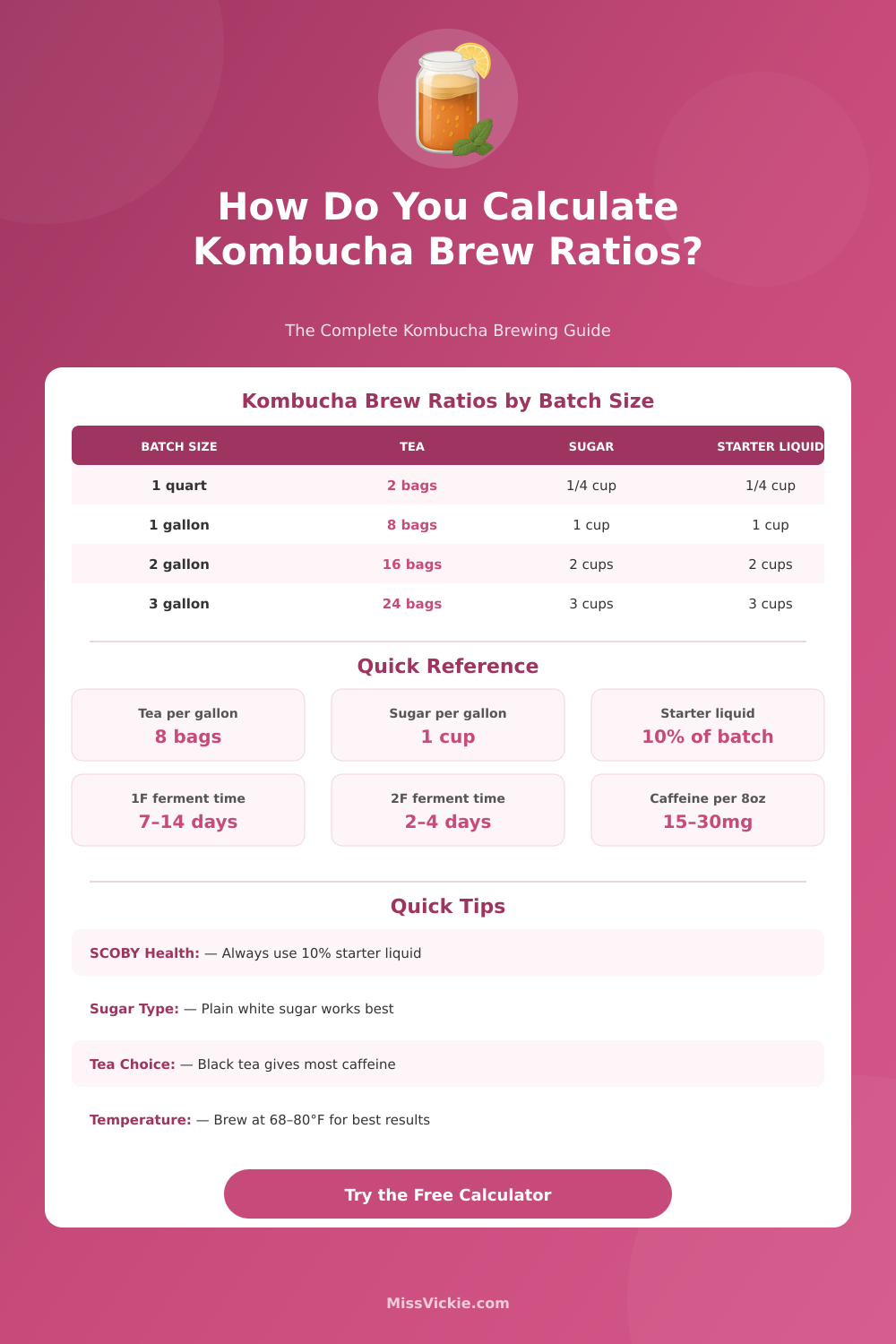
| Batch Size | Tea Bags | Sugar | Starter Liquid | Brew Water |
|---|---|---|---|---|
| 1 quart (0.25 gal) | 2 bags | 1/4 cup | 1/4 cup | 3 cups |
| Half gallon (2 qt) | 4 bags | 1/2 cup | 1/2 cup | 7 cups |
| 1 gallon (4 qt) | 8 bags | 1 cup | 1 cup | 14 cups |
| 2 gallon (8 qt) | 16 bags | 2 cups | 2 cups | 28 cups |
| 3 gallon (12 qt) | 24 bags | 3 cups | 3 cups | 42 cups |
| 5 gallon (20 qt) | 40 bags | 5 cups | 5 cups | 70 cups |
| Tea Type | Caffeine (brewed) | Caffeine (finished kombucha) | Notes |
|---|---|---|---|
| Black Tea | 40–70mg | 15–30mg | Most common choice |
| Green Tea | 25–45mg | 10–20mg | Milder flavor |
| Oolong Tea | 30–50mg | 12–22mg | Balanced body |
| White Tea | 15–30mg | 5–15mg | Lightest caffeine |
| Herbal / Rooibos | 0mg | 0mg | Caffeine-free option |
| Flavor | Amount | Added Sugar | Notes |
|---|---|---|---|
| Fresh ginger | 1–2 tsp grated | ~1g | Great carbonation booster |
| Fruit juice | 2–3 tbsp | 5–8g | Mango, cherry, berry |
| Dried fruit | 1–2 tbsp | 3–5g | Raisins, cranberries |
| Lemon / lime juice | 1 tbsp | 1g | Adds tartness |
| Honey | 1 tsp | 6g | Use raw honey |
| Turmeric + pepper | 1/4 tsp each | 0g | Anti-inflammatory boost |
Kombucha is fermented, fizzy, sweetened tea. You typically make it with green or black tea, although oolong tea also works. Some people call it kombucha mushroom tea, but it does not actually have mushrooms or fungi.
The word “mushroom” refers to the SCOBY, which is symbiotic culture of bacteria and yeast. This SCOBY forms a cellulose mat that floats in the tea during fermentation.
What is kombucha and how to make it
The drink has several other names. When you talk about the culture itself, you say tea mushroom, tea fungus or Manchurian mushroom. Kombucha you find all over the world, for example in Nepal, Siberia, Tibet and India.
It apparently came from the Russia-China border region, known as Manchuria.
Home prepare kombucha is relatively easy. In a big jar you boil water, later remove it from the heat. Add sugar and tea bags.
When the sweet tea cooled after brewing, you place the SCOBY in the liquid. During fermentation the bacteria and yeast consume the sugar, turning it first into alcohol and later into acids. The more long it ferments, the less sweet it is and the more sour.
SCOBY does not lack for kombucha, but kombucha is needed for grow new SCOBYs. From scratch of tea, sugar and a bit of ready kombucha can grow fresh SCOBY.
Healthy SCOBY gives healthy kombucha. Naturally you feel a bit of excitement and doubt during the first fermentation.
Kombucha carries organic acids, amino acids, vitamins, probiotics, sugars, polyphenols and antioxidants. It belongs to functional drinks, so it is non-alcoholic and rich in nutrients like vitamins or amino acids. The fermentation reduces the natural caffeine from the tea, but leaves around a third.
For start well are 4 ounces daily while some days. If it works, you can go to 8 ounces for the day. Many very-healthy adults drink 12 to 16 ounces a day, split into two servings.
Store-bought bottle commonly has more than 20 grams of extra sugar, but a lot of options have much less. Kombucha with food slows the glucose response. Keep serving to 4 to 8 ounces reduces the sugar load.
Kombucha well replace beer or wine in many recipes. It is tart, delicious and comes with various flavors. It works well alone or as a mix.
Some even use it as liquid for bread from sourdough or instead of cooking wine.