Jambalaya Per Person Calculator
Scale jambalaya by guest count, entree or side portions, dry rice, stock ratio, chicken, sausage, shrimp, trinity vegetables, tomato or brown style, pot diameter, resting absorption, and leftovers.
Pick a real serving scenario, then fine-tune rice, stock, meats, trinity, pot width, rest absorption, and leftover buffer.
Your Jambalaya Batch Plan
Enter your jambalaya settings to size the rice, stock, meats, vegetables, and pot.
Portion Breakdown
Ingredient Breakdown
Liquid, Rest, And Pot Fit
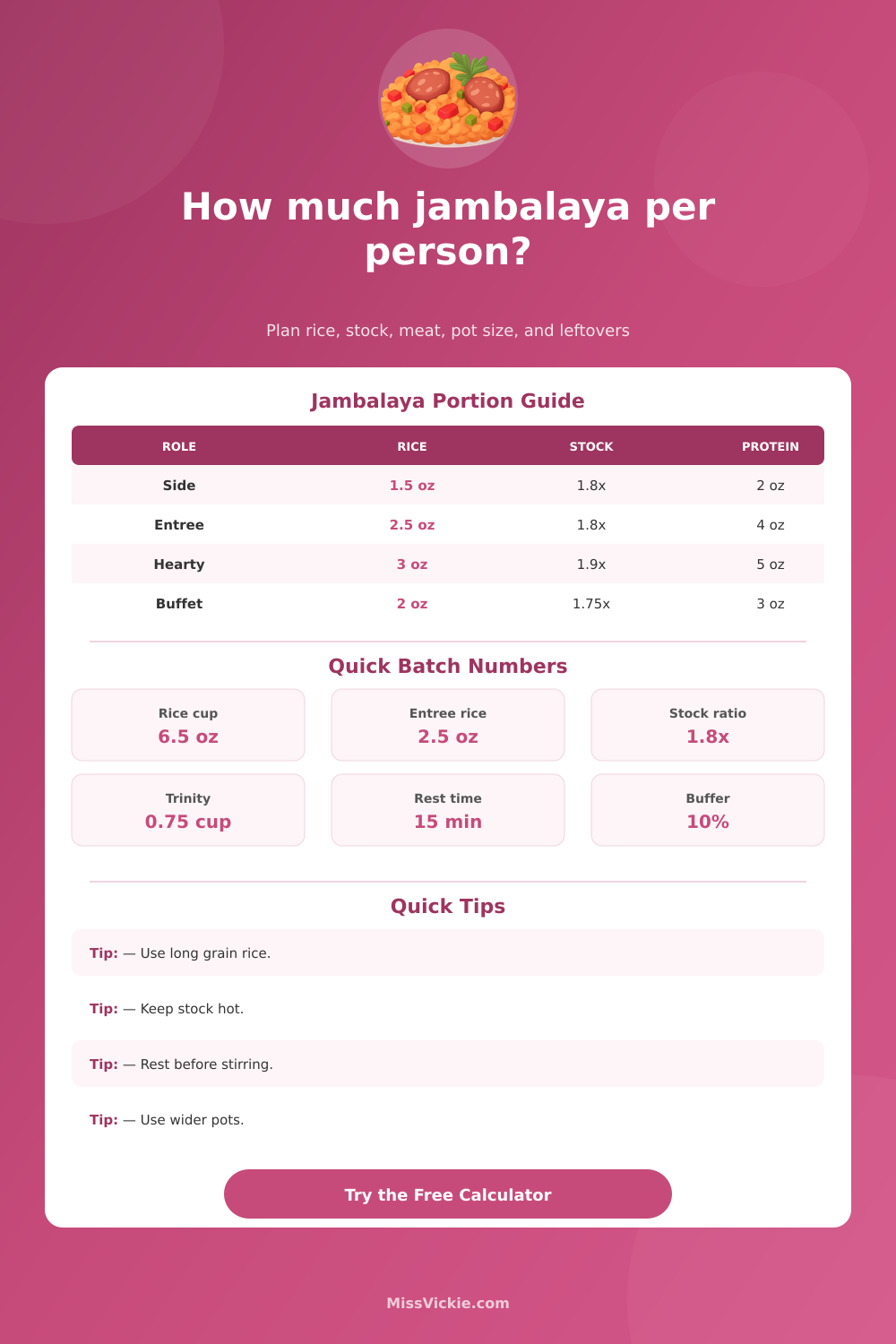
| Serving role | Dry rice per person | Protein per person | Finished jambalaya |
|---|---|---|---|
| Side dish | 1.25 to 1.75 oz | 1.5 to 2.5 oz | 1 to 1.5 cups |
| Buffet line | 1.75 to 2.25 oz | 2.5 to 3.5 oz | 1.5 to 2 cups |
| Entree bowl | 2.25 to 2.75 oz | 3.5 to 4.5 oz | 2 to 2.75 cups |
| Hearty plate | 2.75 to 3.25 oz | 4.5 to 5.75 oz | 2.75 to 3.25 cups |
| Rice or style | Typical stock ratio | Cooked yield | Best use |
|---|---|---|---|
| Long-grain white | 1.65 to 1.85 cups stock per cup rice | About 3 cups cooked | Classic jambalaya texture |
| Parboiled long-grain | 1.75 to 1.95 cups stock per cup rice | About 3.1 cups cooked | Large batches that hold well |
| Brown jambalaya style | 1.75 to 1.95 cups stock per cup rice | Firm and separate | Deep browned meat and rice flavor |
| Tomato Creole style | Reduce stock for wet tomatoes | Softer sauced texture | Tomato-rich family pans |
| Batch style | Chicken | Sausage | Shrimp or seafood |
|---|---|---|---|
| Classic entree | 1.75 to 2.5 oz per person | 1.25 to 2 oz per person | 0 to 1 oz per person |
| Seafood-forward | 0.5 to 1.5 oz per person | 0.75 to 1.25 oz per person | 2 to 3.5 oz per person |
| Smoked sausage heavy | 1 to 1.75 oz per person | 2 to 3 oz per person | 0 to 0.5 oz per person |
| Lean chicken batch | 2.5 to 3.5 oz per person | 0.5 to 1 oz per person | 0 to 0.5 oz per person |
| Pot diameter | Comfortable entree guests | Why it matters | Stirring note |
|---|---|---|---|
| 10 to 12 inches | 4 to 8 guests | Good home Dutch oven size | Keep rice layer shallow |
| 14 to 16 inches | 10 to 20 guests | Better evaporation and browning | Fold gently from the edges |
| 18 to 22 inches | 25 to 45 guests | Works for outdoor burners | Rotate heat if needed |
| 24 inches or wider | 50 plus guests | Large event jambalaya pots | Use a long paddle |
The calculator estimates depth from finished volume and diameter. Actual pot capacity also depends on side height, burner strength, and how aggressively the batch simmers.
Count tomato volume and trim stock slightly so the rice does not turn soupy.
Brown meat and vegetables well, then use a steady stock ratio for separate grains.
Use less chicken, add shrimp late, and avoid over-stirring the rice near the finish.
Lower the per-person rice and protein because guests usually take smaller scoops.
For anyone who has cooked jambalaya for more people, it’s not so much about cooking as logistics. How do you adjust to the rate at which things evaporate? How do you scale up to account for volume? Do you have room in your Dutch oven to hold enough liquid, rice, vegetables, and meat? Mush. Don’t let it happen. Scale it correctly and that won’t be a problem.
It’s not just the flavor, but it’s the logistics, how does water behave different than in a big pot? What happens when your rice settle down into the pan? That’s where the math happens, and the calculator does that for you. You don’t need to guess at what weight of proteins or what ratio of stocks to make. And knowing how each input affect the recipe will help solve your issues fast.
How to Cook Jambalaya for a Crowd
The primary measurement is dry rice per person. Two and a half ounces of raw long grain rice per person equals a standard meal. That’s sufficient for filling up without overfilling. If it’s going into a larger buffet with jambalaya then drop that down to an ounce and a half per person. On paper this doesn’t seem like much, but when the rice absorbs liquid and triples in size, this becomes a big difference in volume.
If your batches has failed it is usually due to managing the stock. For starters, tool assumes about 1.8 cups of stock per cup of rice, which is based off long-grains and accounts for evaporation during simmering. But this is not a plain old rice soup! There are other ingredients beyond grain and water. Celery, onion and bell pepper is all added to jambalaya. If you prefer Creole red style jambalaya, there’s also tomato sauce. All these veggies release moisture as they cook and excess tomato sauce will only result in a soupy mess. Leaving out the shrimp stock liquid will also cause this. You can enter how much tomato sauce (or none at all) along with an allowance for evaporation so you end up with the right amount without cooking to long.
There must be a plan for meat distribution. For example, rice tastes delicious with the added fat and smoke from some andouille sausage. You can also add things for texture and size like shrimp or chicken. Host preferences for taste vary greatly. A classic combination is an ounce and a half of sausage and two ounces of chicken per person.
Your protein split will impact your timing. Because shrimp only take so long to cook, you don’t want them in there too long or they’ll turn into rubbery mush. If you know how much of each type of meat you’re going to use, you can time when things go in accordingely. The calculator totals it all out for shopping.
What kind of pot? Your pot’s shape determine your success. Narrow pots form a tall column of rice, trapping steam at the base and leading to inconsistent results. Bottom grains is waterlogged; top grains are dry. Wide pots promote more even moisture evaporation. The rice layer remains thin, ensuring consistency.
For batches larger than your pot holds, divide between two pan. Cooking in one big crowded pot is worse then using two smaller pots. The calculator measures the depth of your food, given your pot diameter. It alerts you if the rice will be too deep for safe simmering.
After cooking, let it rest. Letting the pot sit covered for 15 minutes gives excess steam time to find its way into any dry patches in the rice. That helps distribute heat evenly. And letting it sit lets flavors blend without disturbing the dish. Sticking a spoon in too soon will break up those grains, releasing starch and destroying the individual texture that makes good jambalaya, well, good. The time-out here really should of pays off in spades.
With these variables, planning becomes a controlled process rather than a stressful dinner party. You won’t have to fret over how much food to make or hope the rice won’t fail. Instead, it’s all about trusting the cook and their mechanics. If the math adds up right, then the food comes together just as it should. And that sense of confidence flows right into serving time.
Instead of fixing a meal that has been cooked too long, you can relax and enjoy your company. By knowing what you’re measuring at every step, you’re prepared well before turning on the burner.