MissVickie kitchen calculator
Infused Oil Calculator
Plan herb, chili, and garlic infused oil batches by oil volume, infusion strength, ingredient ratio, straining loss, bottle yield, and safe storage window.
Presets are starting points for common kitchen batches. Fresh herb and garlic styles are intentionally conservative because oil can create low-oxygen storage conditions.
Batch breakdown
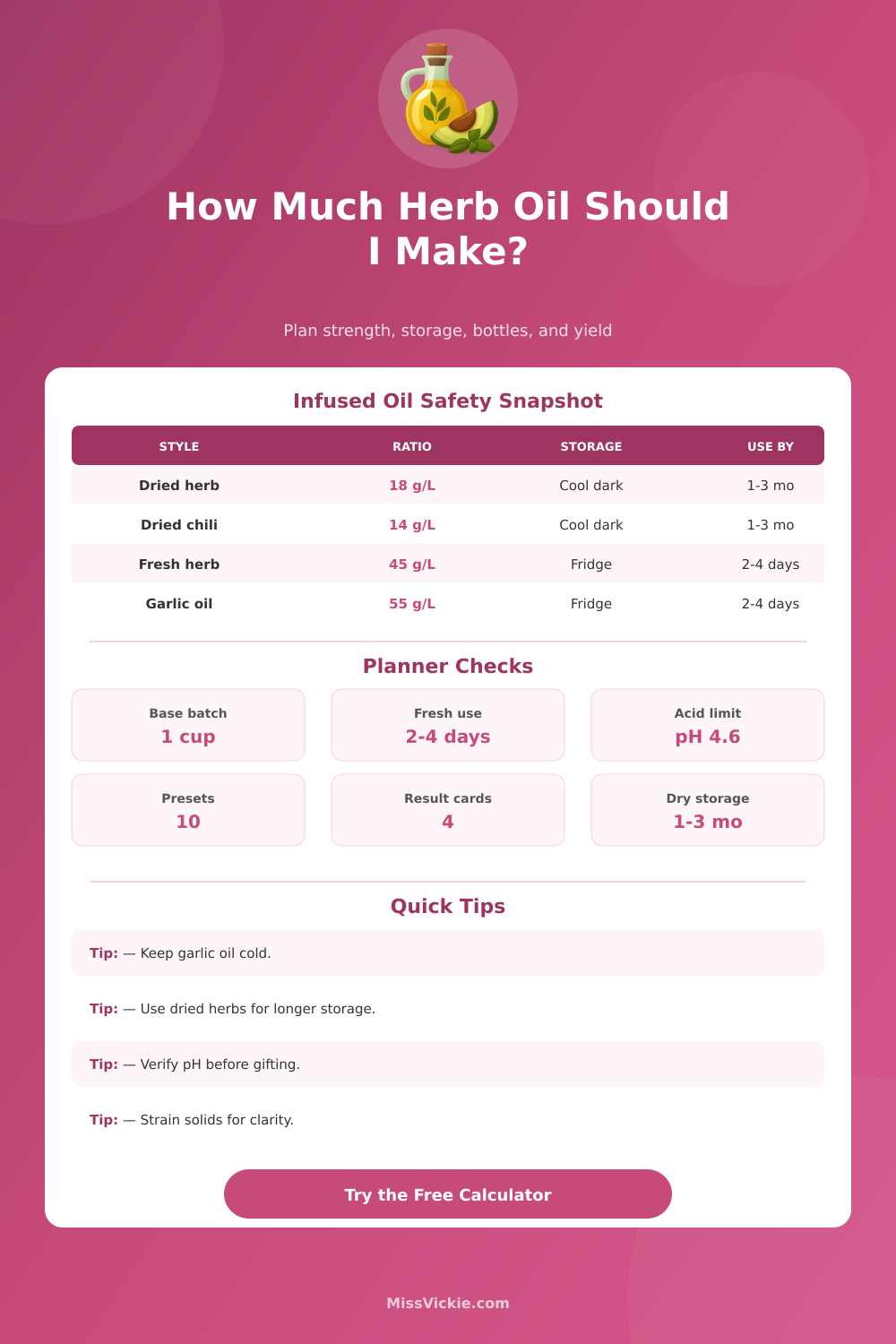
| Infusion style | Base ratio | Useful notes | Best batch size |
|---|---|---|---|
| Dried herb oil | 18 g per liter | Rosemary, oregano, thyme, basil, bay, or dried citrus peel. | 1 to 4 cups |
| Dried chili oil | 14 g per liter | Flakes or whole dried chiles usually release quickly in warm oil. | 1 to 3 cups |
| Fresh herb oil | 45 g per liter | Plan a small refrigerated batch and use it quickly. | 1 to 2 cups |
| Fresh garlic oil | 55 g per liter | Keep cold, make a small amount, and do not hold at room temperature. | 1 cup |
| Acidified garlic or herb oil | 55 g per liter | Use only with a tested process and pH verification at 4.6 or lower. | tested recipe |
| Ingredient type | Room temperature? | Refrigerator | Safety note |
|---|---|---|---|
| Only thoroughly dried herbs or dried spices | Possible for short quality storage | Better quality up to about 1 to 3 months | Keep water out and strain cleanly. |
| Fresh garlic in oil | No | Use within 2 to 4 days | Garlic in oil is a known botulism concern. |
| Fresh herbs or fresh vegetables in oil | No | Use within 2 to 4 days | Make small batches and keep cold. |
| Acidified garlic, herbs, or peppers | Only with tested acidification | Refrigerate for quality | Verify pH 4.6 or lower before oil contact. |
| Fresh herb freezer oil | No | Thaw under refrigeration | Freeze in small portions and label the date. |
| Starting oil | Typical loss | Finished yield | Common containers |
|---|---|---|---|
| 1 cup / 237 ml | 4% to 8% | 218 to 228 ml | One 8 fl oz jar, slightly shy |
| 2 cups / 473 ml | 5% to 10% | 426 to 449 ml | Two 200 ml bottles plus a tasting pour |
| 750 ml | 6% to 12% | 660 to 705 ml | Three 200 ml bottles plus extra |
| 1 liter | 6% to 12% | 880 to 940 ml | Four 200 ml bottles or one large jar |
Best for dried herbs when you want clear oil and gentler flavor extraction.
Best for dried chili, rosemary, thyme, and sturdy dried aromatics.
Best for a short-use refrigerated fresh herb oil with extra straining loss.
Make only what you will use quickly and keep it cold the entire time.
Use a proven acidification process and confirm pH before combining with oil.
Freeze fresh herb oil in small portions when the batch is not for immediate use.
Separate flavor from storage
It is fine to want a strong garlic or basil flavor, but the storage plan must follow the highest-risk fresh ingredient in the jar. When fresh garlic, fresh herbs, or fresh peppers are involved, plan cold storage and quick use unless you are following a verified acidified process.
Plan yield after straining
Herbs, chili flakes, garlic pieces, filters, and sediment can hold back several percent of the starting oil. Use a realistic straining loss so you do not promise more bottles than the batch can actually fill.
Making infused oil requires consider many different variables because many variables impact teh flavor of the infused oil and the safety of the infused oil. The amount of solid material that is to be included in the infused oil need to be decided, the way that the infused oil is to be stored needs to be decided, and even how many bottle of infused oil are to be filled needs to be decided. Each of these variables needs to be considered in order to successfuly make infused oil.
The strength of the infused oil needs to be considered, as the strength of the infused oil will change the amount of herb, chili, or garlic that is included in that infused oil. If the infused oil is to be used as a background flavoring for a meal, a more delicate flavor of infused oil should be created. However, if the infused oil is to be used as a finishing oil, a more bold flavor of infused oil should be created.
How to Plan and Keep Infused Oil Safe
The amount of solid material to include in the infused oil can be calculated with a calculator in order to ensure that the infused oil isnt deficient in it’s flavoring ingredients. The way that the infused oil is to be stored also needs to be considered with an infused oil that contains different ingredient. For instance, dried herbs can remain on a shelf in the kitchen.
However, if the infused oil contains fresh garlic and fresh herbs, it will contain the moisture that the herbs and garlic naturaly contain. Because bacteria can grow in the presence of moisture, infused oil that contains fresh garlic or fresh herbs should be stored in the refrigerator to prevent bacterial growth in those ingredients, and the individual that make the infused oil should utilize it in a timely manner. Straining loss is also one of the factor to consider in making infused oil.
The solid ingredients of infused oil often hold onto the oil itself. Whether the solid ingredients are herbs or garlic, the pieces of these ingredients will naturally hold onto the infused oil, even after the ingredients are pressed. Additionally, the filters for the infused oil may also naturally catch some of the infused oil droplets that may be created during the straining of the infused oil.
Thus, the amount of infused oil that will exit the strainer will be less than that which is started in the infusion; taking this into consideration will allow the maker of the infused oil to account for the natural straining loss of infused oil. An additional variable to consider when making infused oil is the method for making the infused oil. One method is the use of steeping infused oil at cold temperature; cold steeped infused oil is often used for dried herbs.
However, warming the infused oil will warm the oil to extract the essential oil from dried chili or other dried aromatics. Additionally, blending the infused oil and solid ingredients will create a stronger infused oil than if the oil was allowed to steep, but the infused oil may become cloudier after blending the ingredients, and some of that oil will become trapped in those solid ingredients. The size of the bottles of infused oil and how much of the infused oil that each bottle holds can have a major impact on how often those bottles of infused oil are opened and utilize by their owners.
For instance, if the infused oil is contained within large jars, it is possible for those bottles of infused oil to become finished before their infused oil can be utilized. Thus, smaller bottles of infused oil are often created, which allow the infused oil to be kept in fresh portion and easily distributed to those who would like to utilize the infused oil in their cooking. When planning how much infused oil to create, it is important to also consider the loss of infused oil that may occur during the transfer of that infused oil from its initial container into another container.
Each time that infused oil is poured, some of the infused oil may become lost on the funnels or measuring cup that are utilized during the transfer of the infused oil from one container to another. Thus, infused oil can be lost during these transfers; planning for this loss will ensure that the infused oil that is created will have an accurate measure of how much infused oil will be created. Many people make mistake with infused oil.
For instance, many individuals may create infused oil using fresh basil, but they may not understand that those infused oils will not last as long as infused oil made with dried rosemary. Additionally, another mistake that many people make is that they may store infused oil that contains fresh garlic at room temperature; however, if bacteria can grow in the presence of moisture, and fresh garlic naturaly contains moisture, storing infused oil with garlic at room temperature is not an option for those who wish to create and store their infused oil in a way that is safe to consume. In general, then, the main goal for planning the creation of infused oil is to ensure that the infused oil has the flavor that is desired from the individual who made the infused oil, but that the oil is safe to consume by those who utilize that infused oil in their kitchens.
The flavor of the infused oil should be matched to the habit of the individual’s kitchens; the number of meals that contain oil that is infused with herbs or chili will determine how much infused oil the individual should create. For instance, if an individual use infused oil in their recipes often, they may create a small batch of infused oil with fresh herbs. However, if they do not often use infused oil, they may create dried herbs or chili infused oil so that it can remain on the counters in their kitchens.