MissVickie kitchen math
Infused Butter Calculator
Plan a culinary herb butter batch by combining butter mass, ingredient potency, yield loss, serving size, steep time, and steep temperature into one clear concentration estimate.
These presets are flavor-planning examples for culinary herbs, aromatics, spices, and tea-style ingredients. You can overwrite any value after selecting one.
Full breakdown
Steep and concentration readout
Run the calculator to see how time, temperature, yield loss, and serving size shape the batch.
| Starting butter | Starting grams | 8% loss | 12% loss | 18% loss | Useful note |
|---|---|---|---|---|---|
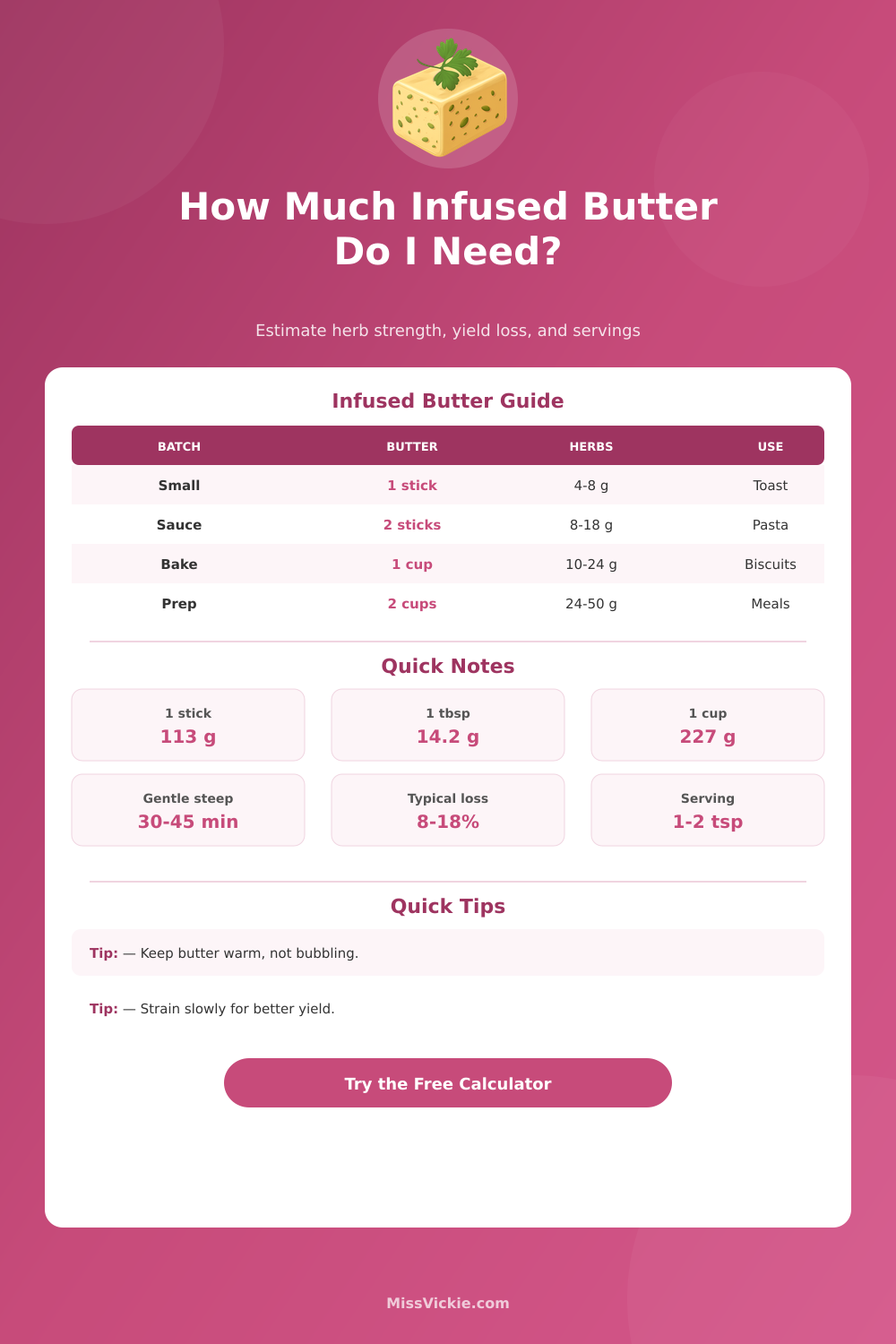
| 1 stick | 113 g | 104 g | 100 g | 93 g | Good for a test batch or one dinner. |
| 2 sticks | 227 g | 209 g | 200 g | 186 g | Common size for sauces, vegetables, and compound butter logs. |
| 1 cup | 227 g | 209 g | 200 g | 186 g | Same mass as 2 sticks in standard U.S. butter math. |
| 1 pound | 454 g | 418 g | 399 g | 372 g | Better for batch cooking when straining loss matters. |
| 500 g | 500 g | 460 g | 440 g | 410 g | Easy metric batch with round serving math. |
| Ingredient family | Typical grams per cup butter | Gentle temp | Steep range | Watch for |
|---|---|---|---|---|
| Woody herbs | 8-18 g | 150-175 F | 25-50 min | Stems can taste resinous if pushed too long. |
| Tender leafy herbs | 10-28 g | 125-155 F | 10-25 min | Color dulls quickly, so strain early for freshness. |
| Aromatics and citrus peel | 8-22 g | 145-170 F | 20-45 min | Minced garlic browns fast if the pan gets hot. |
| Dry spices and chili | 2-10 g | 150-185 F | 15-35 min | Powders keep infusing after heat is turned off. |
| Vanilla, tea, and sweet spice | 3-14 g | 135-165 F | 20-45 min | Tea can turn tannic, so taste before extending. |
| Serving size | Approx grams | Servings from 200 g | Servings from 400 g | Best fit |
|---|---|---|---|---|
| 1 tsp | 4.7 g | 42 | 85 | Toast, steamed vegetables, small finish. |
| 1.5 tsp | 7.1 g | 28 | 56 | Balanced everyday serving. |
| 2 tsp | 9.5 g | 21 | 42 | Baked potato, corn, warm rolls. |
| 1 tbsp | 14.2 g | 14 | 28 | Pan sauce, pasta toss, finishing steak. |
| 2 tbsp | 28.4 g | 7 | 14 | Recipe component or family-style dish. |
| Potency units per gram | How to use it | Good examples | Calculator effect |
|---|---|---|---|
| 2-6 units/g | Mild flavor material or very gentle goal. | Fresh parsley, mild citrus zest, green herbs. | Lower per-serving number unless ingredient mass is high. |
| 7-14 units/g | Standard pantry-strength aromatic planning. | Rosemary, thyme, sage, garlic, vanilla. | Balanced starting point for most savory butters. |
| 15-30 units/g | Concentrated dry spice or assertive ingredient. | Chili flakes, chai spice, dried mushroom powder. | Small mass can still produce a strong estimate. |
| 31+ units/g | Use only when you have a measured in-house scale. | House blends, extracts, strong spice dusts. | Serving size becomes the most important control. |
Measure before and after straining
Weigh the warm strained butter in grams. That finished mass is the number that controls real serving count and concentration per serving.
Change one variable per batch
If the flavor is too light or too bold, adjust ingredient mass, potency units, steep time, or serving size one at a time so your next batch is easier to repeat.
This calculator is for culinary recipe planning only. It uses custom flavor-strength units and general kitchen yield math for herbs, spices, aromatics, and sweet pantry infusions.
Infused butter can be made with the consideration of several variable, including the amount of butter to be used, the amount of herb to be added to the butter, and the temperature at which you will heat the butter. If these variable are not planned for before making the infused butter, the flavor of the butter may not be as expected, and the weight of the infused butter may not be as expected. The first of the variables to consider is the proportion of the infused butters ingredients.
You can decide the amount of butter to be used in the recipe, as well as the amount of herb or spices to be added to the butter. The flavor strength of the herbs can change the amount of herb that is need to flavor the butter. For instance, herbs that are strong in flavor can be used in more smaller amounts than herbs that are lighter in flavor.
Things to Consider When Making Infused Butter
A calculator can help to determine the amount of herb that will be needed to flavor the butter based off the type of herb that will be used. The second of the variables to consider is the temperature and the length of time in which the butter will be heated. The heat that you use to infuse the butter should be gently, as heating the butter to high temperatures can change the flavor or color of the butter.
Using gentle heat will allow the butter to absorb the herb flavors while preventing the herbs from acquiring a bitter flavor. The time that the butter is heated may change depending upon the herbs that are being used. For instance, butters made with woody herbs may heat for a different length of time then butters made with delicate herbs.
Additionally, butters made with dried spices may heat for a different length of time than butters made with fresh herb. Heating the butter for too short of a time will result in insufficient flavor of the herbs in the butter. Heating the butter for too long will result in the flavors of the herbs becoming more dull.
The third variable to consider includes the potential for loss of yield of the infused butter. Some of the infused butter will remain on the herbs, some of the infused butter will remain on the strainer, and some infused butter can be lost during the straining of the infused butter. The type of butter that is used can affect the loss of yield.
For instance, clarified butter contains less water and solids than cultured or salted butter. The method by which you strain the infused butter can also impact the loss of yield. Using a firm press will result in more infused butter being yielded than straining the infused butter slow through a cheesecloth.
However, using a firm press may result in fine particle of herb remaining in the infused butter. Straining the infused butter slowly through a cheesecloth will result in infused butter that is more clarified but more of the infused butter may remain in the cheesecloth. The fourth variable to consider is the size of the servings of infused butter.
Infused butter can contain a certain amount of infused butter per serving, which can be used for a single meal. The amount of infused butter that is used on a type of food can differ from another type of food. For instance, the amount of infused butter that is used on toast can contain more infused butter than the amount that is used on pasta.
The size of servings can help to determine the number of servings of infused butter that can be made from the batch of infused butter that is prepared. Depending upon the herbs that are used in the infused butter, those herbs may need to be treated differently during the preparation process. For instance, herbs like tender basil should be heated to lower heat levels and for shorter periods of time than herbs like rosemary and thyme.
Using the same length of time to heat both basil and rosemary may result in the basil containing insufficient flavor compared to the rosemary, or the rosemary may have an inappropriate flavor of pine needles. It is important to treat each herb different so that the flavor is balanced. Finally, it is important to consider the effect that time will have upon the infused butter after it is strained.
Warm infused butter may contain small particles of herbs that remain in the infused butter and may settle to the bottom of the container of infused butter. Allowing the infused butter to sit for a few minutes after it is made will allow these particle to settle, which may improve the clarity of the infused butter. Additionally, using a planning tool will allow an individual to understand the flavor concentration within the infused butter that is made.
Furthermore, using a planning tool will allow for the calculation of the amount of ingredients that should of been used if there is a change to the infused butter’s ingredients. Infused butter is a matter of the management of the proportion of the ingredients and variables to the infused butter.