Ice Cream Ratio Calculator
Balance cream, milk, sugar, egg yolk, stabilizer, sweetness, PAC-ish softness, overrun, and finished yield for custard, gelato, Philadelphia, soft serve, and fruit styles.
Pick a tested starting profile, then tune fat, dairy split, sugar blend, stabilizer, and freezer softness.
Your Balanced Ice Cream Mix
Calculated from finished yield, overrun, dairy fat, sweetness, and stabilizer settings.
Ingredient Breakdown
| Style | Butterfat | Sweetness | PAC-ish | Overrun |
|---|---|---|---|---|
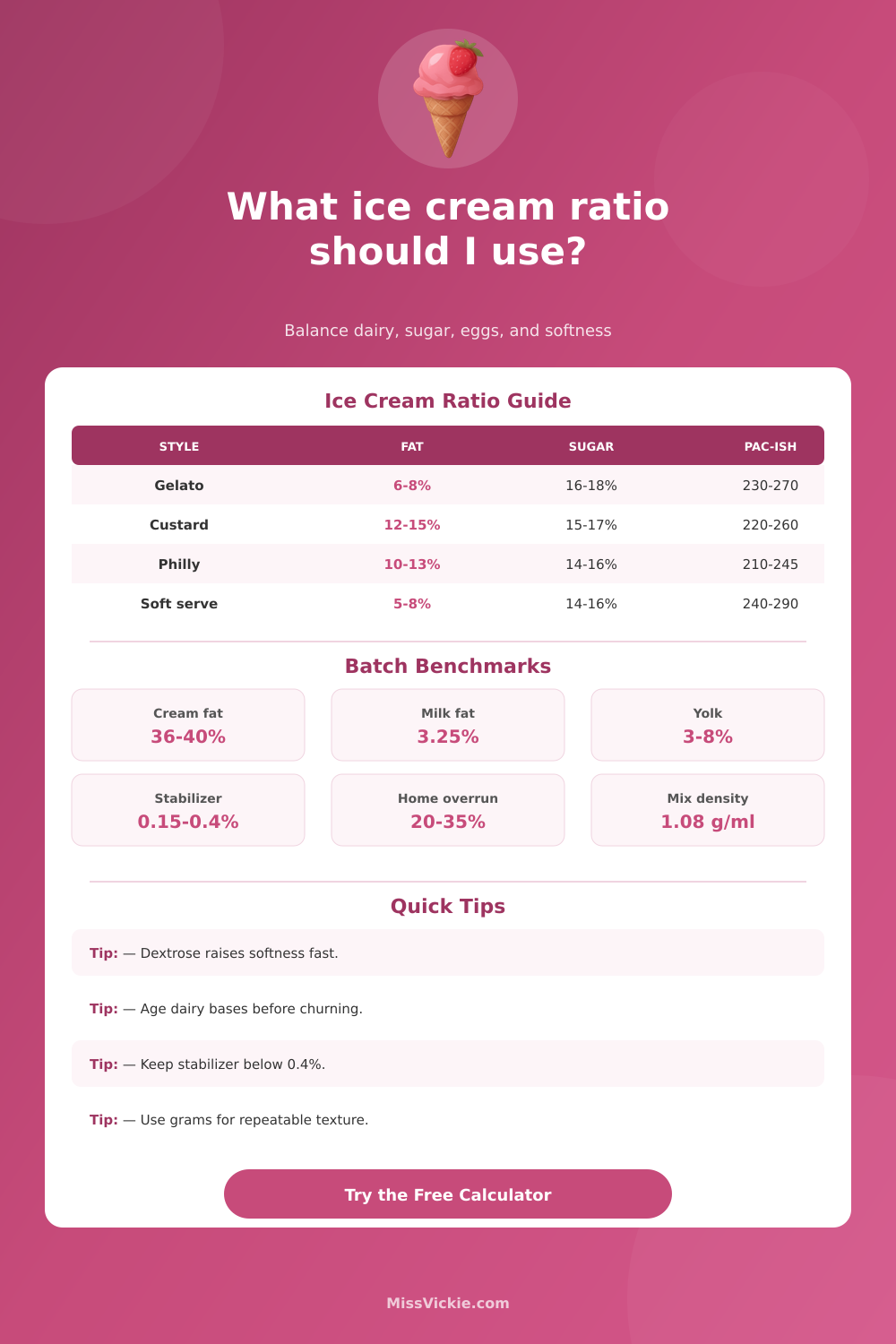
| Classic custard | 12-15% | 15-17% | 220-260 | 20-35% |
| Philadelphia style | 10-13% | 14-16% | 210-245 | 25-40% |
| Dense gelato | 5-8% | 16-18% | 230-270 | 10-25% |
| Soft serve base | 5-8% | 14-16% | 250-300 | 35-65% |
| Light ice cream | 4-7% | 15-18% | 245-290 | 25-45% |
| Frozen yogurt style | 3-6% | 16-19% | 250-300 | 20-35% |
Use these ranges as formulation guardrails, then taste and churn a small batch before scaling for a party or service.
| Ingredient | Sweetness | PAC-ish Factor | Best Use | Texture Effect |
|---|---|---|---|---|
| Sucrose | 100% | 1.0 | Base sweetness | Clean scoop, familiar taste |
| Dextrose | 70% | 1.9 | Softening hard bases | Softer freeze with less sweetness |
| Lactose from milk | 16% | 1.0 | Dairy background | Adds solids and mild sweetness |
| Fruit sugar | 90-120% | 1.4-1.9 | Berry and puree bases | Can soften quickly |
| Cocoa powder | 0% | 0.1 | Chocolate bases | Raises solids and dryness |
| Component | Low | Medium | High | Watch For |
|---|---|---|---|---|
| Egg yolk | 0-3% | 4-7% | 8-10% | Too much can taste eggy |
| Stabilizer | 0.10-0.18% | 0.20-0.32% | 0.35-0.45% | Too much can feel gummy |
| Skim milk powder | 0-2% | 3-5% | 6-8% | Too much can taste cooked |
| Total solids | 32-36% | 37-42% | 43-46% | High solids churn dense |
| Finished Yield | 20% Overrun Mix | 30% Overrun Mix | 40% Overrun Mix | Typical Use |
|---|---|---|---|---|
| 1 pint | 394 ml | 364 ml | 338 ml | Small test batch |
| 1 quart | 789 ml | 728 ml | 676 ml | Home churner batch |
| 1.5 quarts | 1183 ml | 1092 ml | 1014 ml | Family dessert |
| 2 quarts | 1577 ml | 1456 ml | 1352 ml | Party container |
High cream, yolks, and moderate PAC for a rich scoop that holds shape.
Lower butterfat, higher solids, and lower overrun for dense flavor.
No egg yolk by default, clean dairy flavor, and faster cooking workflow.
Higher PAC-ish target and overrun keep the base softer from the machine.
Making ice cream at home requires that you manage a variety of variable that will ultimately change teh texture of the ice cream. The amount of cream that is used, the amount of sugar, the presence of egg, and the amount of air that is contained within the ice cream will each changes the texture of the finished product. If these variables is not balanced in a way that you desire the texture of the ice cream to be, the ice cream will have the wrong texture.
In order to manage each of these variables, a ratio calculator can be used. A ratio calculator allow you to adjust each of these variables in the recipe to achieve the texture you would like for your ice cream. The first variable that you must decide upon is the fat content of your ice cream base.
How to Use a Ratio Calculator for Homemade Ice Cream
High fat content will produce an ice cream that feels richly to the eaters and has a slower melting time. For instance, custard based ice creams contain between twelve and fifteen percent fat content, while gelato has a lower fat content. The ratio calculator will allow you to select the fat content that you would like your ice cream to have.
Based on your selection, the calculator will tell you how much cream and milk should be use in order to achieve that fat content. If you select a recipe that contains less cream to provide a lighter ice cream to the eater, the ratio calculator will compensate for this by adding more milk to the recipe to maintain the same total weight for the dairy based ingredients. Another variable to manage is the sweetness of the base.
You can decide how sweet you would like your ice cream to be, and you can also choose that the ice cream should remain soft when place into the freezer. The ratio calculator allows you to set both these variables simultaneously. The calculator will show you how much sucrose and dextrose to add to achieve the desired softness of the ice cream.
Since dextrose lowers the freezing point of the ice cream base to a lower temperature than sucrose does, adding dextrose will prevent the ice cream from being too hard. Additionally, the ratio calculator allows you to monitor the freezing point depression value of the base to ensure the sweetness is correct. Another variable to consider is the amount of air that should be contained within the ice cream.
Commercial ice cream makers introduce a large amount of air into the ice cream to create a soft texture when eaten. Home ice cream makers, however, introduce less air into the ice cream. The ratio calculator will ask for the percentage of air that you would like in your ice cream.
Based on this percentage, the calculator will add a buffer for the aging of the ice cream and the amount of ice cream base that will remain in the machine. This ensures that you will have enough base to fill your container with finished ice cream. The calculator will provide an indication of the weight of the base that should be prepare prior to freezing.
Stabilizers and milk powder can be added to the base to affect the solids content of the ice cream. Stabilizers will prevent the formation of large crystals of ice within the ice cream. Too many of this ingredient, however, can make the ice cream feel gummy when eaten.
Powdered skim milk will increase the solids content of the ice cream without increasing the fat content of the base. Both of these ingredient can be entered into the ratio calculator, which will provide you with information regarding how much of each ingredient will affect the total solids content of your base. By utilizing a ratio calculator, you can treat your various recipes as adjustable.
For instance, if you would like to incorporate fruit into your ice cream, the ratio calculator will tell you that the fruit will add both water and sugar to the base. Based on these variables, you will be able to decide if changes need to be made to the amount of milk or another ingredient containing water, or if adjustments are needed to the amount of stabilizer. Additionally, the ratio calculator can help you adjust the recipe to account for creating a larger batch of ice cream.
By changing the amount of ice cream that is to be created, the ratio calculator will provide information to each of the variable for the recipe so as to ensure that you purchase the correct amount of cream and sugar. It is common for individuals to make mistake when adjusting the recipe for ice cream. For instance, many people will increase the amount of cream that is contained in the recipe to provide a more richer taste to the ice cream.
Increasing the amount of cream, however, can cause the ice cream to become too hard when frozen. Another example of the type of mistake is individuals adding more dextrose to the batch to provide softer ice cream. This can, however, lead to the ice cream being too sweet.
These tradeoffs are made visible to the individual that utilizes the ratio calculator. If the recipe is unbalanced, a status label will indicate which variable is unbalanced. One way of testing your new recipe is to produce a small batch of ice cream according to the calculations performed by the ratio calculator.
Once you have prepared this batch and allowed it to harden in the freezer overnight, you can taste the ice cream. If the texture is not what you desire, adjust only one variable at a time. By repeatedly making adjustments to one variable at a time, you will eventually become aware of how each variable can impact the texture of the ice cream.
By understanding these variables and how they impact the ice cream, you will be able to prepare various style of ice cream.