Hummus Per Person Calculator
Plan hummus by guest count, appetizer or mezze role, serving ounces, chickpea yield, tahini and lemon balance, dipper type, platter time, garnish oil, leftovers, and store-bought tub size.
Choose a real serving scenario, then adjust the guest count, role, portion size, chickpea source, dipper style, platter duration, oil garnish, leftovers, and container size.
Your Hummus Plan
Calculated for the selected guests, role, dips, yield, garnish, and leftover plan.
Portion Breakdown
Ingredient Breakdown
| Role | Typical Hummus | Best For | Planning Note |
|---|---|---|---|
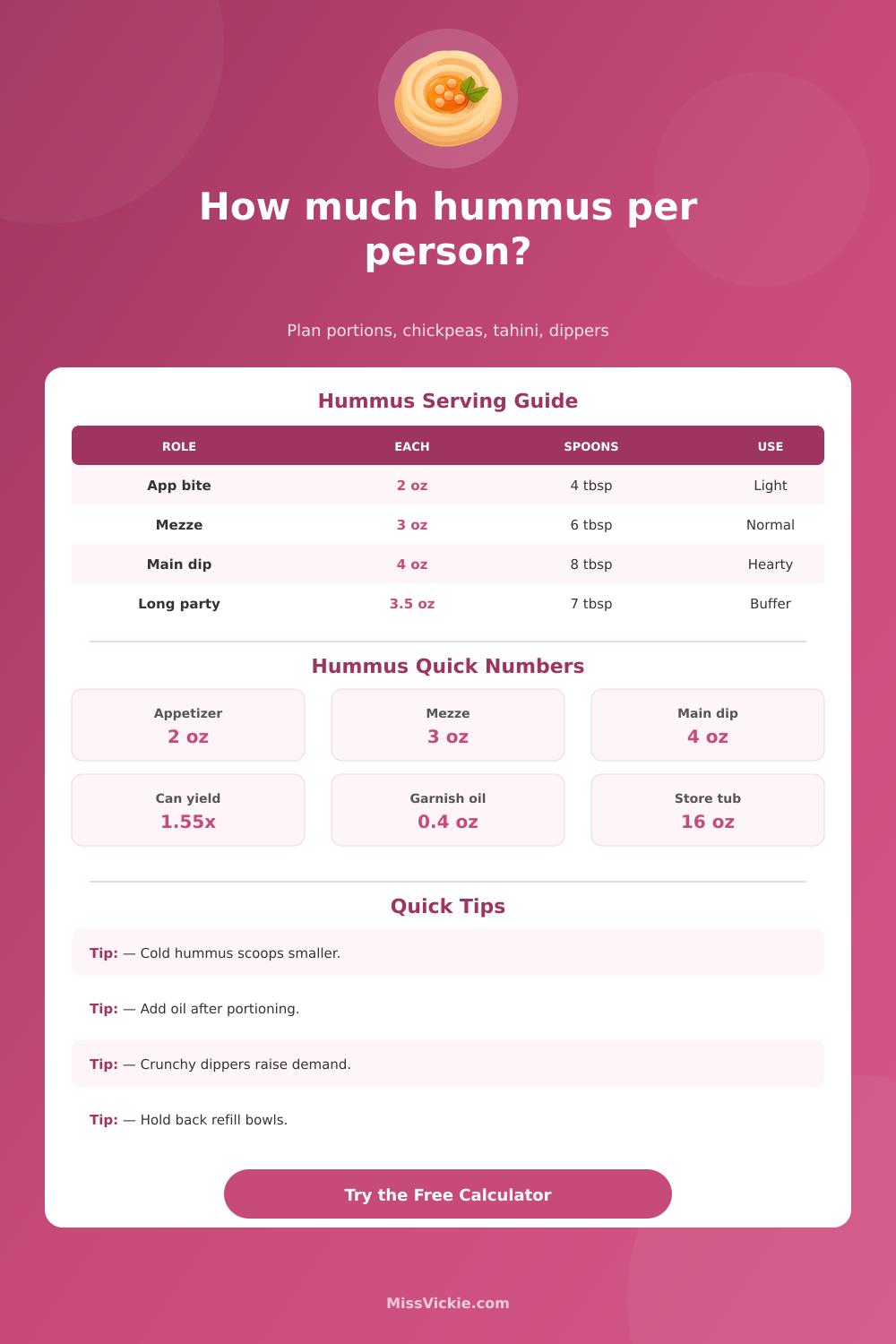
| Light appetizer bite | 1.75 to 2.25 oz per person | Short pre-dinner snack boards | Works when there are cheeses, olives, nuts, and other dips nearby. |
| Appetizer with other snacks | 2.25 to 2.75 oz per person | Casual parties and potlucks | The safest default when hummus is one of several appetizers. |
| Mezze platter feature | 2.75 to 3.5 oz per person | Pita, vegetables, olives, falafel, tabbouleh | Use a larger serving when hummus is central to the platter. |
| Main dip or lunch spread | 3.5 to 4.5 oz per person | Lunch bowls, flatbread spreads, hearty grazing | Guests treat hummus like part of the meal, not just a dip. |
| Individual cups or meal prep | 3 to 4 oz per cup | Pre-portioned snacks, lunches, school packs | Round up to fill cups neatly and avoid under-filled portions. |
| Chickpea Source | Usable Chickpeas | Finished Hummus Yield | Calculator Use |
|---|---|---|---|
| 15 oz can, drained | About 8.8 oz drained chickpeas | About 13.5 to 14 oz hummus | Best everyday shortcut for small and medium batches. |
| 15 oz can plus aquafaba | About 8.8 oz chickpeas plus liquid | About 14.5 to 15 oz hummus | Useful for softer, lighter hummus without adding much oil. |
| Dry chickpeas | 1 lb dry makes about 6 to 7 cups cooked | About 3 lb finished hummus | Good for parties, catering, and meal prep batches. |
| Store-bought hummus | Already blended | Container weight equals hummus weight | Calculator rounds up to whole tubs based on selected size. |
| Dipper Type | Demand Effect | Why It Matters | Good Pairing |
|---|---|---|---|
| Vegetable sticks | Lower to normal | Carrots, cucumbers, and peppers carry smaller scoops. | Use lighter portions for a fresh appetizer board. |
| Pita and vegetables | Normal | A balanced mix gives predictable hummus use. | This is the default for mezze planning. |
| Pita chips or crackers | Higher | Crunchy dippers encourage repeated scooping. | Add a refill bowl for long parties. |
| Warm flatbread | Higher | Bread-heavy platters turn hummus into a spread. | Use mezze or main-dip portions. |
| Falafel and bowls | Highest | Hummus acts as sauce, dip, and side. | Plan closer to 4 oz per person. |
| Container Size | Approx Cups | 2.5 oz Servings | Best Use |
|---|---|---|---|
| 8 oz small tub | 1 cup | 3 servings | Small snack board or two meal prep cups. |
| 10 to 12 oz tub | 1.25 to 1.5 cups | 4 to 5 servings | Family appetizer with vegetables. |
| 16 oz family tub | 2 cups | 6 servings | One dinner party appetizer bowl. |
| 24 to 32 oz party tub | 3 to 4 cups | 9 to 12 servings | Potluck, brunch spread, or refill station. |
For food safety, keep chilled backup hummus separate and refresh the platter with clean utensils during long service.
Best when you want to tune tahini, lemon, texture, and garnish for the group.
Best for tight timelines because the calculator rounds up whole containers.
A practical middle point when hummus shares space with pita, vegetables, and sides.
Better for lunches because each portion needs enough hummus to feel complete.
Plan your hummus portions so you don’t run out at a party. Realizing you have twelve people coming over for mezze and only one small tub of store-bought hummus can cause a specific kind of panic. Running out before all the appetizers is gone causes anxiety because we see hummus as just a dip, rather than something to include in our meal planning.
How much each guest consume depends on what other items appears alongside it. With a couple of cheese, some olives, hummus becomes a light snack and portion size shrinks accordingly. When paired with falafel and warm flat bread, hummus take center stage and portion size expands. Knowing the difference mean knowing how to keep platter full.
How to Plan Your Hummus Portions
By selecting your guest count and whether it’s a serving or finger food, the calculator tells you what’s just right. It prevents guesswork, how many ounces will two be? Four? How many guests over-estimate hummus consumption if there are crunchy dippers around?
If you use vegetable sticks, you’ll get smaller, lighter scoops since no one wants soggy veggie sticks. Switching to pita chips changes that equation. Because they’re made for aggressive dipping, they promote multiple returns to the bowl. Warm flatbread wedges change the experience into something different, not a dip but a spread. People consumes more as a result.
Portion accuracy also depends on temperature. If the hummus is cold right out of fridge, it will result in much smaller scoops than one that has reached room temperature. Because it’s firmer and denser, what appears to be a big scoop in your mind might realy only weigh half as much. Letting the container warm up for 20 minutes prior to serving can help with this (and makes the scoops appear more generous then they are, so no digging around for each bite).
By including these textural truths in its design, the tool compensate for both consistency and style. Bright lemon variations and extra-tahini rich blends is weighed to match their lighter counterparts.
When you make a batch from scratch, home cooks typicaly miscalculate yield. Fifteen ounces of chickpeas out of the can doesn’t equal fifteen ounces of hummus. Some of that liquid gets drained off during blending; then there’s the volume added by tahini, lemon juice, garlic and olive oil. By the time it’s all done, the finished hummus weigh a little more, but its volume seems smaller (because it’s denser).
If you soak and cook your own dry chickpeas, the math change once more. Properly blended, dry beans have pockets of air within them, so they’ll have different texture. The more you know about what you’re starting with, the better you can estimate how many cans or cups of dry bean to purchase.
The “garnish” layer of oil is often confused with amount that’s being served. Consider this an embellishment instead of padding. While some drizzled olive oil will certainly enrich the taste and create visual appeal (a nice swirl), it won’t replace any of the hummus itself. People comes here for the hummus, not the oil. When you divide your hummus into layers in the calculator, it keeps the oil separate from the rest of the dish. That way, when you’re running low on supplies at a long party, you don’t order more by area because the oil has already been consumed, leaving behind a layer of hidden goodness beneath.
One thing we always forget about parties is leftover buffers, and these is crucial when it comes to meal preparation! When planning for your party, remember that whatever you serve initially won’t last as long than you think. Because people snack throughout the event (up to 2+ hours), the first portion will be gone in no time. A simple ten to twenty percent buffer helps so you don’t have to scrounge around looking for back-up containers. This prevents interrupting the conversation because everyone’s bowl is empty just as the entree hits the table or as people starts leaving.
With hummus, it’s all about planning: How many grams? Make enough to be plenty, but not so much that it goes bad in your fridge for weeks. What textures? What temperatures? How will guests’ appetites affects how much they eat? Most importantly, how can you create a platter that looks inviting throughout? How much extra do you need to satisfy round two of dipping?
That’s what separates a stress-free host from one who would of forever-refilling-bowls host.