🍺 Homebrew Dilution Calculator
Calculate exactly how much water to add to hit your target ABV and final volume
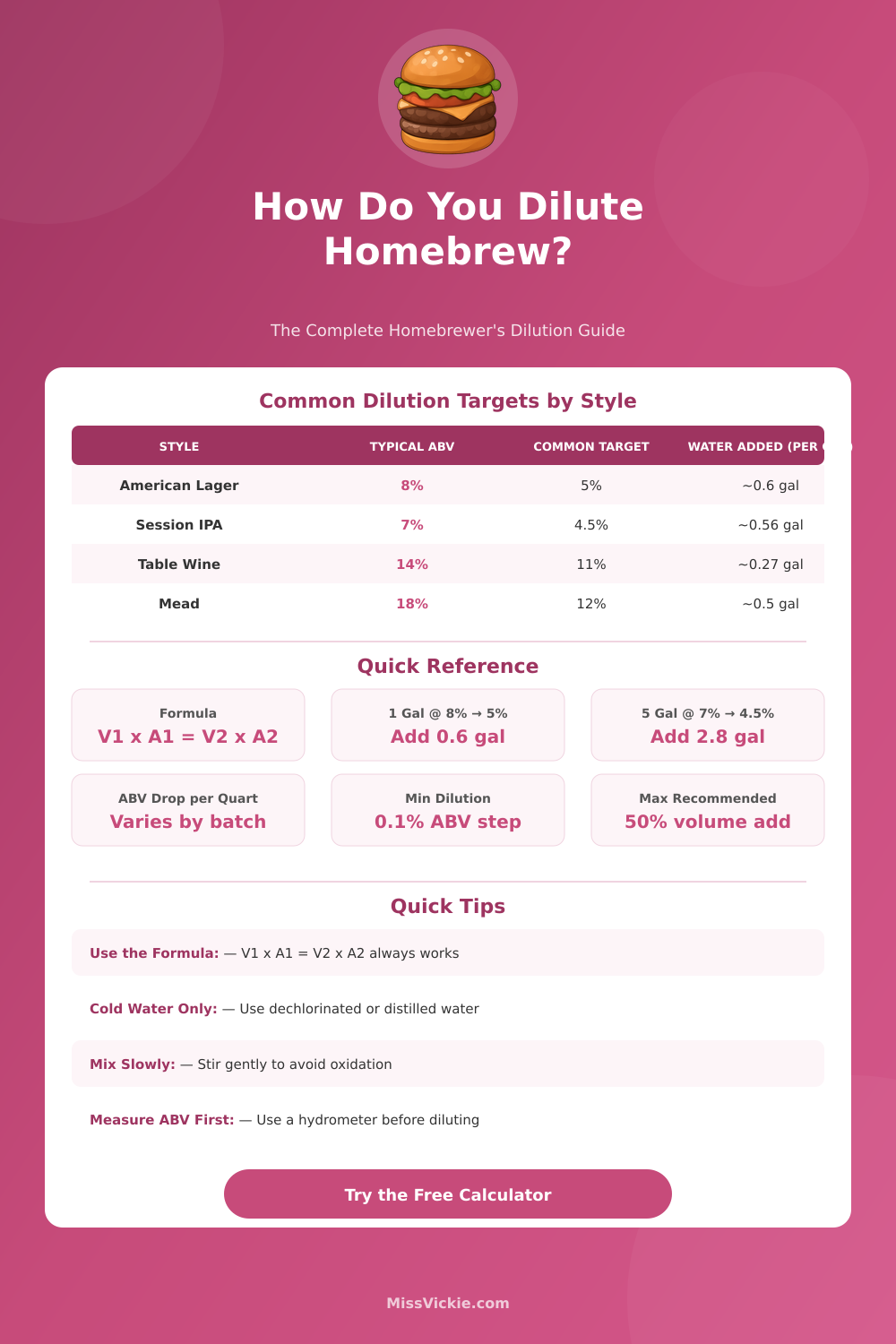
| Starting ABV | Target 4% | Target 4.5% | Target 5% | Target 5.5% |
|---|---|---|---|---|
| 6% | +2.5 gal | +1.67 gal | +1.0 gal | +0.45 gal |
| 7% | +3.75 gal | +2.78 gal | +2.0 gal | +1.36 gal |
| 8% | +5.0 gal | +3.89 gal | +3.0 gal | +2.27 gal |
| 9% | +6.25 gal | +5.0 gal | +4.0 gal | +3.18 gal |
| 10% | +7.5 gal | +6.11 gal | +5.0 gal | +4.09 gal |
| Starting ABV | Target 9% | Target 11% | Target 12% | Target 13% |
|---|---|---|---|---|
| 14% | +0.56 gal | +0.27 gal | +0.17 gal | +0.08 gal |
| 16% | +0.78 gal | +0.45 gal | +0.33 gal | +0.23 gal |
| 18% | +1.0 gal | +0.64 gal | +0.50 gal | +0.38 gal |
| 20% | +1.22 gal | +0.82 gal | +0.67 gal | +0.54 gal |
| Measurement | US Gallons | Liters | Quarts |
|---|---|---|---|
| 1 US Gallon | 1.00 gal | 3.785 L | 4 qt |
| 1 Liter | 0.264 gal | 1.00 L | 1.057 qt |
| 1 Quart | 0.25 gal | 0.946 L | 1.00 qt |
| 5 Gal Batch | 5.00 gal | 18.93 L | 20.0 qt |
| 6.5 Gal Carboy | 6.50 gal | 24.60 L | 26.0 qt |
| 23 L Batch | 6.07 gal | 23.00 L | 24.3 qt |
Homebrewing is making beer, wine, cider and mead in your home. It is a passion that combines brewers, mazers, vintners and cider makers, folks that love the craft, the science and that magic moment when the fermentation starts. The vision of the homebrew community is inspiring: a homebrewer in every neighbourhood and a club in every city.
Our real target is to create a united, well informed community of homebrewers, now and in the future
Homebrewing Basics and Tips
Here is something that could surprise you: homebrewing was not legal at the federal level until 1978. Before Prohibition however it flowered, and even George Washington himself did beer. That history bit gives the hobby extra coolness.
In batch sizes homebrewers most commonly choose 19 liters, which matches 5 gallons according to the American system. That spot exists because many use Cornelius kegs for storage, which hold exactly that much. If you start with all-grain brewing, a 2.5-gallon brew-in-a-bag system could be the best choice.
Many reckon that it is ideally apt, no matter your expereince.
Online forums about homebrewing address almost everything… General chat about brewing, all-grain techniques, recipe swaps, wine making, mead making, and more. Questions about yeast, grains, kits and everything in between always receive explanations.
Most useful is finding forums with already tested recipes, so that newcomers can see what genuinely works. There are also programs, calculators, planners and digital journals that help fix your batches every time.
Getting homebrew supplies is genuinely easy today. Quality starter kits and reliable recipes are available together with high-grade ingredients for brewing and winemaking. Most stores offer free shipping after a certain total, which always helps.
Many rules float around, but actually: try and see, and it will succeed. Blogs and online communities are treasures for answers. Look in homebrew forums and recipe databases, then create your own beers according to something pleasant and your experiences, that is a good way forward.
Except simply drinking, use beer in cooking. The Homebrew Chef Sean Paxton shows clever ways to put beer in everyday meals and dinners. He teams up with pub owners and craft brewers across the country for exclusive multi-course beer meals.
His website offers scalable recipes with beer as a basic ingredient. Beer mustard works, just mix beer with mustard seeds, and you’re done.
Local homebrew stores usually have a big selection of barley malts, plus weird variants like wheat, rye and spelt. Some bakers make bread from homebrew mash, although the moisture balance canbe tricky.