Gumbo Per Person Calculator
Calculate gumbo for any guest count with bowl size, protein mix, roux flour and oil ratio, trinity vegetables, stock reduction, okra or file, rice serving, simmer time, and second-helping buffer.
Pick a real serving scenario, then fine-tune the pot size, rice, thickener, simmer, and second-helping buffer.
Your Gumbo Batch
Portions, pot volume, and ingredient amounts update as you edit the form.
Batch Breakdown
Ingredient Breakdown
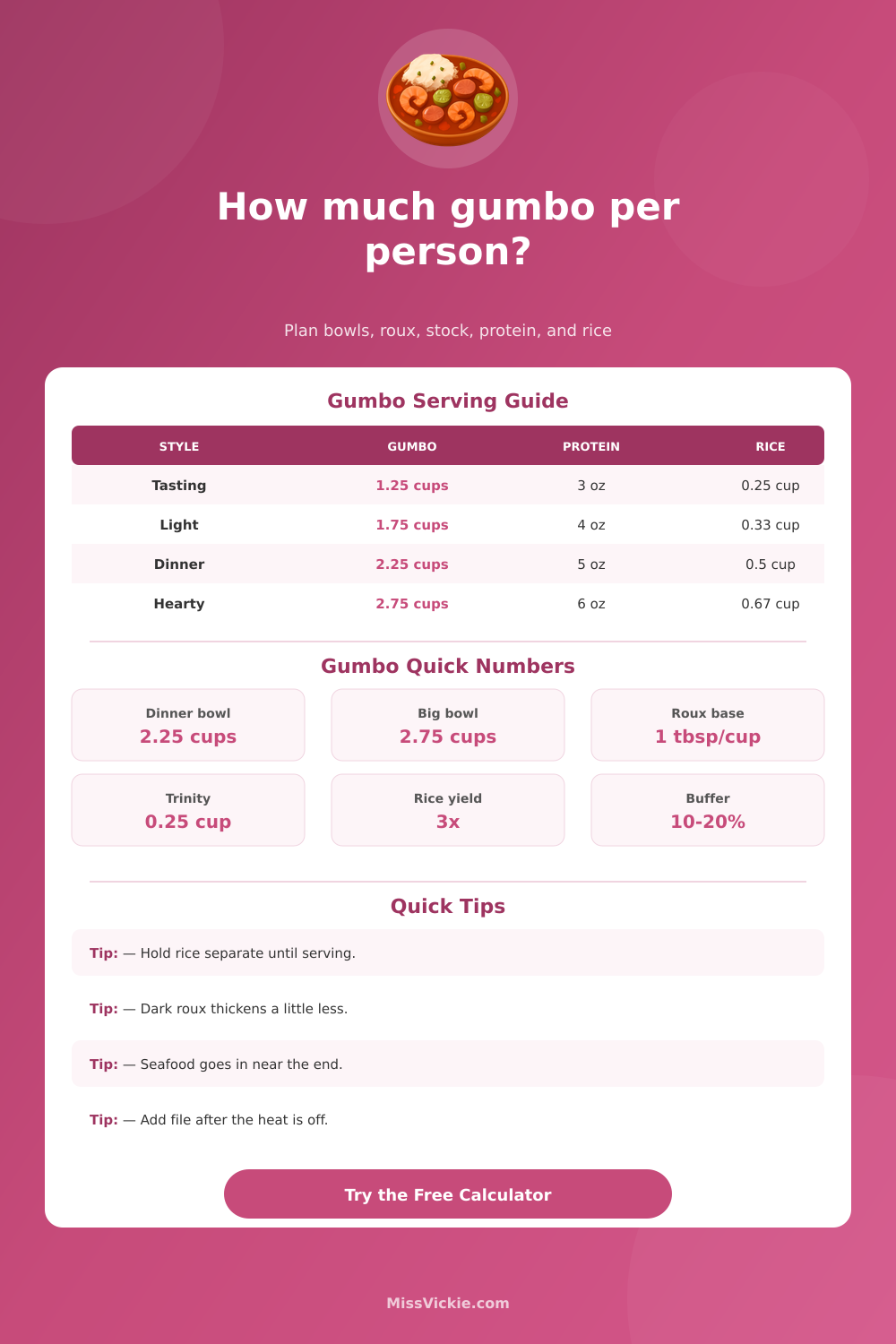
| Serving style | Gumbo per person | Cooked protein per person | Cooked rice per person |
|---|---|---|---|
| Tasting cup or appetizer | 1.25 cups | 3 oz | 0.25 cup |
| Light lunch bowl | 1.75 cups | 4 oz | 0.33 cup |
| Standard dinner bowl | 2.25 cups | 5 oz | 0.5 cup |
| Hearty main bowl | 2.75 cups | 6 oz | 0.67 cup |
| Festival or very hungry crowd | 3.25 cups | 7 oz | 0.75 cup |
| Protein mix | Typical gumbo use | Cooked protein per gumbo cup | Timing note |
|---|---|---|---|
| Chicken and smoked sausage | Classic family pot | 2.45 oz | Add sausage early |
| Shrimp, crab, and seafood | Lighter seafood bowl | 2.1 oz | Add seafood late |
| Duck and andouille | Rich holiday pot | 2.6 oz | Skim extra fat |
| Turkey and sausage | Post-holiday gumbo | 2.35 oz | Use cooked turkey |
| Crawfish and sausage | Boil leftover batch | 2.2 oz | Fold tails in late |
| Vegetable and okra | Meatless pot | 0.7 oz | Use beans if wanted |
| Batch basis | Roux flour | Trinity vegetables | Starting stock |
|---|---|---|---|
| 8 dinner bowls | 1.1 to 1.4 cups | 4.5 cups | 16 to 18 cups |
| 12 dinner bowls | 1.7 to 2.0 cups | 6.8 cups | 24 to 27 cups |
| 25 dinner bowls | 3.5 to 4.2 cups | 14 cups | 50 to 57 cups |
| 50 dinner bowls | 7 to 8.5 cups | 28 cups | 100 to 114 cups |
| Choice | Amount guide | Best timing | What it changes |
|---|---|---|---|
| Gentle 45 minute simmer | 8 percent extra stock | Covered partly | Fresh flavor |
| 75 minute simmer | 12 percent extra stock | Low bubbling | Balanced body |
| 2 hour simmer | 18 percent extra stock | Stir often | Deeper taste |
| Okra in the pot | 0.125 cup per cup | Last 30 minutes | Extra body |
| File powder | 0.5 tsp per bowl | Off heat | Herbal finish |
About 18 cups gumbo before a second-helping buffer.
Plan 36 cups for dinner bowls, then add your buffer.
Use at least a 24 quart cooking vessel for standard bowls.
Split across pots so the roux and seafood stay manageable.
The calculator estimates practical kitchen quantities for cooked gumbo. Very salty sausage, heavily reduced stock, or a wide uncovered pot can shift the final seasoning and volume.
Gumbo-making requires certain math, which means no more worry in the kitchen. Stirring the roux until it turns dark is easy, but estimating how much gumbo to make for how many people are not. Not so much. How little can you get away with serving? Should I plan for everyone having a heaping bowl or just a taste of something?
No worries, as long as you do some planning, because the math takes care of those kinds of questions; how much one ingredient will yield how much at the end. And that’s where the tool on this page come into play: It lets you know exactly how many quarts of stock to buy before you start cooking.
How Gumbo Math Makes Cooking Easy
Home cooks tend to undervalue added volume from vegetables and thickeners. To account for onion, celery and bell pepper mass, I built it into the calculator. They may bulk up the dish but they’re full of flavor and substance. For settings that include extra vegetable, the app will adjust yield accordingly. Why? Adding veggies without changing the stock-to-liquid ratio result in diluted soup. You don’t want watered-down liquid. You want rich broth.
Adjusting the roux thickness also tip the balance. One common recipe call for one tablespoon of flour for each cup of gumbo, which gives the sauce its structure. Because dark rouxes are cooked longer, their starches break down so they thicken less well. That means there’s more liquid needed in pot.
The remainder of calculations come from protein options. Chicken & sausage recipes aren’t different than seafood gumbo. Adding shrimp and crab requires adding near the end because they cook fast. But tougher cuts will require hours to break down. This calculator breaks those factor apart to show what quantity of each kind of meat you’ll want for amount of liquid you’ve chosen to make. For example, if you select a large, filling bowl size, it will recommend plenty of meat to fill people up.
Then there’s the question of thickening: Do you opt for okra or do you plan to use only filé? Okra increases the amount in the pot. Using just filé doesn’t alter the volume. That way you can plan ahead; are you going to purchase some fresh okra? Or will you stick with the filé powder already in the cabinet?
The simmer time determine your output volume due to evaporation. You will lose less liquid during a short forty-five minute simmer then if you had cooked it for three hours. An eighteen percent buffer may be necessary for long simmer when calculating your initial stock. Because the calculator takes that into consideration, it will adjust the initial stock volume to compensate so that you aren’t left with a dry pot full by the time you’re ready to serve.
It also calculates rice independently, which is the proper way. Gumbo served atop rice must take into account how much cooked grain you’ll need per person. Half a cup of rice per serving is standard; however, heavy eaters may prefer more. Separating the numbers in this manner helps prevent you from buying twice as much starch because you forgot to double the meat.
With dinner party math, you never know who will want seconds. If the roux is any good, everyone will ask for more. A 10-20% buffer will give you plenty of leftover without buying too much. And the serving guides on the page break down the numbers plainly. From tasting cup to festival-size bowl, each is within range. Each number can be adjusted to fit your specific group.
It makes the whole process of cooking less of an adventure and more of a well planned series of steps. Start with the number of guests, choose the right size bowl based off how much they will eat, and everything else will fall into place. Comfort food: that’s what gumbo is all about, but we’re also in the business of feeding others, and we do it best when things go like clockwork.
From a straightforward veggie pot to a luxurius seafood feast, understanding your proportions will keep you calm and in command. Let the math get done by the calculator while you stir. It’s time for the magic to happen, quietly, one step at a time. Measure the stock; smell the roux. And then let it be history. Ready to serve.