
To prepare gluten-free baked goods, it is essential to understands how different flours work and how you can replace the functions of wheat flour without gluten. Because wheat flour contain the protein that holds baked goods together, removing the wheat flour will require the replacement of this protein function and the starch function of wheat flour with alternative flours. Alternative flours will contain different level of protein, starch, and liquid absorption than wheat flour.
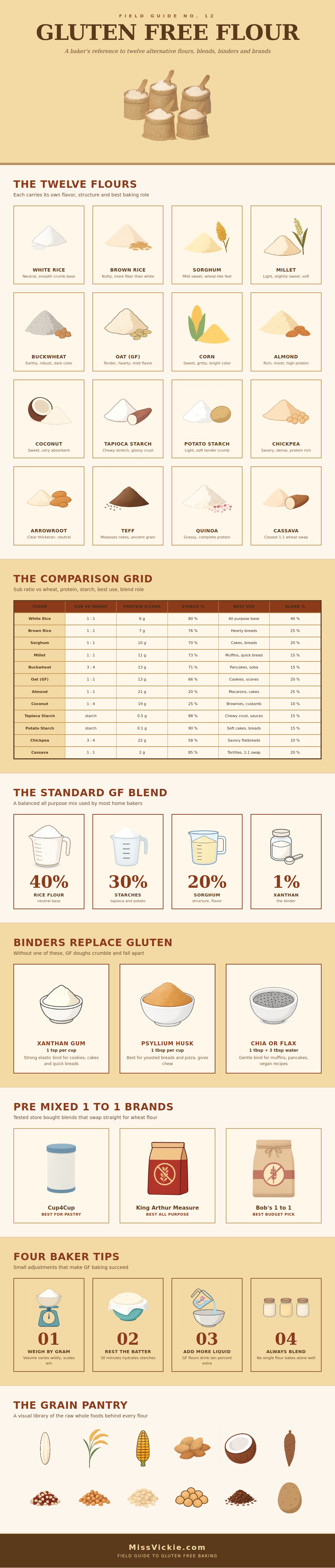
White rice flour is a neutral flour that you can often substitute for wheat flour in a one to one ratio. Brown rice flour is also a neutral flour but contains more fiber and a nuttier flavor than white rice flour. Sorghum flour is another neutral flour that can add structure to the baked goods it is used in but have a flavor similar to wheat flour.
How to Bake with Gluten-Free Flours
Millet flour is a light flour that will add softness to the baked goods it is used in but should be used in small amounts because it is delicacy. Buckwheat flour is a denser flour that contains an earthy flavor that is often used in pancakes or noodles. Oat flour will add tenderness to baked goods such as cookies and scones but must be certify gluten-free.
Corn flour will add sweetness and color to baked goods but can be gritty in texture and is often used for coating. Nut and seed flours will add moisture and protein to gluten-free baked goods. Almond flour is high in protein and adds moisture to items like cakes or macarons but does not contain much starch.
Coconut flour is very absorbent and requires the use of much less of this flour in gluten-free recipes. For example, one-quarter of the amount of coconut flour that would be used for wheat flour recipe. Starches are added to change the texture of the baked goods.
Tapioca starch will create a chewy texture to the baked good and is often used in making pie or sauce topping. Potato starch will make the crumb of the baked good soft and tender and will help lighten the texture of the baked good. Chickpea flour is a dense flour that contain protein and is often used in savory flatbreads.
There are other exotic flours that can be used in gluten-free baking. Arrowroot powder is a starch that can thicken liquids without adding any flavor to the liquids. Teff flour is an ancient grain that will add a molasses like flavor to the baked goods it is used in.
Quinoa flour contains all the essential amino acid and can be used in gluten-free baked goods as a protein source. Cassava flour can be used as a direct substitute for wheat flour in items such as tortillas and breads. Because no flour can replicate the properties of wheat flour, it is necessary to create a blend of different alternative flours to use in gluten-free baking.
A standard gluten-free flour blend will contain rice flour as the base for the blend, starches such as tapioca or potato starch, and sorghum flour for the baked good to have body. In addition to the blend of alternative flours, a binder is also required. A binder will provide the elasticity to the baked good that gluten natural provides.
Xanthan gum is the most common gluten-free binder used in gluten-free baked goods and should be used in a ratio of one teaspoon of xanthan gum to every cup of flour in the recipe. Psyllium husk and chia or flax seeds can also be used as the binders in gluten-free baked goods. Psyllium husk is best for yeasted bread products such as bread and pizza dough while chia or flax gel is best for baking products such as muffins and gluten-free vegan pancakes.
To prepare gluten-free baked goods, follow a few specific step. First, allow the batter to rest for thirty minutes prior to baking. Allowing the batter to rest permits the starches in the baked goods to fully hydrate which will ensure that the baked goods do not dry out during the cooking process.
Second, weigh the flour in grams when measuring the flour for gluten-free baked goods. Because each flour has a different density, weighing the flour ensures that the measurements in the recipe are accurate. Third, add ten percent more liquid to the baked goods as compared to the wheat flour recipes because gluten-free flours absorb more of the liquid than wheat flour.
These steps can be followed with either the purchase of pre-mixed gluten-free flour brands or in the preparation of your own blend of gluten-free flours. Pre-mixed gluten-free flour brands contain the mathematical ratios of gluten-free flours calculated by the manufactures but allow for less control over the flavor and the nutritional content of the baked goods. To prepare your own blend, use forty percent rice flour, thirty percent starches, twenty percent sorghum flour, and one percent xanthan gum.
By weighing the gluten-free flours, blending the gluten-free flours, allowing the batter to rest, and adding the correct amount of liquid to the recipe, you will be able to produce gluten-free baked goods with a stable structure.