Batch volume, dairy fat, sugar solids, stabilizer, flavor solids, and overrun
Gelato Calculator
Balance a gelato mix before churning by checking butterfat, total solids, sugar solids, stabilizer dose, egg yolk option, cocoa or fruit additions, aging time, freeze loss, overrun, and the final serving count.
Gelato is usually denser than American ice cream, so this planner keeps overrun modest and focuses on mix balance. Enter the dairy blend first, then add sugar, stabilizer, optional yolks, and cocoa, fruit, nut, or coffee solids.
Gelato Formula Breakdown
Milk to cream split
72 / 28
Higher cream raises fat quickly; higher milk keeps gelato lighter and cleaner.
Aging readiness
Good
Base hydration improves after several cold hours.
Overrun density
Dense
Low overrun makes gelato heavier per scoop and lowers apparent yield.
Loss allowance
5%
Use more loss for small bowls, sticky inclusions, or fast service transfers.
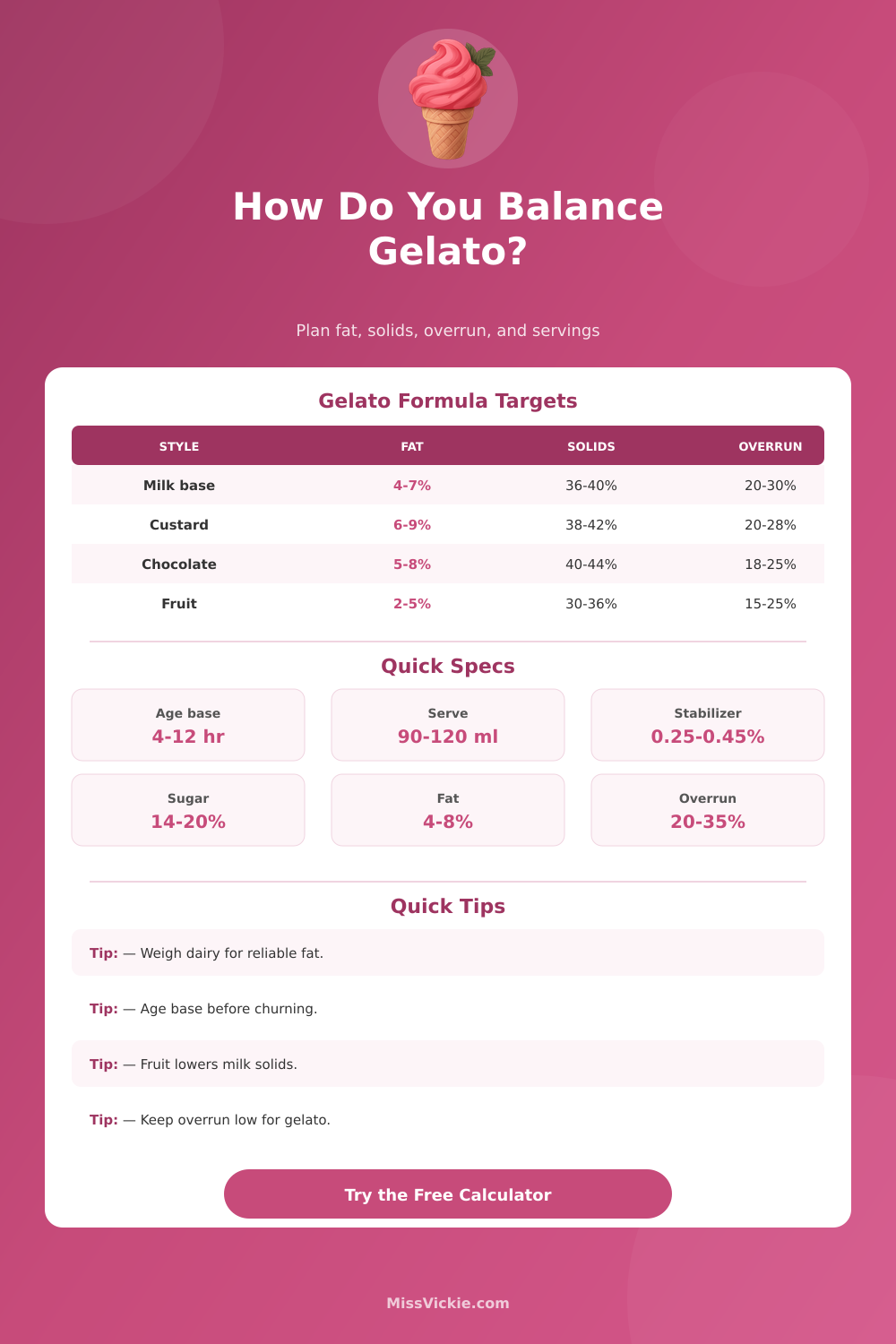
| Gelato style | Butterfat target | Total solids target | Overrun target | Serving note |
|---|---|---|---|---|
| Fior di latte or vanilla milk base | 4% to 7% | 36% to 40% | 20% to 30% | 90 to 120 ml is a common dessert scoop. |
| Custard gelato with yolks | 6% to 9% | 38% to 42% | 20% to 28% | Yolks add fat, solids, emulsifiers, and a warmer flavor. |
| Chocolate gelato | 5% to 8% | 40% to 44% | 18% to 25% | Cocoa and chocolate add solids, fat, bitterness, and body. |
| Fruit and cream gelato | 2% to 5% | 30% to 36% | 15% to 25% | Fruit puree brings water, acid, pulp, and natural sugars. |
| Display case gelato | 5% to 8% | 38% to 42% | 20% to 35% | Warmer service needs stable solids and a clean scrape. |
| Ingredient | Approximate solids | Approximate fat | Formula effect | Common adjustment |
|---|---|---|---|---|
| Whole milk | 12% | 3.25% | Adds water, lactose, minerals, and milk proteins. | Raise milk powder if the mix tastes thin. |
| Heavy cream | 41% | 36% | Raises fat and richness quickly. | Reduce cream when nut paste or chocolate adds fat. |
| Skim milk powder | 97% | 1% | Raises milk solids without adding much water. | Use carefully to avoid chalky or cooked-milk notes. |
| Dutch cocoa | 96% | 11% | Adds dry solids and strong flavor. | Hydrate with warm dairy and raise sugar slightly. |
| Fruit puree | 10% to 18% | 0% | Adds water, fiber, acid, and natural sugar. | Lower milk share or increase stabilizer modestly. |
| Nut paste | 95% | 45% to 55% | Adds fat, solids, and a dense mouthfeel. | Cut cream to keep butterfat in range. |
| Starting dairy | Low overrun 20% | Classic 25% | Airier 35% | Portions at 4 fl oz |
|---|---|---|---|---|
| 2 cups dairy | About 2.4 cups | About 2.5 cups | About 2.7 cups | 4 to 5 servings after loss |
| 1 quart dairy | About 1.2 qt | About 1.25 qt | About 1.35 qt | 8 to 10 servings after loss |
| 2 quarts dairy | About 2.4 qt | About 2.5 qt | About 2.7 qt | 18 to 21 servings after loss |
| 5 liters dairy | About 6 L | About 6.25 L | About 6.75 L | 48 to 64 small servings |
Making gelato rewards those who pay close attention to small balances (before the machine even turns on). How do I gets enough portion out of this batch? Will it hold up in a display case? How should it feel on a spoon? Those are all determined by the mix that goes into the machine. You must understand exactly what each ingredient contribute. Getting those balances right is as much art than it is about chasing perfection.
Creaminess comes from fat. Fat makes things creamy, but also delays melting. Add too little fat and you’ll end up with a thin, iced texture. Add too much fat, and your gelato may be heavy in your mouth. When it does melt, it might coat your mouth. To figure out what works best for your recipe, use this fat calculator to see how different levels of milk and cream mix with extra ingredients like chocolate or nut pastes. These extra ingredient also contribute fat.
Understanding Gelato Ingredients
Why? Because you’re unlikely to change just the cream without changing the other ingredients you intend to add. The milk proteins, the fat, the sugar, and any added dry flavors are all “total solids.” These determines how much water will freeze into big crystals. If there is too few solids, the finished product will taste watery. Too many and it can get tough to scoop and might become too chewy. Using the tool, you can understand how changes to amount of stabilizer, sugar, and flavor solids shift the overall total. This helps you know whether to add more milk powder to your fruit purees or less cream to your chocolate.
Sweet is not all that sugar does. It lowers the freezing point and keeps part of the water unfrozen at serving temperature. Various kind of sugars do this at different rates. You can even use a dextrose/invert combination (less sweet but softening), which doesn’t add more sweetness. With the calculator, you can substitute types of sugar and see how the freezing index shifts. Adjust the blend for your desired result.
Storage: Stabilizer is added as an incredibly small amount, binding water to slow crystal growth during storage in freezer. It’s enough, but that little number on the label makes many home cooks underdose. (Those few tenths of a percent prevent scoops from shrinking or icing over in the freezer after a day.) Weigh accurately based off the calculator, which shows a reasonable range for each style.
The overrun controls the amount of air that gets into the final gelato. Classic gelato has a rich, intense taste, so a low overrun makes it more dense. A higher overrun will stretch out the gelato. This dilutes its flavor and makes it lighter, which also make you think it is light. You select an overrun to aim for, which accounts for a little bit you’ll lose to transfer and freezing, depending on how gooey things like inclusions are and the size of the batch.
You might of forgotten how much aging time affects when to churn. Letting your gums and proteins really soak up some water for a few quiet hours in the fridge will give you smoother churn, with slower melting. The calculator shows if your intended rest period fits this helpful window, and then you get to choose: do I want to begin my base sooner? Or am I ok with a bit of faster turnaround?
Any planning tool has its greatest value when it shows you the tradeoffs of your vague intentions. That’s where you notice that adding egg yolks increase both fat and solids. You also notice that increasing fruit puree requires more stabilizer to balance the effect. It’s the kind of thing you learn after seeing the relationships, and then making the little decisions becomes easy. And that’s when you no longer follow one perfect recipe: You create a combination that suits the actualy contents of your fridge.