How Many Gelatin Sheets per Cup of Liquid Calculator
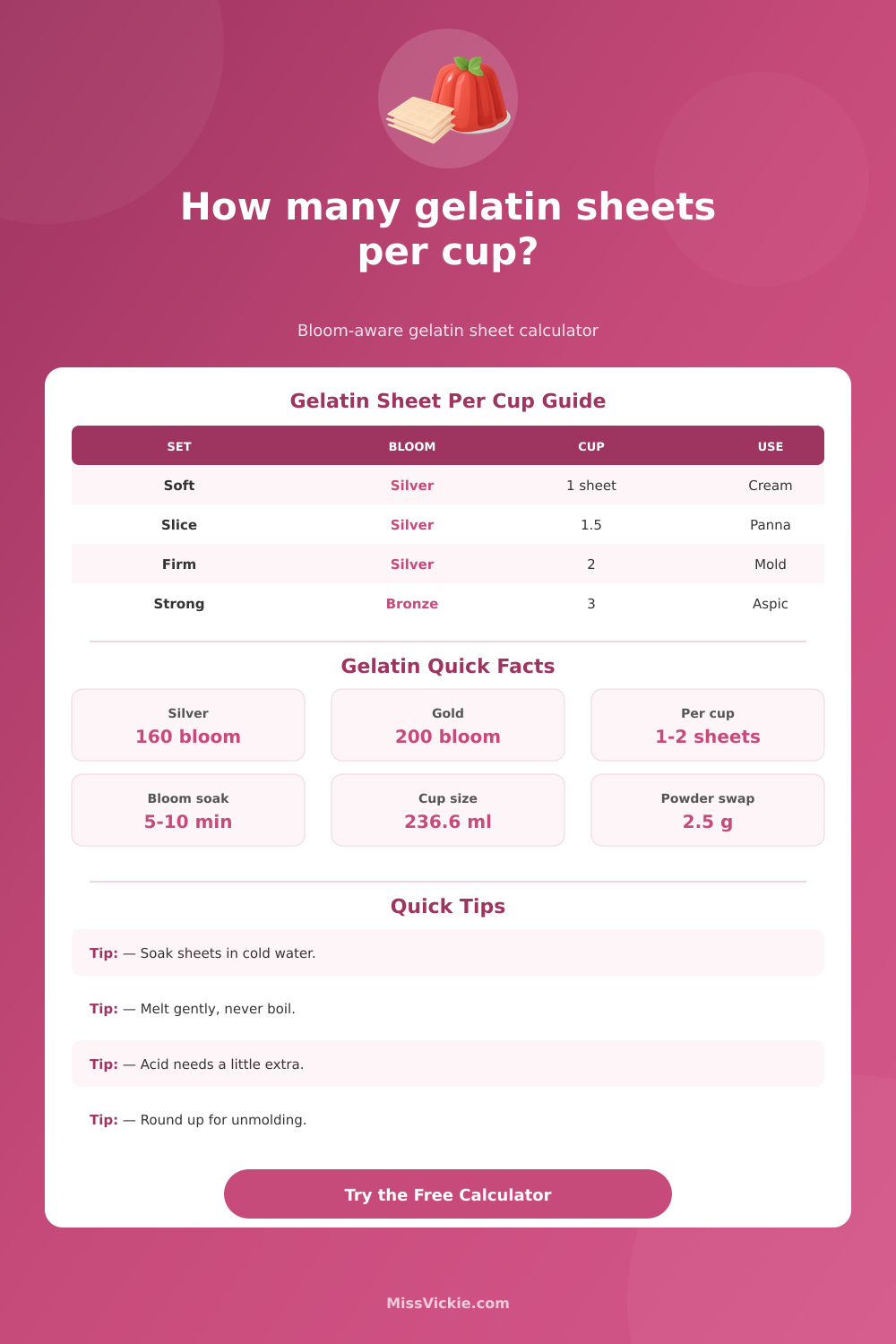
Estimate gelatin sheets per cup and for the whole recipe using sheet bloom strength, sheet weight, target set, liquid type, acidity, sugar, alcohol, and unmolding margin.
Load a realistic dessert or savory scenario, then adjust the bloom strength printed on your gelatin package.
Calculation Breakdown
| Texture Goal | Approx Gelatin % | Silver Sheets per Cup | Best Use |
|---|---|---|---|
| Barely set sauce | 0.35% to 0.45% | 0.5 to 0.75 | Glazes, stabilized sauces, loose creams |
| Soft spoon dessert | 0.55% to 0.70% | 0.75 to 1.1 | Mousse cups, panna cotta, whipped cream fillings |
| Clean slice layer | 0.80% to 1.00% | 1.2 to 1.6 | Cake inserts, fruit jelly layers, cream pies |
| Unmolded firm gel | 1.10% to 1.35% | 1.7 to 2.2 | Molds, terrines, buffet desserts |
| Strong aspic or cubes | 1.45% to 1.75% | 2.3 to 2.9 | Aspic, gelee cubes, hot-room service |
| Sheet Grade | Typical Bloom | Typical Sheet Weight | Compared With Silver |
|---|---|---|---|
| Bronze | 120 to 140 bloom | 3.0 to 3.5 g | Lower bloom, often heavier sheets |
| Silver | 150 to 170 bloom | 2.3 to 2.7 g | Common baseline for recipes |
| Gold | 190 to 210 bloom | 1.9 to 2.2 g | Stronger per gram, fewer sheets by weight |
| Platinum | 220 to 240 bloom | 1.6 to 1.9 g | Very strong and usually lighter sheets |
| Liquid Type | Adjustment | Why It Changes | Kitchen Note |
|---|---|---|---|
| Milk, cream, custard | 0% to -3% | Fat and proteins give body | Great for soft spoon sets |
| Fruit juice | +5% to +12% | Acid can weaken the gel | Use more for citrus or berry layers |
| Fruit puree | +10% to +18% | Fiber interrupts a clean network | Strain thick purees for a smoother set |
| Wine or cocktail | +12% to +25% | Alcohol slows firm setting | Keep alcohol moderate for clean cubes |
| Fresh pineapple, kiwi, papaya | Cook first | Enzymes break gelatin | Heat fruit before adding gelatin |
| Batch | Liquid | Soft Set | Firm Mold |
|---|---|---|---|
| Small dessert | 1 cup | about 1 silver sheet | about 2 silver sheets |
| Family panna cotta | 2 cups | 2 to 2.5 silver sheets | 3.5 to 4.5 silver sheets |
| Cake layer | 3 cups | 3 to 3.5 silver sheets | 5 to 6.5 silver sheets |
| Party tray | 8 cups | 8 to 10 silver sheets | 14 to 18 silver sheets |
Useful when recipes call for older, lower-bloom sheets or a robust savory set.
The most common home-kitchen reference for sheets per cup calculations.
Good for pastry work where fewer, stronger sheets keep flavor dilution low.
Best for precise molds, but custom weight matters because sheets are often light.
Gelatin can behave in different ways, depending on the specific type of gelatin that is use. Gelatin can produce different texture when it is added to different types of liquids. For example, the texture of the setting may feel too soft, or the texture may feel to rubbery.
Both of these problems is caused by the amount of liquid to which the gelatin is added, as well as the type of gelatin sheet that is used in the recipe. Because the ratio of cups to sheets of gelatin sheets does not work for all recipes, it is essential to understanding the various factors that impact the setting properties of the added gelatin. One of the primary factors that impact how the gelatin sheets set the liquid is the bloom strength of those sheets.
How Many Gelatin Sheets to Use
For example, an silver sheet of gelatin that has a bloom strength of 160 will create a stronger set of the liquid than a bronze sheet of gelatin with a bloom strength of 125. Thus, the different types of gelatin sheets has different properties that impact the setting of the gelatin. As a result, two recipes that are otherwise identical could produce different textures of the setting if a different grade of gelatin are added.
Using a calculator that allows you to enter the bloom strength of the set gelatin will ensure that the calculator make the calculations applicable to the specific type of gelatin sheets that you will use in the recipe. Additionally, the type of liquid that is used in the recipe will impact the way in which the added gelatin sheets set. For instance, liquids like milk and cream contain the proteins and fats that will assist in the setting of the gelatin.
Thus, less gelatin sheets need to be used with milk or cream than with juice. However, high acid liquids or those that contain alcohol will weaken the structure of the setting created by the gelatin sheets. For this reason, more sheets of gelatin will need to be used in recipes that contain these ingredient.
Additionally, fruits that contain enzymes, such as pineapples or kiwis, will digest the structure of the gelatin if the recipe does not first heat the liquid containing the enzymes. This digestion of the gelatin will prevent the setting of the gelatin in these types of recipes. Furthermore, the texture that is desired for the finished recipe will determine how many sheets of gelatin are to be used in the recipe.
For example, the texture of a sauce that you are to pour over a cake will require fewer sheets of gelatin than a terrine that is to be unmolded. Thus, the desired texture determines the percentage of the recipe that will contain gelatin sheets. Finally, the level of sugar and alcohol that is contained in the liquid will also impact the setting created by the added gelatin sheets.
Any liquid that contains high levels of sugar or noticeable levels of alcohol will require more sheets of gelatin to be used in the recipe. While this modification to the recipe isnt always necessary, it can have a significant impact on the ability of the gelatin to properly set within the prepared dessert. The calculator also includes sugar and alcohol levels in the final recommendation so that you dont have to remember these different modifiers.
Batch size and the way you serve the food will also affect the amount of gelatin that you should use. If you are making a small batch of gelatin that you know will only feed six people, the set of the gelatin will be softer. If you are making a large batch of gelatin for a buffet, you will need to include extra gelatin because the food will be out of the refrigerator for a long period of time.
Because of the temperature swings that the food will experience, you may need more gelatin for a buffet than for a smaller serving. The calculator includes a margin setting that will automatically add extra gelatin if you set it to the amount of time that the food will be served. You must also remember that gelatin sheets and powder are not the same thing.
A teaspoon of powder is not the same as one sheet of gelatin, and the amount of gelatin sheets and powder will change with the bloom strength of the gelatin. The calculator will show you the amount of gelatin powder needed in addition to the number of sheets of gelatin. This will allow you to decide what type of gelatin to use in the recipe.
Many people make the mistake of assuming that every sheet of gelatin weighs the same as every other sheet of gelatin. The weight of silver gelatin sheets can vary from manufacturer to manufacturer. If you use gelatin sheets in your recipe, you should check the weight of one sheet of gelatin and use that number in your recipe calculator.
If you use an old recipe that asks for a certain number of sheets of gelatin, you will need to know both the bloom and the weight of the sheets in order to duplicate the recipe. After calculating the number of sheets of gelatin that you will use, you must bloom the sheets properly. To bloom gelatin sheets properly, you will need to place the sheets into cold water for five to ten minutes.
You will then squeeze the sheets to remove the water and then melt the sheets in a portion of the liquid that you are using for the recipe. Avoid boiling the liquid and the gelatin sheets together because boiling can weaken the setting of the final gelatin product. These steps will not change the number of sheets of gelatin that you calculate, but they will ensure that the strength of the gelatin sheets that you use is preserved.
Consistency in your recipe will result from following these steps. If you know how much gelatin sheets of what weight and what liquid you must use to achieve the desired texture, you will not have to add any extra gelatin sheets at the last minute to achieve the same texture. The recipe calculator will remove the need for performing arithmetic to determine the number of sheets of gelatin to use in your recipe.