Gelatin for Gummies Calculator
Plan homemade gummy batches by mold cavity size, gummy count, chew firmness, gelatin bloom strength, syrup solids, acid timing, drying loss, and final yield.
🍬 Gummy Batch Presets
Choose a mold and chew style, then adjust the count, cavity ml, bloom rating, syrup body, acid timing, and drying loss for your recipe.
⚖ Mold, Chew, and Syrup Details
Classic gummy batch
Your gummy formula will appear here after calculation.
Formula Breakdown
Mold and Timing Plan
🧪 Quick Batch Metrics
📊 Gummy Gelatin Reference Tables
| Gummy Chew | Base Gelatin Before Bloom Adjustment | Best Bloom Range | Expected Drying Loss | Good Mold Use |
|---|---|---|---|---|
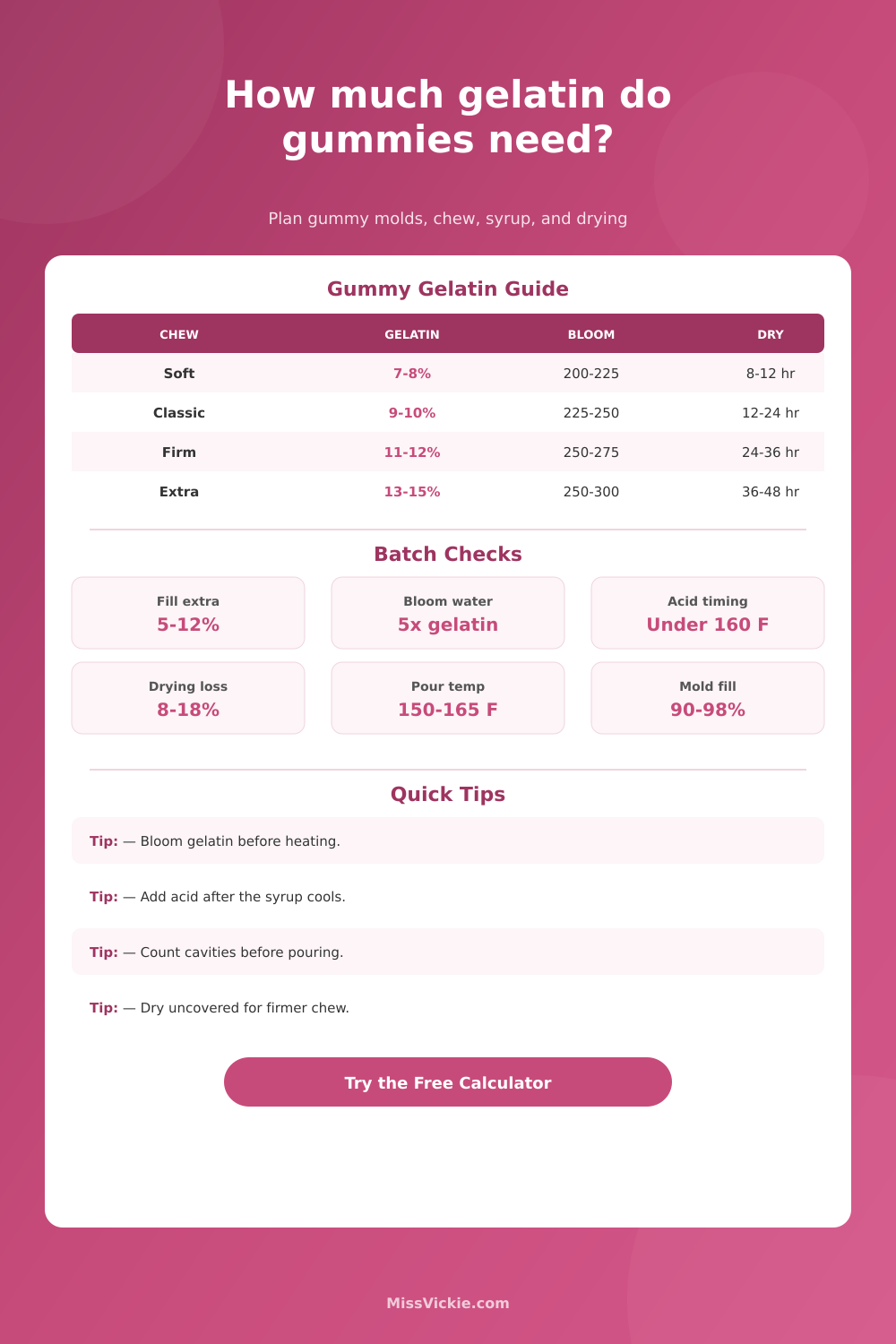
| Soft jelly chew | 7% to 8% of cooked syrup weight | 180 to 225 bloom | 6% to 10% | Large drops, cups, or shallow fruit snacks. |
| Classic gummy bear | 9% to 10% of cooked syrup weight | 200 to 250 bloom | 10% to 14% | Small bears, fruit shapes, worms, and detailed silicone molds. |
| Firm candy chew | 11% to 12% of cooked syrup weight | 225 to 275 bloom | 14% to 18% | Vitamin-style bites, sour gummies, and molds with fine edges. |
| Extra firm slab | 13% to 15% of cooked syrup weight | 250 to 300 bloom | 18% to 24% | Ropes, rings, cubes, or gummies that will be tossed in sour sugar. |
| Mold Cavity | Common Piece | 100 Gummies Need | With 8% Overage | Finished Yield at 12% Dry Loss |
|---|---|---|---|---|
| 0.8 to 1.2 ml | Mini bears or tiny drops | 80 to 120 g cooked syrup | 86 to 130 g | 76 to 114 g after drying. |
| 2 to 3 ml | Classic bears or fruit snacks | 200 to 300 g cooked syrup | 216 to 324 g | 190 to 285 g after drying. |
| 4 to 6 ml | Worms, hearts, fruit slices | 400 to 600 g cooked syrup | 432 to 648 g | 380 to 570 g after drying. |
| 8 to 12 ml | Rings, large drops, cubes | 800 to 1200 g cooked syrup | 864 to 1296 g | 760 to 1140 g after drying. |
| Recipe Factor | Calculator Adjustment | Why It Matters | Kitchen Check | Best Correction |
|---|---|---|---|---|
| Gelatin bloom | Lower bloom increases gelatin grams; higher bloom lowers them. | Bloom is gel strength, so equal grams do not give equal chew. | Check the bloom number on the gelatin label or supplier page. | Keep the same gel strength by adjusting grams, not by guessing packets. |
| Acid timing | Early acid adds gelatin insurance and a longer cure. | Hot acid can hydrolyze gelatin and soften the final gummy. | Add citric acid after the syrup cools below 160°F when possible. | Use sour sanding sugar when you want more tartness without weakening set. |
| Syrup body | Glucose and high sugar reduce stickiness; puree raises moisture. | Solids control chew, tackiness, drying time, and shape hold. | Cook syrup to a consistent final weight before adding gelatin. | For sticky gummies, dry longer or raise solids before raising gelatin heavily. |
| Drying loss | Finished yield is cooked syrup weight minus cure moisture loss. | Gummies can look full in the mold but weigh less after drying. | Weigh a tray after unmolding, then again after curing. | Use your measured dry loss in the next batch for repeatable yield. |
| Pour overage | Extra batch mass covers residue, droppers, funnels, and bubbles. | Small cavities waste proportionally more syrup than a slab tray. | Watch how much remains in the pan after your first pour. | Use 5% for slabs, 8% to 12% for bears, and 15% for tiny molds. |
📝 Firmness and Acid Planning
Best for tender fruit snacks that dry briefly and stay soft.
Balanced bear-style chew with clean unmolding after chilling.
Better for sour gummies, warm kitchens, and detailed molds.
Use for slab ropes, rings, or candies that need a strong bite.
💡 Gummy-Making Notes
This calculator is for gelatin-based gummies, not a packet-to-water dessert gel ratio. It assumes a cooked candy syrup or juice syrup that is poured into molds and cured.
The process of making gummy bears (or other gummies) isn’t magic; it’s physics. There’s powder for structure, there’s a hot syrup, and there’s a mold. But those three things hinge on three variables: moisture content, gelatin strength, and acid timing. If you get them right, you’ll make something perfect. Get any one wrong, though, and you’ve got a sticky mess in your hands.
Home cooks mostly treat gelatin like an unchanging ingredient. In fact, it’s not. It varies by bloom strength. That number stamped onto the package tell you how much you should of use to reach a certain set. Stronger gel has a higher number, higher bloom, and requires fewer gram. Once you plug your desired firmness and mold size into the calculator above, it do the math for you. You won’t have to guess if your packet will be strong enough for the task.
The Secrets of Making Gummy Bears
This brings us to the first major decision: What kind of chew are we making? Are you after something with a hard snap when bitten (like a bear), or do you prefer a softer, spoonable gummy… Like a fruit snack? That will determine how much gelatin go into your finished batch. For soft gummies (seven- to eight-percent of cooked syrup weight), go light on the gelatin. For classic bears, try nine- to ten-percent. Vitamin-type bites require even firmer chews. Extra-firm ones will shoots past 12 percent.
Beyond what you like best, chew firmness also determine drying time. While a soft gummy may dry fast in a few hours, a firmer variety may take up to a day to lose enough moisture to maintain their shape.
It’s worth noting that this has everything to do with water. Water needs to come into contact with the gelatin in order for the gelatin to become bloomed… Meaning it absorbs water before dissolving and gelling. Use one part gelatin for every five parts of water. That’s not additional water: it’s part of the overall amount of liquid you use to make your base. Without taking that bloom water into consideration when thinking about your recipes, you risk having super-thick syrup and therefore dry-as-a-bone gummies.
There’s also the issue of shrinkage, which is called “drying loss.” As soon as you put syrup into a mold and let it set up, the gummies will be lighter than the syrup itself. This happens because they sheds some of the moisture into the air. How much? It depends based off airflow and humidity, but ten to twenty percent of their original weight isn’t unusual. Take that drying loss into consideration so you don’t end up with something that shrivels into nothing.
The wildcard is acid. Gelatin doesn’t like heat and acid doesn’t like gelatin. Heat damages its structure; acid will actualy break down the gelatin’s chain of molecules (a process called hydrolysis). When you mix acid into the boiling syrup, it’s game over. You’re going to break down the gelatin chains and destroy its network… The thing that binds the candy together. What you’ll be left with is an un-firming lump of goop that won’t quite ever become something worth chewing on.
Trick? Timing. Wait until your syrup cools below one hundred sixty degrees Fahrenheit before adding any acids. Or better yet, keep it back for the sugary coating you’ll later throw onto the completed candy. It’s a little tweak of time, but it can make or break a good chew.
The other side of the pour is technique. Air gets trapped in the nooks and crannies of silicone molds, and syrup clings in there. Plan an overpour of about 8%, which is the amount that’s left clinging to your ladle or otherwise lost in the mold detail. Also note: sometimes underfilling a little bit helps at unmolding time; it makes it less suction-y when the gel pulls away from the mold as it cools. The chart on the page explain this, and how the size of the cavity relates to the overall quantity you’ll want to make up.
That’s what gummy making is all about, in the end. It’s about ratio, about keeping acid in check with moisture, sugar in check with gelatin, texture in check with time. You don’t need a lab to make it work, but you must respect those ratios. Once you know why the gelatin sets, and how the acid impacts it… You stop blind-following recipes. Instead, you begin making gummies on purpose.
Next time you look into a bag of gelatin, think of it not as just a thickener. Think of it as the skeleton of your candy, and the rest, the rest is simply the flesh you’ll wrap around it.