Garlic cloves, minced grams, prep intensity, simmer time, servings, pasta shape, and tolerance
Garlic for Pasta Sauce Calculator
Estimate garlic for pasta sauce from finished sauce volume, clove size, grams of minced garlic per clove, raw, sauteed, or roasted intensity, simmer time, servings, pasta shape, and garlic tolerance.
Start with a sauce scenario, then tune the exact finished sauce volume, clove weight, minced garlic density, preparation intensity, simmer time, pasta shape, and garlic tolerance.
Garlic Calculation Breakdown
| Sauce Style | Balanced Garlic Rate | Best Preparation | Flavor Note |
|---|---|---|---|
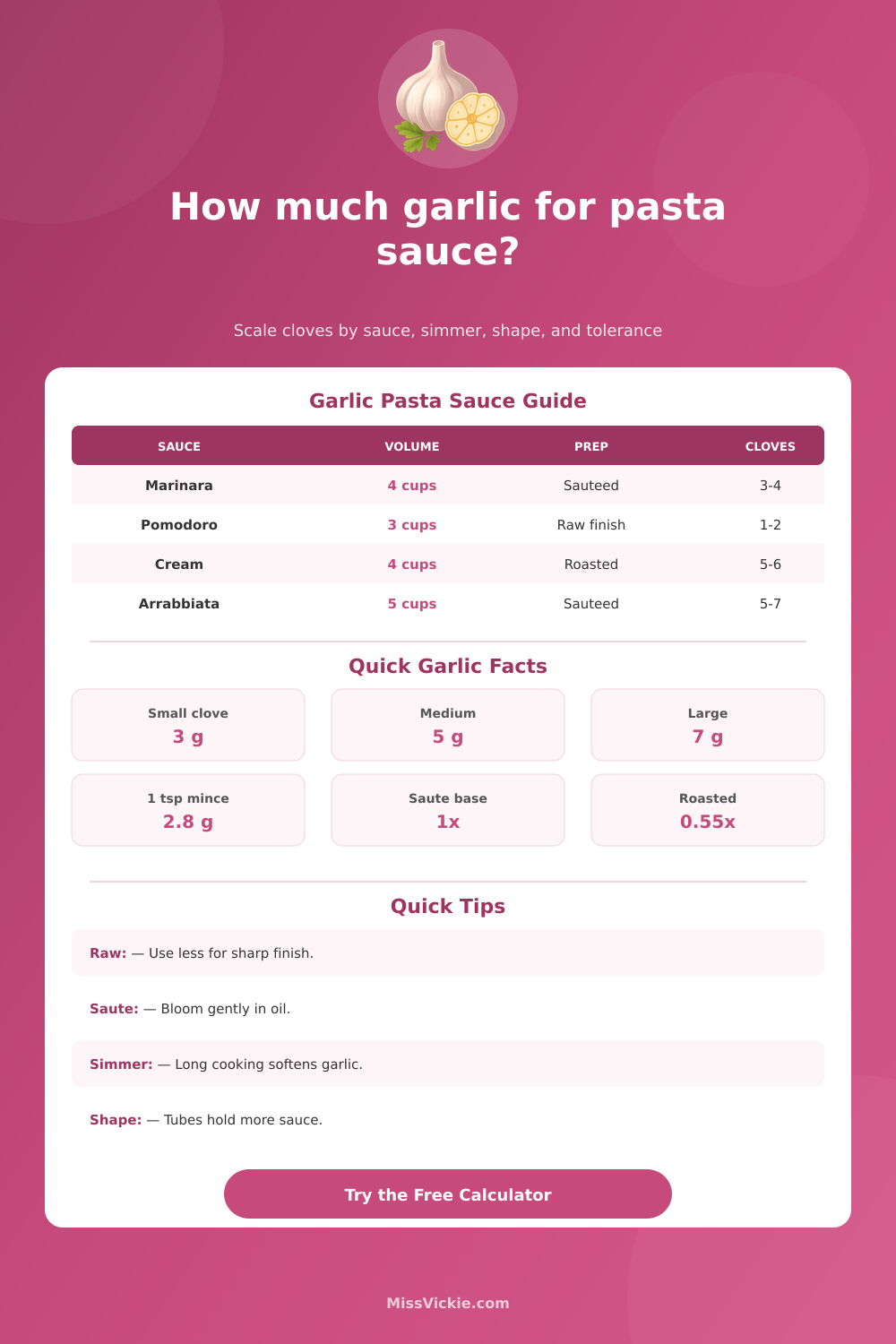
| Fresh pomodoro | 2.4 to 3.2 g per cup | Raw finish or quick saute | Small amounts read sharp because the sauce is light. |
| Classic marinara | 3.2 to 4.3 g per cup | Light saute in olive oil | Balanced tomato sauce can carry a medium clove per 1 to 1.5 cups. |
| Arrabbiata | 4 to 5.4 g per cup | Sauteed or sliced in oil | Chile heat and tomato acidity can handle more garlic. |
| Tomato cream or vodka sauce | 2.6 to 3.6 g per cup | Golden saute or roasted | Cream softens pungency, so the garlic should be rounded. |
| Meat sauce or ragu | 3.8 to 5.2 g per cup | Sauteed into fat | Meat, mushrooms, and long simmering need a stronger base. |
| Pizza-style sauce | 2.2 to 3 g per cup | Powder or brief saute | Garlic gets concentrated when spread thinly. |
| Garlic Preparation | Perceived Strength | Calculator Effect | Use In Pasta Sauce |
|---|---|---|---|
| Raw or microplaned finish | Very sharp | Uses less by weight | Best for fresh tomato sauces and final tosses. |
| Lightly sauteed minced garlic | Classic | Baseline | Best all-purpose method for marinara. |
| Golden sauteed garlic | Nutty and rounded | Slightly more | Good for oil-rich tomato sauces and seafood pasta. |
| Roasted garlic | Sweet and mellow | Uses much more | Best for cream sauce, baked pasta, and gentle garlic lovers. |
| Garlic confit | Soft and rich | Uses more | Works when the garlic should melt into the sauce. |
| Garlic powder | Even and dry | Converts to teaspoons | Useful for pizza sauce or when fresh cloves are too harsh. |
| Choice | Adjustment | Why It Matters | Kitchen Check |
|---|---|---|---|
| Off heat garlic | Less garlic | Raw bite stays strong and immediate. | Start low and add more after tossing. |
| Last 5 minutes | Baseline | Garlic blooms without losing all aroma. | Good for weeknight marinara. |
| Long simmer | More garlic | Heat rounds and fades the sharp top notes. | Reserve a small fresh finish if needed. |
| Tubes and ridges | More garlic | More sauce clings inside each bite. | Rigatoni can taste milder than spaghetti at the same pot strength. |
| Low tolerance | Less garlic | Sensitive eaters notice raw bite and aftertaste quickly. | Choose roasted, confit, or golden sauteed garlic. |
| Garlic-forward | More garlic | The sauce is meant to lead with garlic aroma. | Balance with oil, salt, tomato sweetness, and pasta water. |
About 4 to 5 grams garlic for 2 cups of fresh, lightly cooked sauce.
About 15 grams minced garlic for 4 cups of balanced red sauce.
Spicy tomato sauce can take extra garlic when it is sauteed gently first.
Mellow roasted garlic needs more cloves to show through cream and cheese.
Nutrition is a planning estimate for garlic only. Tomato sauce, pasta, oil, cheese, meat, and salt are not included.
Garlic is anothers ingredient that will affect the flavor of the sauce, and the amount of garlic that is used will change the flavor of the sauce. Using too little garlic will make the flavor of the sauce too flat, while using too much garlic will overpower the other flavors of the sauce. The flavor of the garlic can change depending on the type of garlic that is used and the length of time that the cook cook the garlic.
Using minced garlic that is added at the end of the sauce will create a strong flavor of garlic in the sauce, but using garlic that has been roasted and simmered for a long time will create a milder and sweet flavor. Due to the fact that the flavor of garlic change with preparation, many people may find it difficult to select the correct amount of garlic to use in the sauce. The other ingredient that will go into the sauce will also determine the amount of garlic that the sauce can hold.
How Garlic Changes the Flavor of Sauce
For instance, thin sauces made with tomatoes will hold less garlic than heavy sauces made with meat or cream. This is due to the fact that the acidity of the tomatoes will create a flavor that is strong and will mask the flavor of the garlic. The fat in sauces made with meat will create a flavor that is strong enough to even out the strong flavor of the garlic.
The type of pasta that is cooked will also play a role in how much garlic that the sauce will taste of. Shapes that have tube or ridges, such as rigatoni, will hold more sauce than pasta shape like spaghetti. Due to the fact that rigatoni will hold more sauce than spaghetti, rigatoni will taste of more garlic than spaghetti.
The size of the clove of garlic that is used can also cause inconsistency in the sauce. One clove of garlic may weigh five gram while another clove of garlic may weigh seven grams. This can cause issues when cooking for many people or when scaling a recipe.
The garlic calculator will allow a person to choose the size of the clove of garlic or the weight of the garlic that is to be use. The garlic calculator also takes into account the preparation of the garlic. Raw garlic is stronger than roasted garlic.
Therefore, if a person choose to use roasted garlic, which is less flavorful than raw garlic, they will need to use a greater volume of garlic to achieve the same flavor as raw garlic. Another factor that will affect the garlic flavor is the amount of time that the garlic simmer in the sauce. Garlic that simmers in the sauce for only five minutes will have a much stronger aroma than garlic that simmers in the sauce for forty minutes.
The longer that the garlic simmers in the sauce, the less intense the flavor of the garlic will become. For those who would like a background flavor of garlic in there sauce, long simmering is the way to go. However, for those who would like garlic to be a prominent flavor in their sauce, cooking the garlic raw at the end of the sauce cooking process will provide the flavor that they seek.
The garlic calculator will allow for a person to set their preference for the strength of the garlic flavor in the sauce. Many people often make the mistake of assuming that all form of garlic are the same. Garlic powder, jarred minced garlic, and fresh garlic cloves have different strength of flavoring, despite having the same weight.
The garlic calculator accounts for these difference in the form of garlic that is to be used. An extra cushion for error in the garlic flavor is also provided in the garlic calculator. Finally, the amount of the sauce that is placed on the pasta will also play a role in the flavor of the garlic that the person taste.
If the sauce is heavy on the pasta, the garlic flavor will be strong. However, if the pasta is only lightly toss in the sauce, then the flavor of the garlic will be much less. The garlic calculator accounts for the volume of the sauce and the weight of the pasta to calculate the proper amount of garlic flavoring that each person who taste the sauce will experience.
Due to all of these factors being include in the garlic calculator, it will allow a person to ensure that the flavor of garlic remains the same from the pot of sauce to the plate of pasta.