Ganache Calculator
Calculate chocolate, cream, ratio, cake coverage, coating thickness, filling layers, overage, and cooled finished yield for dark, milk, white, ruby, and compound ganache.
Choose a common cake or dessert setup, then adjust the chocolate type, cream fat, cake size, coating thickness, and final yield.
Kitchen note: This calculator sizes ganache by weight. Temperature, chocolate brand, cocoa butter level, and mixing method can still change final flow, so test a spoonful before coating the cake.
Your Ganache Batch
Use the calculated weights for a balanced ganache batch.
Batch Breakdown
Coverage Breakdown
| Use Case | Dark Chocolate | Milk Chocolate | White Chocolate | Texture Goal |
|---|---|---|---|---|
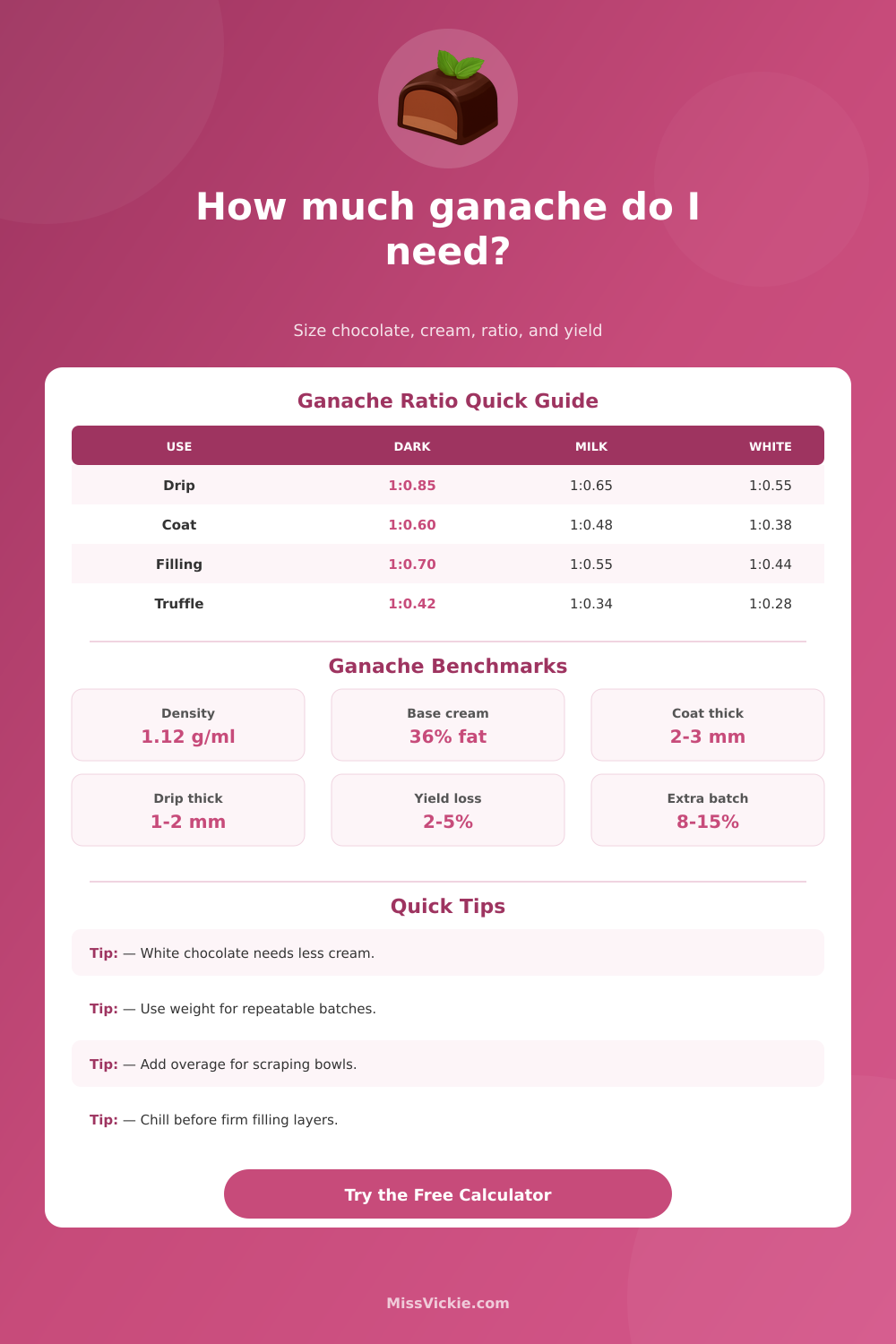
| Drip edge | 1:0.85 cream | 1:0.65 cream | 1:0.55 cream | Fluid but controlled on chilled cake |
| Glossy glaze | 1:1.05 cream | 1:0.82 cream | 1:0.70 cream | Pourable and shiny while warm |
| Outer coating | 1:0.60 cream | 1:0.48 cream | 1:0.38 cream | Spreads cleanly and firms for smoothing |
| Layer filling | 1:0.70 cream | 1:0.55 cream | 1:0.44 cream | Sliceable after chilling |
| Truffle center | 1:0.42 cream | 1:0.34 cream | 1:0.28 cream | Firm enough to scoop and roll |
| Cake Size | Typical Coating | Approx Finished Ganache | Best Use | Overage Note |
|---|---|---|---|---|
| 6 in round, 4 in tall | 2.5 mm | 330-420 g | Drip, coating, small tier | Add 10 percent for smoothing |
| 8 in round, 4 in tall | 2.5 mm | 520-670 g | Birthday cake coating | Add more for sharp edges |
| 10 in round, 5 in tall | 3 mm | 950-1200 g | Tiered cake base | Add 15 percent for tall sides |
| 9 by 13 in sheet | 1.5 mm | 450-600 g | Warm glaze or top coat | Less side coverage needed |
| 24 cupcake tops | 2 mm | 280-360 g | Dipped cupcake tops | Use a narrow dipping bowl |
| Cream or Dairy | Fat Range | Calculator Adjustment | Texture Risk | Best Match |
|---|---|---|---|---|
| Heavy cream | 36-40 percent | Baseline to slight increase | Stable, rich emulsion | Most ganache uses |
| Whipping cream | 30-35 percent | Small cream reduction | Softer if over-added | Drip or glaze |
| Light cream | 18-29 percent | Noticeable cream reduction | Higher water can loosen set | Soft glaze only |
| Extra rich cream | 41-45 percent | Small cream increase | Can feel very rich | Truffle and filling |
The adjustment is a practical kitchen model, not a brand guarantee. Chocolate cocoa butter content matters as much as the label name.
Higher cream for a flowing edge that stops on a chilled cake.
Balanced ratio for smoothing sides and building sharper edges.
Lower cream keeps layers stable after chilling and stacking.
Lowest cream ratio creates a scoopable batch for centers.
Ganache is a mixture of chocolate and cream that is used for a variety of purposes in relation to the finished cakes. Ganache can be used as a glossy drip, ganache can be used as a thin coating for covering the cake, and ganache can be used as a firm layer that will hold the cake slices together. Adjusting the ratio of chocolate to cream that is used in the ganache, the thickness of the ganache layer, and the amount of ganache that is lost during the mixing of the ingredient can control the texture of ganache.
The ganache calculator on this page will calculate the weights in grams of both chocolate and cream that is required in order to prepare ganache according to the selected variable. You must select variables that include the intended use of the ganache, the type of chocolate that is to be used, the dimensions of the cake that is to be coated in ganache, and the allowances for ganache that will be lost during mixing. Adjusting the chocolate to cream ratio will change the texture of the ganache, and too much ganache will result in ganache that dont properly adhere to the slices of the cake.
Ganache Calculator for Cakes
Too little ganache will cause the ganache to drip from the cake when the cake is cut into. The type of chocolate that is used will impact the texture of the ganache. Dark chocolate contains more cocoa butter than chocolate varieties that contains milk or no cocoa solids.
Thus, ganache that uses dark chocolate will be firmer than ganache that uses milk chocolate or white chocolate. White chocolate contains a higher percentage of sugar and milk solids. Because ganache that utilizes white chocolate will be softer than ganache that employs other types of chocolate, the calculator reduces the amount of cream that must be used when white chocolate or ruby chocolate is selected.
The fat percentage of the cream that is used will also impact the texture of the ganache; using cream that has a lower fat percentage than the other ingredients will result in ganache that sets more soft due to the higher water content in the cream. The size of the cake will impact the amount of ganache required. A round cake will require ganache to coat both the top and sides of the cake.
A sheet cake will only require ganache to coat the top of the cake. If the sheet cake also includes filling layer, then those filling layers will also have to be coated in ganache. You can calculate the total weight of ganache that is required by multiplying the total surface area of these layers by the thickness of the ganache layer.
The thickness of ganache will impact the weight of ganache required for the cake; a two-millimeter thickness of ganache is not the same as a three-millimeter thickness. Some ganache must be lost during the preparation of the ganache. Some ganache may adhere to the spatula that mixes the ganache, or ganache may be used in test drips to determine the texture of the ganache.
Some ganache may remain in the mixing bowl after the ganache is mixed, or it may be lost to evaporation. The percentage of ganache that is lost during preparation is typically between 10 and 15% of the total weight. If ganache is not accounted for in the recipe, it is possible that there will not be enough ganache to coat the cake once the ganache is poured onto the cake slice.
Ganache can separate if it is allowed to cool too slowly in the kitchen; the cocoa butter content in the chocolate brands can also impact how the ganache sets. The baker should test the calculated weight of ganache; using a spoonful of ganache on a chilled plate will allow the baker to determine whether the ganache will behave in the way that is required of it. If the texture of ganache is satisfactory, it can be applied to the cake.
If the ganache does not have the appropriate texture, either more cream or more chocolate can be added. The various uses for ganache requires different amounts of chocolate and cream to be used in the ganache. Ganache that is used to produce truffles will contain less cream than ganache that is used to produce glossy drips of ganache.
Ganache that is used as a crumb coat will contain the least amount of ganache of any type of ganache. The ganache calculator automatically adjusts the ratio of chocolate to cream according to the use of the ganache. However, you still must test ganache against the surface of the cake.
Cold cakes will impact the ganache in a different manner then warm cakes. Therefore, while the ganache calculator can determine the weight of the ingredients required to make ganache, it cant calculate the temperature of the cake or the kitchen in which the ganache will be prepared.