
Pulling the steak out of the pan only to have it laying there in an inch-deep puddle of grey liquid different than sporting a good crust. Ugh. But don’t blame yourself for technique (or even the quality of the meat). Odds are very high it’s not your fault. Here’s what it is: nearly every time this issue arises, it’s due to pan size.
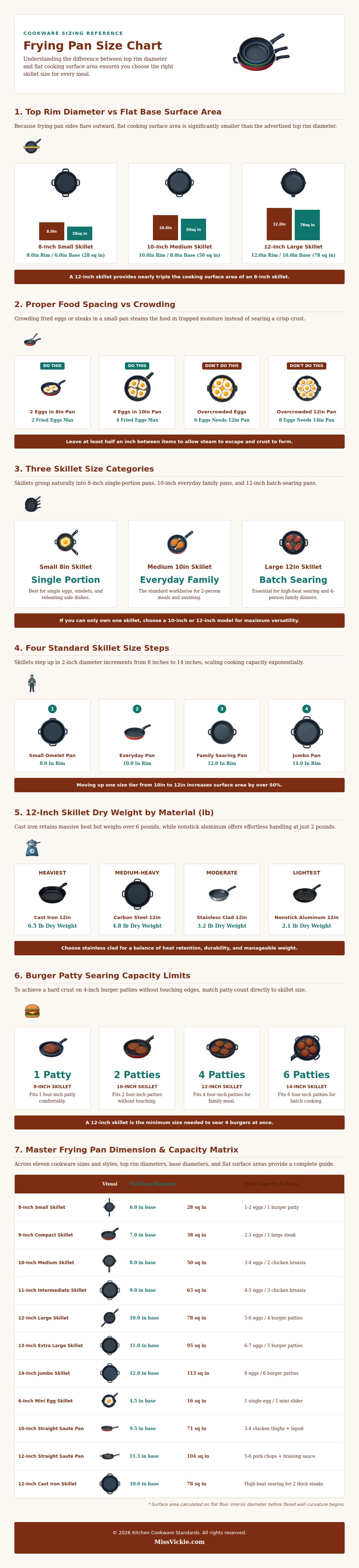
Home cooks typically purchase their cookware by looking at the rim diameter printed on the box. They never notice. Until now, that there is something else to know about pan sizing. There is a difference between the rim diameter and the diameter of the actual flat cooking surface. And this geometric detail make all the difference.
Why Your Pan Size Matters
The Maillard reaction occurs on the pans flat surface. That’s where the sear becomes seared. That is what turn boiled food into seared food. You might attempt to sear a steak in a pan that says it’s twelve inches across, yet you’ve only got a ten-inch flat surface to work with. Well, you’re starting behind.
Once you understand this distinction, things like frying eggs makes sense in a new way. A good sear requires some breathing room, which is where the visual guide comes into play to show you how many servings each portion make. As soon as you crowd a pan, you start compromising its ability to keep temperature; moisture gets locked inside and everything starts steaming instead of browning. The trick is to leave plenty of space between your food; at least half an inch, so steam can evaporate. That’s a small thing, but it makes a big difference.
For instance: You may believe an eight-inch pan can accommodate a family breakfast, but the data tells us that it’ll handle just two eggs with any comfort. If you try cramming four in there, then you’re waiting longer for the heat to rebound which sacrifices texture for volume. That is not the best tradeoff.
A Decade of Cooking While I don’t think we need a dozen pans in most kitchens, we absolutely want the proper ones. The infographic organizes skillets by how often you cook for more than just yourself. How often do you reheat things? There’s no point having an eight inch pan when you’re feeding more than one person; likewise, a twelve inch pan is a powerhouse for batch cooking, yet it can be unwieldy for a single meal. The goldilocks range, if you’ve got counter space to clear and just a single skillet to have, would of the ten inch pan, it’s versatile enough for two people, but still scales up relatively well while retaining some control over your dish.
People also overlook weight. Picking up a twelve inch cast iron skillet (over 6 pounds) one handed while trying to deglaze is not fun. That’s nice for retaining heat, but a bit much on the wrist after doing this too often. For reference, the same sized nonstick version in aluminum weighs slightly more than two pounds. This chart breaks down the comparisons directly, with stainless steel clad skillets giving a nice compromise. They hold heat well without being heavy. It is a balance between comfort and performence.
Lastly, take into account what you’re preparing. For example, how do you plan to prepare certain foods such as chicken breast, or a few burger patties? Here’s where the pan size comes into play. The chart above connects pan size to foods (via the “capacity matrix”). You can see that if you want to sear four burgers simultaneously, you’ll have to use a 12-inch pan or larger; anything smaller will cause them to touch each other, which leads to boiling the meat around the edges instead of crisping it up. Most folks mess this up. Instead of thinking about how much space they need to cook their food properly, they just think about quantity. Match your pan to your portion and quit guessing. Cooking with intent begins here.
Next time you grab for a skillet, check out not only the rim but also the bottom, this simple bit of forethought will save you from rubbery eggs and soggy steaks every single time.