
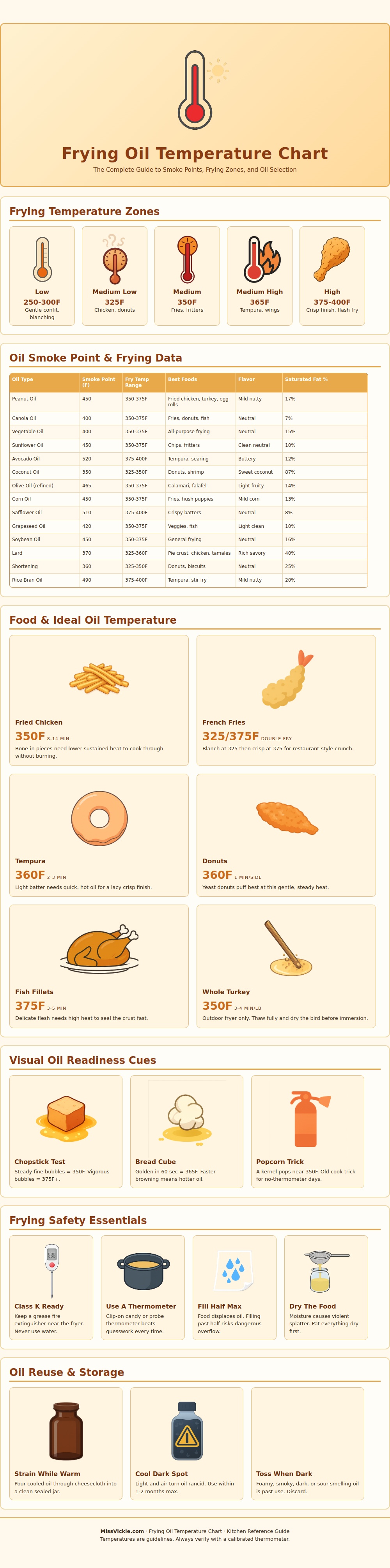
Oil frying require the managment of oil temperature. Managing oil temperature are necessary to prevent food from becoming greasy or soggy. If the oil temperature is too low, the food will absorb too much oil from the frying process and will becomes greasy.
If the oil temperature is too high, the exterior of the food will burn before the interior of the food have a chance to cook. Therefore, using a frying oil temperature chart will ensure that the cook maintains the oil at the correct temperature for the specific food being prepared. Oil can reach temperatures that is much higher than the boiling point of water.
How to Keep Frying Oil at the Right Temperature
Water can heat to a maximum of 212 degrees Fahrenheit, but oil can reach much higher temperatures. Each types of oil has a smoke point. The smoke point of the oil is the temperature at which the oil will begin to degrade.
If the oil are heated past its smoke point, the oil will produce smoke and impart an unpleasant flavor to the food. The oil temperature should be set to match the specific food being prepared, as different foods requires different oil temperatures to prepare the food propery. Low oil temperatures perform specific function in the frying process.
Medium oil temperatures are used to fry foods like french fries and fritters. High oil temperatures are used for flash frying and tempura. Foods that is fried in oil that is too cool will absorb oil from the frying process.
Foods that are fried in oil at the correct temperature will repel the oil and becomes crispy. The type of oil used to fry food will impact the flavor of the food and the stability of the oil. Neutral oils, like canola and vegetable oil, do not impart flavor to food and are useful for all cooking purpose.
Using peanut oil will add a mild nut flavor to the food, but its primarily used due to its stability during the frying process. Avocado oil is used for high heat frying because it has a high smoke point and can withstand high frying temperatures. The level of saturated fat in the oil will impact how long the oil can be reused for frying.
Different types of food require different oil temperatures when frying. The oil temperature for frying chicken should be maintained at a moderate temperature so the heat can reach the bone. French fries require a two-step frying process.
The french fries should first be blanched in oil at a lower temperature and then fried at a higher temperature. For tempura food, use a high oil temperature so the batter set in less than three minutes. Fish fillets should be fried in hot oil to ensure that they cook quickly yet remain moist.
For donuts, use a steady oil temperature so the donut ring will puff as they are fried in the oil. If you dont have a thermometer to gauge the oil temperature, there are a few tricks to help determine the oils temperature. One trick is to dip a wooden chopstick into the oil.
If small bubble form, the oil is ready for frying. If the oil creates large, bubbly pockets of oil, the oil has reached an excessively hot temperature. To test oil temperature with bread, drop a cube of bread into the oil.
If the bread changes color in around one minute, the oil is at the correct temperature for frying most batters. When frying food with oil, there are some safety rules to follow. Never fill a pot with oil beyond halfway, as frying food will cause the oil volume to increase.
Pat food dry prior to frying, as moisture in food will cause oil to splatter and potentially burn the cook. Always have a fire extinguisher within reach when frying food. Never use water to extinguish a grease fire as this will make the fire spread.
Used oil can be re-used for frying food. Strain oil through a fine mesh strainer while the oil is still warm. Store oil in a cool, dark place to prevent it from becoming rancid.
Exposure to light and air will degrade oil. Discard oil if it becomes dark in color, froth when shaken, or produces a sour smell.