
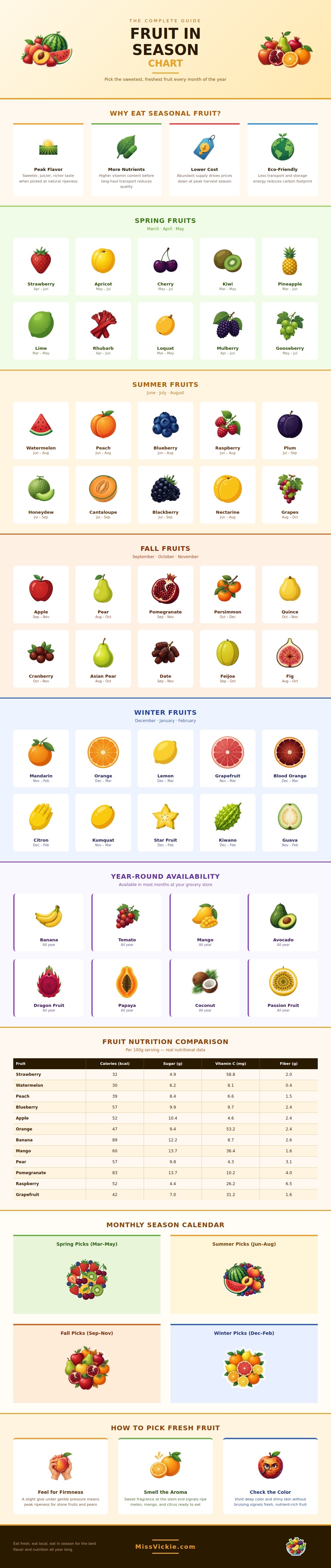
Did you ever buy strawberries in January and find yourself frustrated by the lack of flavor? The fruit look red and sweet, but it is watery inside. Out-of-season fruit must be transported further, and the fruit come ripe not on the plant, but in transit. When you know what grows in what month, you’ll pay less and eat better. With this chart (above) you can see what’s at its best in every month.
It will help you match your grocery list to the calendar (no longer do you fight nature); now you work with it. You get better flavor and lower prices. As the weather warms up, spring berries hit the market. Strawberry reigns supreme through April and May; they’re packed with much-needed vitamin C after enduring the winters tiredness. Because strawberries are fragile, they’ll go bad fast if you hold off on eating them.
Eat Fruit In Season For Better Taste And Health
Kiwi and rhubarb is not far behind. Tart and not-sweet at all, rhubarb typically gets used in baked goods. Usually pie, instead of eaten out of hand. Though its peak time is actualy spring, it becomes an essential part of early-summer treats nonetheless. With a short window of freshness, purchase immediately upon availability.
Summer brings more volume and heat for produce. Stone fruits and melons dominates as warm days increase their sugar content. Early-season peaches (purchased in early June) might be firm but lack flavor; later ones (in late July) will be fragrant and juicy. You can see it all spelled out in the infographic.
Fresh berries, blueberries and raspberries; hang on into midsummer, delivering antioxidants when your skin needs them most (to cope with sun damage). It makes perfect biological sense. Fruits that fight heat stress, such as cantaloupe (which has high water content), do there thing.
As the air cools, markets turn to hardy fruits that last. Before frost comes, apples (and pears) is all the rage, since they’ll keep awhile longer. Persimmons and pomegranates complicate matters. They’re work to consume; you get rewarded for poking around inside if it’s worth your while, but the effort keeps casual snackers at bay.
Quince are so hard when raw that they don’t make it into the snack bowl; instead they’re used in jellies and other preserves. If only you would of knew that. Citrus fruits have it all over in the winter: they’re a rich source of vitamin C at a time of year when other fresh foods may be scarce. Look at that chart: those fruits lasts into February. Why? Their thick-skinned structure allows them to withstand shipment well (unlike soft berries), keeping them good longer.
That architectural detail is why you don’t find many fragile-looking strawberries in December; there’s no way they could make it through the cold chain logistics of winter shipments. Then there are the fruits that are simply out of season… Bananas, avocados, mangos (which come from someplace else in the tropics where it’s always summer). They’re on the list as a nod to our globalized world, where we don’t need to be limited by seasons when it comes to food.
But at what cost? Consistent availability vs. Locally grown at their peak flavor. If you value consistency over locality, then so be it. It is, after all, convenient. Here’s another wrinkle to your decision: nutrition data. Most of the popular berries has more fiber per serving compared to other fruits (raspberries especially). Pears and apples deliver decent amounts of fiber too, helping to keep you fuller longer while aiding digestion.
On the flipside, bananas are higher in both sugar and calories, great for fast energy, but perhaps not as good if you’re monitoring carbohydrate intake. Use this knowledge to mix a lower-calorie fruit with something higher in fiber for a balanced plate. For optimal picking, you can’t just consult the calendar. Using all your senses is required to judge what’s ready.
For example: Sight may be less important than smell in determining ripeness. If the fruit is ripe, it should have a distinct aroma at the stem end, such as with melons or mangos. Nothing? Ditto in the flavor department. Touch: With stone fruits such as peaches, ripe fruit will give slightly when gently squeezed. Too hard? More time on the countertop. Soggy? That indicates bruising, which quickly becomes rot.
Color & Texture: Vibrant color means good things. Smooth skin helps; bruises are invitations to mold. There’s an obvious financial incentive to eat seasonally: When the supply is greater then the demand, prices are less. If you purchase your apples in May, you’re paying more than if you bought them in October.
By choosing local, seasonal food, you support the region’s growing cycle, reduce a product’s carbon footprint from long-distance travel, help the farmer, and get more value from tastier goods. The next time you go shopping, pick up a few items and check out the month beforehand. Are they in season? Pick what nature has ready, save some money, and give your taste buds the treat of better flavor.
It’s not just how something looks fresh, but when.