MissVickie fresh pasta math
Flour for Fresh Pasta Calculator
Size fresh pasta flour by servings, shape, egg or no-egg dough, semolina/AP/00 blend, hydration, rolling loss, filled-pasta allowance, and dough rest.
🍝Pick a fresh pasta scenario
Each preset loads a real pasta plan, then you can adjust the flour blend, hydration, rolling loss, filled-pasta allowance, and rest time.
⚖Choose units
🥚Servings, shape, and dough style
🌾Semolina, AP, and 00 flour blend
📊Fresh pasta flour checkpoints
📋Shape and serving guide
| Pasta shape | Base flour per main serving | Best dough | Typical adjustment |
|---|---|---|---|
| Tagliatelle or fettuccine | 100 g flour | Classic egg or 00 blend | Balanced sheet width, low trim loss |
| Tagliolini or thin noodles | 95 g flour | 00-rich egg dough | Thin rolling needs gentle dusting |
| Pappardelle | 105 g flour | Egg dough with some semolina | Wide ribbons carry more sheet weight |
| Lasagne sheets | 108 g flour | Egg dough or balanced blend | Plan extra for pan trimming |
| Ravioli | 88 g flour plus allowance | Elastic egg sheet | Use 12-18% assembly allowance |
| Tortellini or cappelletti | 82 g flour plus allowance | Thin egg sheet | Use 18-25% folding allowance |
| Extruded semolina shapes | 112 g flour | No-egg semolina dough | Lower hydration and longer rest |
🌾Flour blend reference
| Blend | Semolina | AP flour | 00 flour | Use when |
|---|---|---|---|---|
| Silky sheet pasta | 20% | 0% | 80% | You want tender ribbons and smooth lasagne sheets. |
| Balanced home blend | 25% | 25% | 50% | You want enough bite without relying on all 00 flour. |
| All 00 flour egg pasta | 0% | 0% | 100% | You want delicate egg pasta that rolls very thin. |
| AP and 00 mix | 0% | 50% | 50% | You want familiar handling with a smoother finish. |
| Semolina-forward | 80% | 0% | 20% | You want firmer bite for rustic noodles or hand shapes. |
| Extruded no-egg | 100% | 0% | 0% | You want water dough for bronze-die style shapes. |
💧Hydration and rest table
| Dough style | Liquid target | Rest range | Handling note |
|---|---|---|---|
| Classic whole-egg dough | 48-52% egg weight to flour | 30-45 minutes | Rest until the surface relaxes and rolls without snapping back. |
| Yolk-rich dough | 45-50% egg and yolk weight | 40-60 minutes | Extra yolk makes a tender dough that benefits from a longer rest. |
| No-egg semolina dough | 48-52% water to flour | 50-75 minutes | Semolina hydrates slowly, so rest before judging stiffness. |
| No-egg AP/semolina dough | 46-50% water to flour | 40-60 minutes | Start lower, then mist water only if the dough will not come together. |
| Spinach egg dough | 46-50% including puree | 35-55 minutes | Squeeze puree well so the dough does not become sticky while rolling. |
💡Pasta flour notes
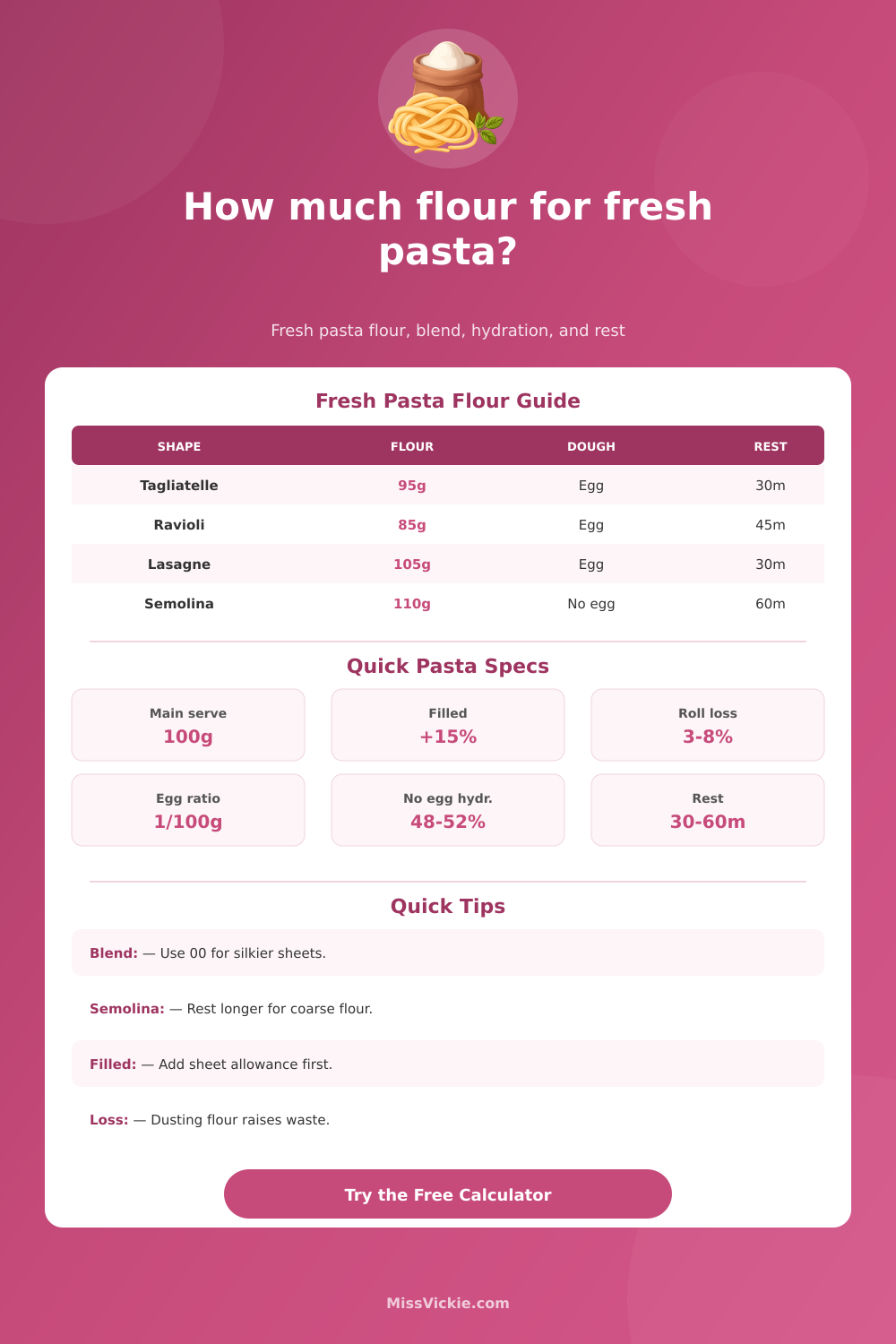
To determine an amount of flour needed for making pasta, there is several variables that must be accounted for in the calculation. First, the shape of the pasta that will be made can affect the amount of flour that are needed. For example, those who is making tagliatelle or fettuccine will need to use approximately one hundred grams of flour for each person who will eat the pasta, but those who are making pappardelle will require more flour because the pappardelle pasta are wider and uses more flour to achieve the desired weight.
Additionally, those who are making filled pasta will require even more flour then those who are creating unfilled pasta shapes. These types of pasta requires more flour to provide enough dough to completely seal the pasta. Thus, the shape of the pasta can impact an amount of flour required for the pasta being made.
How Much Flour Do You Need for Pasta
Second, the ingredients that will be used in the pasta will impact the amount of flour that should be used in the pasta recipe. For instance, egg dough will require a level of hydration (amount of water to flour) of 50%. However, semolina dough recipes (those that contain no egg) will require you to add water manually to achieve the proper hydration of the dough.
As a result, semolina dough will require more time to rest to allow the semolina flour to be hydrated. If the dough isnt rested enough, it will be difficult to roll; however, if it is rested for too long without covering the dough, the surface will dry out and begin to crack. Third, the type of flour that will be used will impact the texture that the pasta have when it is cooked.
00 flour will produce pasta that has a delicate texture. However, if semolina flour is added to the dough, the pasta will have a firm texture. The firmer texture of pasta made with semolina flour, however, may be more difficult for cooks to roll.
These percentages of 00 and semolina flour can be adjusted in a calculator to see the effect that each flour have on the weight of the pasta. Fourth, some allowance must be made for the rolling loss of the pasta. Flour is used to roll the pasta on a counter top and with a rolling pin.
Thus, the rolling process will use some of the flour, and some of the pasta may be lost when trimming the edges of the pasta of the rolling scraps. Six to seven percent of the total flour can be allowed for rolling loss; however, more flour may be required if the pasta to be rolled is very thinly or if it is filled pasta. Fifth, the resting period of the dough will impact whether or not the pasta is workable.
If the pasta is rested for too short of a time, it will be difficult to roll; however, if rested for too long without a cover, the pasta will dry out. The amount of time required for the dough to rest can be calculated based off the amount of semolina in the flour and the amount of extra egg yolks in the pasta recipe. By calculating the amount of flour needed and the resting time of the pasta recipe, cooks can ensure that they have enough of each ingredient for the pasta recipe.
You should of accounted for the flours weight. Its important to recieve the correct measurements.