
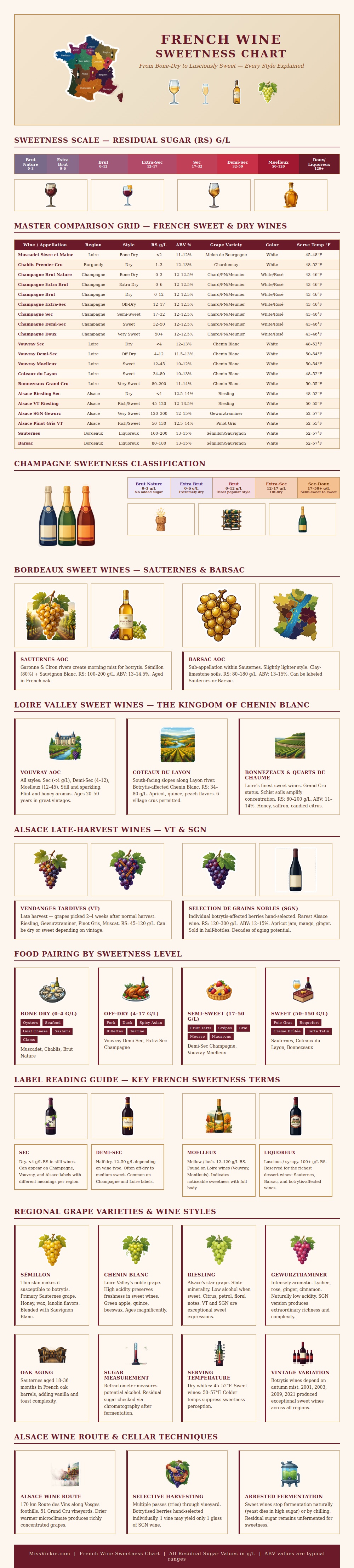
There are so many options when walking into a well stocked wine shop. There’s Alsace, Burgundy, Loire Valley, Champagne… yet it can be confusing. Why? Because words like Sec, or Brut mean one thing in one region and something else entirely elsewhere. It happens so much that you’ll reach for a bottle that turns out to be drier (or sweeter) then expected, which ruins your dinner in the process.
Knowing what those words realy imply in terms of sugar levels make all the difference at table. Here’s a breakdown of residual sugar levels by region in France (above). Residual sugar refers to level of grape sugar remaining in a finished bottle when yeast stops fermenting, and thus what determines how sweet or dry your wine will taste.
How Sweet Is Your French Wine?
Here’s where a confusing term comes into play, specifically in Champagne. If you think a Brut is dry enough for most people, try a Brut Nature instead (with virtually no sugar) since you prefer a sharper taste than most. At the opposite end of the sparkling scale, Demi-Sec is much sweeter, think macarons or fruit tarts. Whereas a typical Brut would ruin such dessert.
The bubble doesn’t stop there, it’s just as much of a regional thing. In the Loire Valley, for example, the dominant grape is Chenin Blanc, which make anywhere from honeyed to crisp wines. The graphic shows that even though Chenin Blanc is one grape variety, it makes different wines in Vouvray. These can be Sec (dry), Demi-Sec (off-dry), or Moelleux (sweet). Order a glass of Chenin Blanc without noting what style you want and you’re gambling with your taste buds. Note: The sweetness of these wines isn’t cloying, because they relies on their natural acidity to balance the sugar.
Alsace does things differently with late harvest wines. You’ll see late-harvest wines classified as either Selection de Grains Nobles or Vendange Tardive. Both are powerful wines that frequently experience noble rot. That sounds scary, but in the case of making sweet wine, it’s what we want: noble rot dries out grapes, concentrating their flavor, creating mango, ginger and apricot notes. They’re difficult to find; age for decades; and develop layers of depth not found in early-harvest wines. Now you know why you may have seen a bottle from this area listed at a higher price, and why it deserves a place on your special occasion list.
Once you understand where these numbers fall on the scale, pairing your meal gets much easier. For instance, the lack of residual sugar in dry white wine… Such as Chablis or Muscadet, highlight the naturaly salty flavor of seafood or oysters. On the other hand, a sweet white like Sauternes will counteract the saltiness of a blue cheese or cut into a rich foie gras dish. The contrast between them makes both elements better.
Don’t expect to remember all of the numbers on this chart, but having the general categories in your head will help keep you from an embarrassing dinner moment. You should of had some practice. At the end of the day, French wine labels represent generations-old traditions from their own regions. If you can look beyond simple varietal name and grasp the underlying sweetness structure, you gain control over your own selection.
Next time you’re standing there staring at that wine shelf, consider what you plan on eating first and use the general guides to find something with just enough (or not enough) sugar for your meal. A little prep work means pouring yourself a glass of wine that matches the meal instead of one that’s fighting against it.