
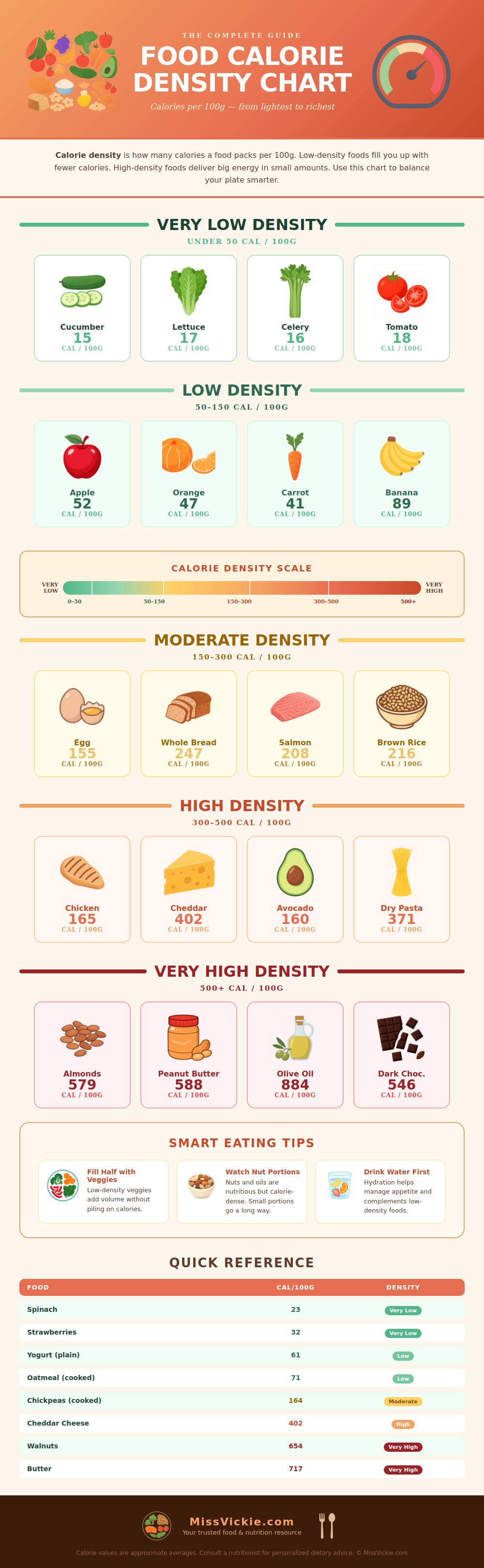
Calorie density shows how many calories food has for its weight, usually for 100 grams or 3.5 units. Foods with high density give more calories per bite than those with low density. Simply, it is the ratio between calories and weight of the food.
Take a quarter pound of steak and same amount of cauliflower: they weigh equally, but the steak has 28 times more calories
What Is Calorie Density and Why It Matters
For same calories you can eat much more of low-dense food than high-dense. Daily folks usually pick alike weight of food. Hence choose low-dense foods help to eat the usual amount, but with fewer calories.
Such foods take lot of space in the belly and give satifaction regarding the calories that they carry.
Pure fat is the most calorie food what you can eat, with around 9 calories each gram. Protein and carbohydrates have 4 calories each gram, alcohol 7. All oils and fats have a bit different energy values, but most recline in 9 calories for gram.
That marks the upper limit of calorie density.
Oils, nuts, seeds and nut butters rank among the densest foods. Peanut butter has surprisingly high density: 90 until 100 calories each spoon. Later come greasy dairy products as milk and cheese, together with greasy meats.
Vegetables, fruits, lean proteins and lean milk or yogurt has low calorie density. Candies, pastries, fast food, oils and greasy dairy are heavy and easily overeaten. Pound of apples has 240 calories, pound of potatoes 350, pound of cheddar cheese 1800.
Fancy carbohydrates from grains as bagels, bread and crackers has around three times more calorie density than whole grains as rice, oats and potatoes. Sweeteners and sugars are heavily calorie, but poor nutrition, so you call them empty calories.
Popcorn is good snack with few calories. Some microwave brands have only 100 calories in 6 cups. Cheesecake rank among the densest foods.
Cast water during bake also expand the density. Foods with more calories each gram are more hazardous for overconsumeing.