Cupcake topper fondant planning
Fondant for Cupcakes Calculator
Estimate fondant for cupcake discs and decorations from cupcake count, topper diameter, rolled thickness, dome allowance, cutout details, fondant style, rolling waste, and color batches.
Choose a topper plan, then adjust the diameter, cutouts, color split, and rolling waste to match your cupcake design.
Fondant Topper Breakdown
| Topper Diameter | Best Cupcake Fit | Look on Top | Fondant Note |
|---|---|---|---|
| 1.5 to 1.75 in | Mini or narrow cupcakes | Small accent disc | Good for initials and tiny icons |
| 2 to 2.25 in | Standard cupcake liners | Balanced round topper | Most common size for flat discs |
| 2.5 to 2.75 in | Large bakery cupcakes | Full top coverage | Add dome allowance for swirls |
| 3 in and wider | Jumbo cupcakes | Statement plaque | Dry flat before moving |
| Rolled Thickness | Use Case | Handling | Calculator Effect |
|---|---|---|---|
| 1 to 1.5 mm | Thin discs and tiny cutouts | Flexible but fragile | Lowest fondant weight |
| 2 mm | Standard cupcake toppers | Easy to cut and lift | Baseline estimate |
| 3 mm | Embossed stamps and plaques | Holds shallow impressions | Adds about half again |
| 4 mm or more | Bows, numbers, and raised pieces | Needs longer drying | Use for chunky cutouts only |
| Fondant Type | Texture | Best Topper Use | Planning Note |
|---|---|---|---|
| Commercial rolled | Consistent and smooth | Discs, plaques, stamped tops | Reliable baseline density |
| Marshmallow fondant | Soft and stretchy | Simple discs and hand shapes | Allow more re-roll waste |
| Fondant with gum paste | Firmer and quicker drying | Flowers, bows, thin letters | Great for delicate cutouts |
| Chocolate fondant | Dense and rich | Thicker plaques or molded accents | Weighs more at same thickness |
| Decoration Plan | Cutouts Per Cupcake | Color Batches | Waste Setting |
|---|---|---|---|
| Plain disc with one stamp | 0 to 1 | 1 to 2 colors | 8 to 12 percent |
| Small stars or leaves | 2 to 4 | 2 to 4 colors | 12 to 18 percent |
| Layered florals or logos | 4 to 8 | 3 to 6 colors | 18 to 25 percent |
| 3D bows, toppers, numbers | 1 to 3 larger pieces | 2 to 5 colors | 20 to 30 percent |
Lowest waste and easiest color batching when the design is stamped or painted.
Needs extra fondant for small cutters, rerolling, and several accent colors.
Uses extra surface allowance so discs can sit cleanly over rounded cupcake tops.
Works best with firmer fondant blends and a larger drying buffer before serving.
Calculating the amount of fondant required to cover cupcake topper involve considering a variety of different variables. If the amount of fondant needed for you cupcake toppers isnt correctly calculated, you may either find that you dont have enough fondant to complete the project, or you will have too much fondant left over after completing the decorating process. Having too much fondant left over can be problematic because it can dry out and become difficult to work with.
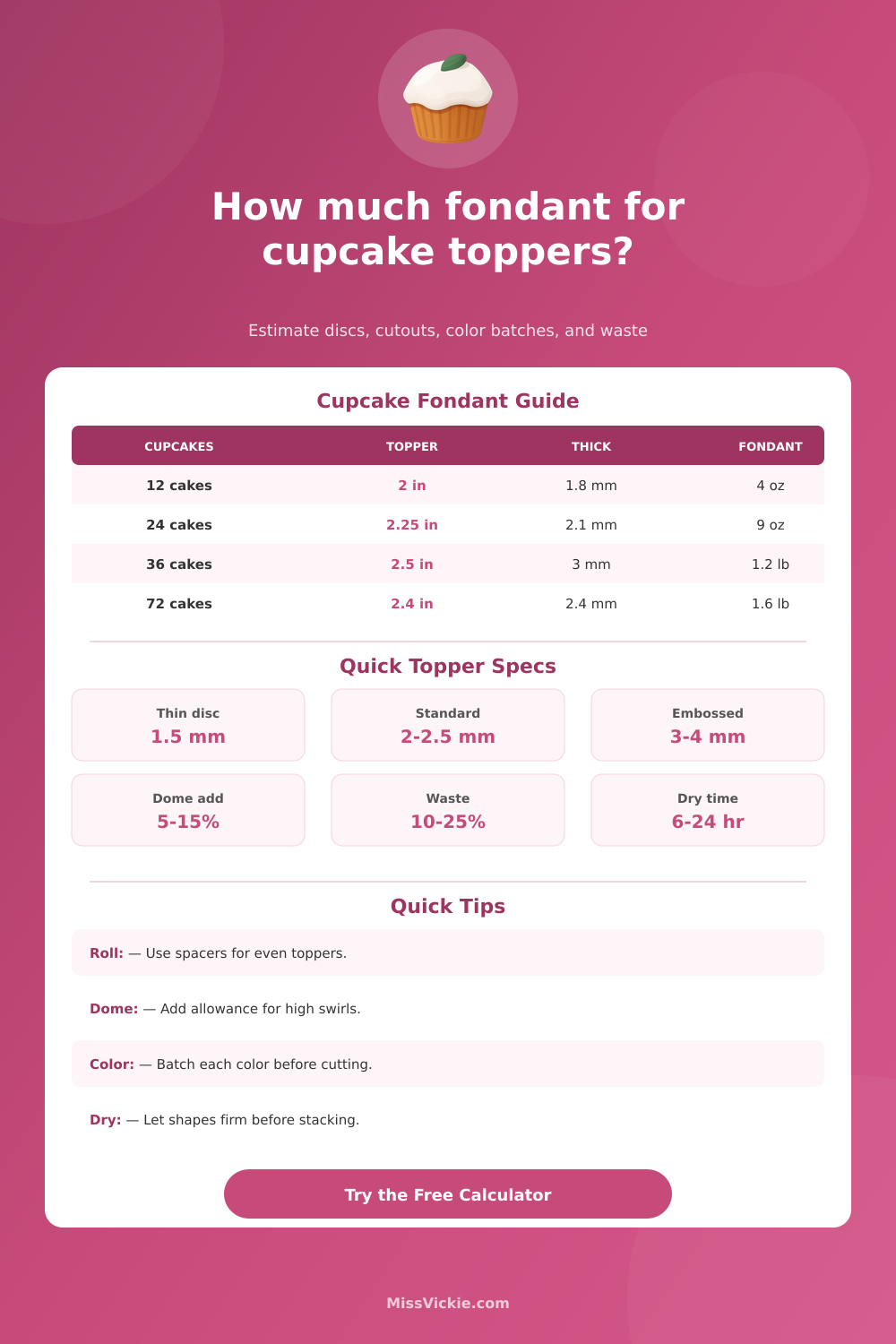
The variables to consider to determine the amount of fondant needed for decorating cupcakes include the thickness of the fondant, the shape of the fondant toppers, the number of colors of fondant to use, and the type of fondant to use. The thickness of the fondant is one of the primary variables in calculating the amount of fondant needed. Thin discs of fondant, such as one and a half millimeters in thickness, will use less fondant than discs of fondant that is three millimeters in thickness.
How Much Fondant You Need for Cupcake Toppers
Although the difference in thickness may seem small for one cupcake topper, the difference in thickness of fondant will become apparent when rolling the fondant for a large number of cupcakes. For instance, if you are to decorate thirty-six cupcakes, then the thicker the fondant discs are rolled, the more fondant will be required to cover the required number of cupcakes. The other variables to consider is the shape and style of the fondant toppers.
Fondant toppers that are in the form of small stars will use less fondant than toppers that are in the form of complex shapes. Complex shapes often require margins around the fondant topper to allow for trimming of the fondant to even out the topper. Therefore, the more complexly the shapes of the toppers are, the more fondant will be required to create those toppers.
The number of colors of fondant that you will use for the cupcakes will also impact the amount of fondant that will be required. Each color of fondant typically requires a new batch of fondant. Each batch of fondant that is created results in some waste of the fondant.
This waste results from the scraps that are left from creating new colors of fondant. For this reason, if a decorator intends to use a variety of colors of fondant for a large number of cupcakes, the amount of fondant waste will increase. In addition to the color of the fondant, the type of fondant that is to be used will also impact the amount of fondant that is required.
For instance, marshmallow fondant can stretch but tends to dry out at the edges when rolling the fondant. Gum paste fondant will firm up more quickly than marshmallow fondant but are easier to use if decorating for intricate elements, such as letters, but more difficult to reroll if an error is made when decorating the cupcakes. The fondant type selector on the calculator allows for these properties to be accounted for in calculating the total weight of the fondant to be used.
Another factor to consider when determining the amount of fondant is the waste that will be created when rolling and cutting the fondant. Some baker account for approximately ten percent of roll waste. However, fifteen to twenty percent of roll waste is typically experienced when decorating cupcakes at home using the methods described in this article.
Roll waste is created when test rolls of fondant are made, fondant tears when lifted from the decorative surface, and fondant trimmings are discarded. By adjusting the percentage waste in the fondant calculator, the decorator can account for their specific rolling habits and waste percentage. The fondant calculator will provide a measured amount of fondant to be used.
By using the fondant calculator to determine the amount of fondant that will be required for the decorating project, the decorator will be able to avoid either running out of fondant before the project is complete or having too much fondant left over. By calculating the amount of fondant that will be required, the decorator will be able to complete the decorating project without having to find more fondant during the decorating process.