Flour Per Loaf of Bread Calculator
Calculate flour per loaf and total flour by loaf count, pan or freeform size, target dough weight, hydration, flour type, add-ins, bake loss, preferment flour, slice size, and flour bag yield.
Choose a common bread setup, then adjust the loaf count, dough weight, flour type, hydration, preferment, add-ins, bake loss, and slice target.
Your Bread Flour Plan
Flour, water, preferment, bake-loss, slices, and bag yield are calculated from your loaf target.
Formula Breakdown
Preferment And Yield
Flour for a standard 9x5 loaf at moderate hydration.
Flour for an 800 g freeform loaf with open crumb.
Flour for a long lidded pan with tight square slices.
Flour for small pans, gift loaves, or tasting batches.
| Loaf size | Typical dough | Flour per loaf | Best use |
|---|---|---|---|
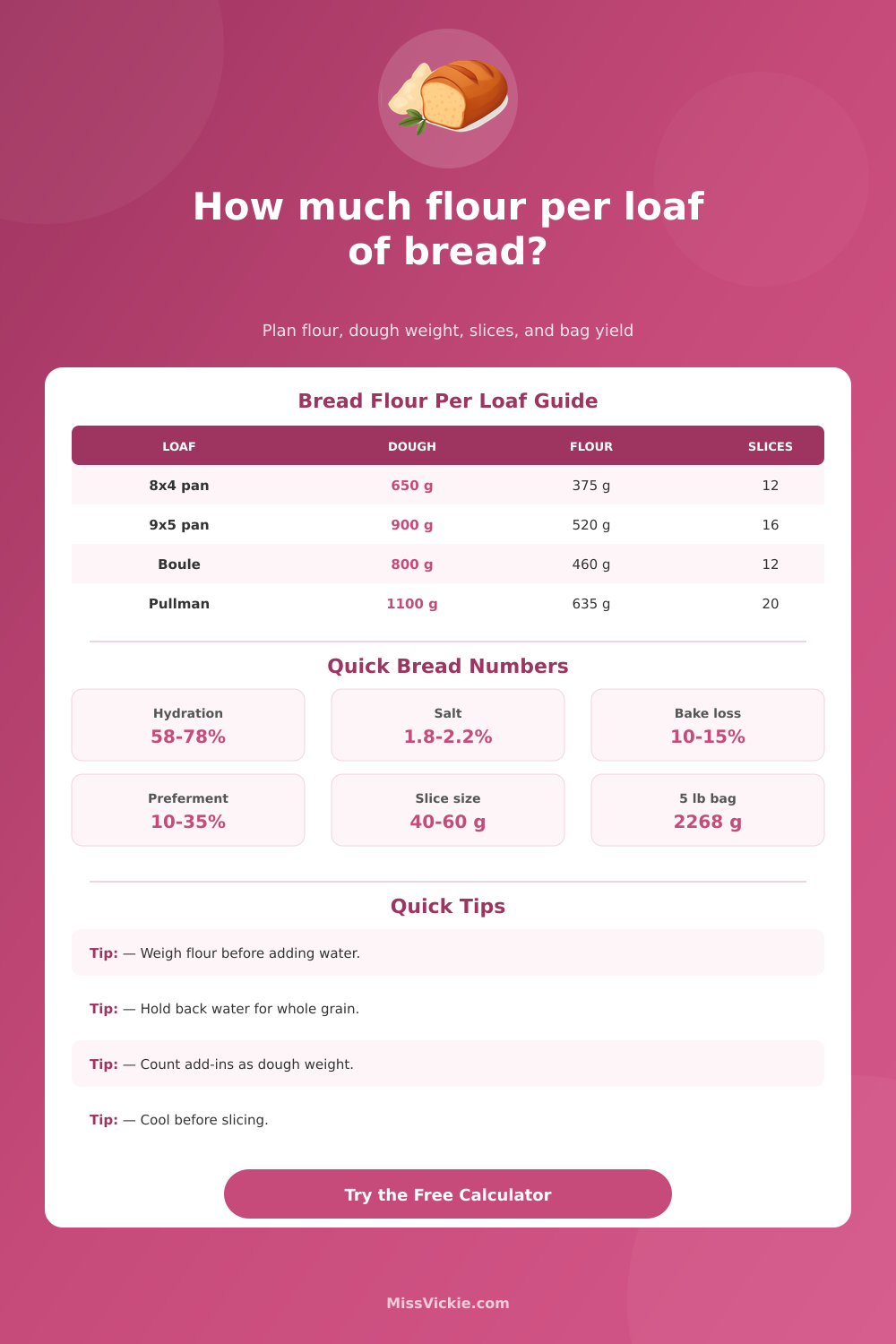
| 8x4 inch pan | 600-700 g | 350-410 g | Breakfast bread, quick sandwich loaf |
| 9x5 inch pan | 850-950 g | 490-560 g | Classic sandwich bread |
| 13x4 Pullman | 1050-1200 g | 600-700 g | Square slices and toast |
| Round boule | 750-900 g | 420-530 g | Crusty artisan loaves |
| Oval batard | 800-950 g | 450-560 g | Sourdough slicing loaves |
| Mini loaf pan | 275-375 g | 160-220 g | Gift loaves or tasting batches |
| Flour type | Cup weight | Hydration range | Loaf note |
|---|---|---|---|
| White bread flour | 125 g | 60-75% | Strong gluten and tall pan loaves |
| All-purpose flour | 120 g | 58-70% | Soft sandwich bread and dinner loaves |
| High extraction flour | 118 g | 68-82% | Nutty flavor with moderate bran |
| Whole wheat flour | 113 g | 75-90% | Needs time to hydrate the bran |
| Medium rye flour | 102 g | 70-90% | Sticky dough, best with pan support |
| Gluten-free blend | 140 g | 85-105% | Usually batter-like rather than kneaded |
| Baker's item | Lean bread | Soft pan bread | Enriched loaf |
|---|---|---|---|
| Hydration | 68-78% | 58-68% | 55-65% |
| Salt | 1.8-2.2% | 1.8-2.2% | 1.5-2.0% |
| Oil, sugar, dairy | 0-3% | 4-12% | 12-35% |
| Add-ins | 0-15% | 0-20% | 5-40% |
| Preferment flour | 15-35% | 0-20% | 0-15% |
| Flour bag | Bag grams | 9x5 loaves | Mini loaves |
|---|---|---|---|
| 2 lb bag | 907 g | 1-2 | 4-5 |
| 5 lb bag | 2268 g | 4-5 | 11-13 |
| 10 lb bag | 4536 g | 8-9 | 22-26 |
| 25 lb bag | 11340 g | 20-23 | 55-65 |
Measurements are practical baking estimates. Flour humidity, milling style, and dough handling can shift the final feel, so hold back a little water when trying a new flour.
Dump some flour in a bowl. Hope it becomes bread. It’s going to be sloppy and unpredictable. Most people begin by throwing in a cup of flour, adding water, then kneading away until their hand feel like they’re falling off.
It’s about precision, not effort. Baking isn’t rocket science, you don’t need a degree in chemistry to make something great. But you do need to stop guessing and start weighing. When you input your hydration levels and desired dough weight, the calculator do the rest of the work. No more translating baker’s percentage by hand. No more forgetting amount of flour tied up in your starter.
Why Baking Needs Precision
We home bakers tend not to pay attention to our preferments. If you’re working with a poolish or levain, there is actualy flour and water in that dough. This needs to be accounted for, otherwise your formula will be off. The app takes away what you have in your finished product, so you don’t end up with too much flour.
One variable to keep in mind is hydration, which is the percentage of water relative to flour weight; a higher hydration simply means you’ll have a wetter, stickier dough. The higher the hydration, the wetter your dough will be. With a high hydration dough, you’ll get big hole and an open crumb when baked. A lower hydration dough is better suited for sandwich loaves and is easier to handle. As you read down the column on the page, table of hydration by bread type explains this.
Because bran is spongy, whole wheat has a greater thirst then white bread does. Rye is another matter altogether; it’s dense and sticky. If you know how thirsty your flour is before mixing, you won’t overdo amount of dry flour in your mix. Once the flour soaks up the water you can add more, but you can’t subtract easily.
The missing variable that no recipe tells you about is bake loss. When your dough enter the oven, it has one weight. When it exits, it is lighter due to water lost as steam through long baking process. To plan meals based off what you have, use the baked weight of your dough. We estimate that loss in the calculator so you can see exactly how many loafs of real bread you’ll get at the end. It makes a difference if you’re sending lunch for the workweek or hosting a dinner party.
No bread can be baked without salt. About two percent of the flour weight is what you want. Less than that: Flat tasting. More than that: Inedible. The tool automaticly breaks down necessary amount.
Because enriched breads uses milk, egg, sugar, or butter, the math changes. These ingredients contribute weight but no structure. They soften the crumb, so there’s a slight shortening of shelf life. If you’re making milk bread or brioche, those fats also coat the gluten strands, which will make your hydration feel lower. To compensate, the calculator lets you enter enrichment percentages, ensuring that you don’t over-hydrate an already heavy-on-dairy dough.
Practically speaking, most consumers purchase five pound bags of flour. How many loaves can I expect to get from a bag? How much should I stock up on? Knowing how many loafs come out of a bag helps you plan shopping trips and avoid waste. And you won’t waste any. Go ahead, bake for your family; that bag of flour won’t last long. It translates those vague ‘how much do I have left?’ pantry questions into hard data. Just how many are there in my typical package size?
The last stage of the process is cooling. If you try to slice into your bread while it’s still hot, it will turn to gummy mush. As it cools, the starches set up. Skipping over this step defeats the purpose, even if you’ve got the right formula going in. You should of let your loaf cool completely (firm to the touch) before slicing into it.
After all, when you put a pile of powder in your oven, you expect to end up with something with some structure, and that’s just what happens. That is because you know exactly what went into it.