How Much Flour to Thicken Chili Calculator
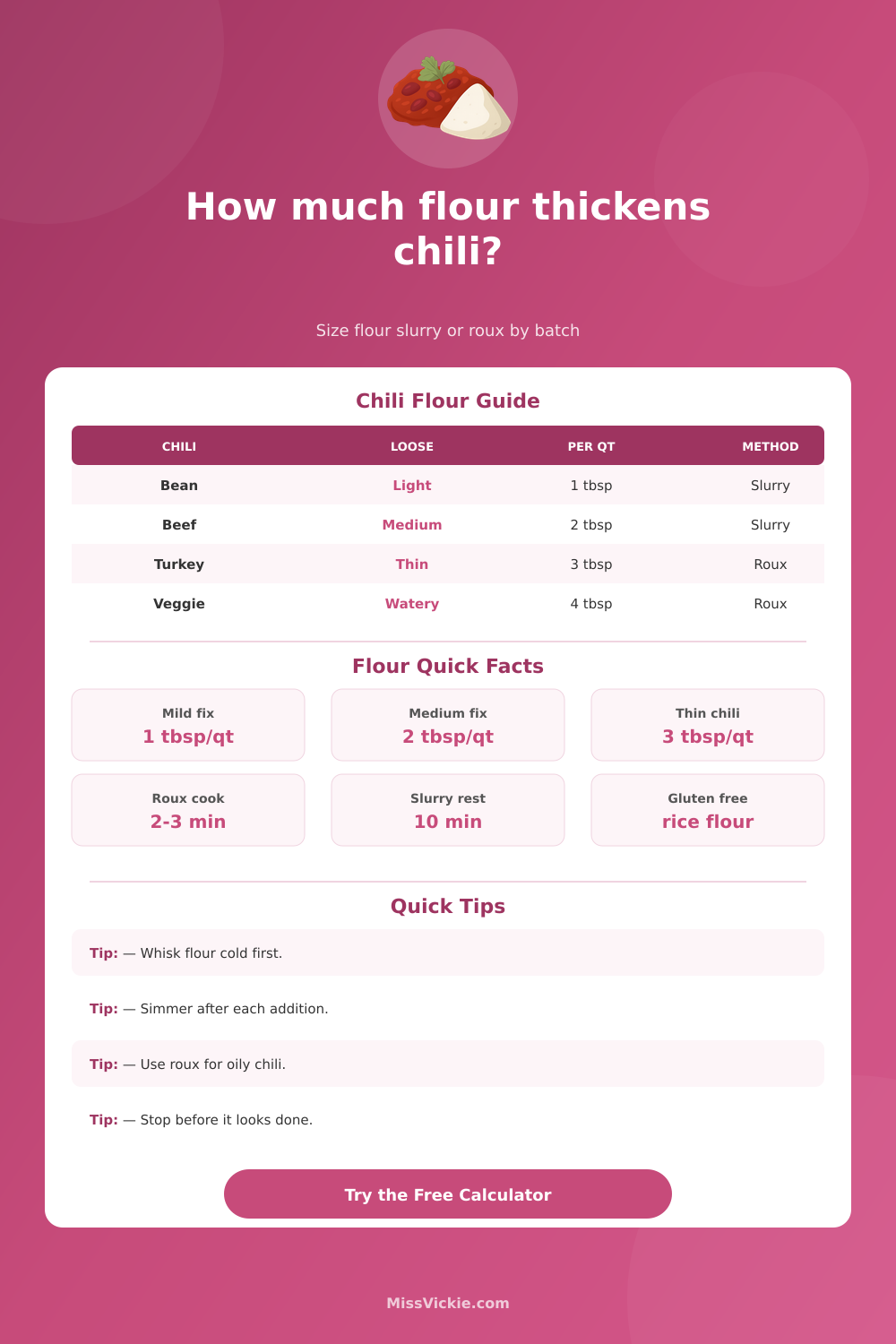
Estimate flour for chili by batch volume, meat and bean load, looseness, simmer time, slurry or roux method, target texture, and flour type.
Load a real chili scenario, then adjust the texture and method before adding flour to the pot.
Flour Thickening Breakdown
Standard chili thickener; needs a full simmer to lose raw flavor.
Blends cleaner and thickens faster, so use a little less.
Slightly thirstier and grainier; roux is usually smoother.
Good gluten-free choice; whisk cold and simmer gently.
| Current Chili | Spoonable Bowl | Hearty Spoon | Topping Texture | Competition Tight |
|---|---|---|---|---|
| Slightly loose | 0.6 tbsp/qt | 0.9 tbsp/qt | 1.2 tbsp/qt | 1.5 tbsp/qt |
| Brothy around solids | 1.1 tbsp/qt | 1.6 tbsp/qt | 2.1 tbsp/qt | 2.5 tbsp/qt |
| Thin and soupy | 1.8 tbsp/qt | 2.4 tbsp/qt | 3.0 tbsp/qt | 3.4 tbsp/qt |
| Watery tomato pool | 2.5 tbsp/qt | 3.2 tbsp/qt | 3.8 tbsp/qt | 4.4 tbsp/qt |
| Method | Best For | Flour Prep | Liquid Ratio | Cook Time |
|---|---|---|---|---|
| Cold slurry | Most chili pots | Whisk flour with cold broth | 2 tbsp liquid per 1 tbsp flour | 10 to 15 min |
| Cooked roux | Fatty or very thin chili | Cook flour with fat first | 1 tbsp fat per 1 tbsp flour | 12 to 20 min |
| Toasted paste | Deeper roasted flavor | Toast flour, then hydrate | 2.5 tbsp liquid per tbsp | 15 to 20 min |
| Sift and whisk | Tiny emergency fixes | Dust very lightly while whisking | No added liquid | 8 to 12 min |
| Batch | Medium Fix | Thin Fix | Slurry Liquid | Add In |
|---|---|---|---|---|
| 1 quart | 1.5 tbsp | 2.5 tbsp | 3 to 5 tbsp | 1 pour |
| 3 quarts | 5 tbsp | 7 tbsp | 10 to 14 tbsp | 2 pours |
| 6 quarts | 0.6 cup | 0.9 cup | 1.2 to 1.8 cups | 2 pours |
| 12 quarts | 1.2 cups | 1.8 cups | 2.4 to 3.6 cups | 3 pours |
| Factor | Raises Flour | Lowers Flour | Why It Matters | Kitchen Move |
|---|---|---|---|---|
| Beans | Few beans | Many beans | Beans keep absorbing liquid as chili rests. | Mash a small scoop before more flour. |
| Meat | Lean meat | Fatty beef | Lean batches often taste thinner and need more body. | Roux helps bind surface fat. |
| Tomato acid | Late vinegar | Low acid sauce | Acid slows starch swelling and can keep chili loose. | Simmer flour longer before serving. |
| Hold time | Serve now | Long hold | Chili tightens as starch and beans hydrate. | Hold back a little flour for later. |
When you make chili, you may find that the chili are too thin and that it look more like a soup. Flour can be used to thicken the chili, but using the correct amount of flours is essential. The amount of flour that you need to thicken chili can be determined based off the amount of liquid and solid that are in the chili pot.
The thickness of the chili can be the result of many differents factors. The meat that you use for chili naturaly contain fats and liquids that are released when the chili is cooked. The bean that are used in chili contain the ability to absorb the liquid from the chili when simmering.
How Much Flour to Add to Chili
Additionally, the tomatoes that is used in chili contain acid that can naturally slow the thickening of the chili. A calculator can help to determine an amount of flour that should be added to the chili pot as the calculator can process the batch size, looseness of the chili, and the load of the solids in the chili. The looseness of the chili is a factor that must be measured to determine an amount of flour that should be added to the chili.
If the chili is slightly loose, it will cling to a spoon. If the chili is more brothy, it will separate from the meat and beans in the chili pot. Thin and soupy chili will allow for the viewer to see the bottom of the chili pot.
The chili may also be watery, indicating that the liquid portion of the chili is shiny and separate from the chili solid. Each of these different measurements of looseness will require a different amount of flour to be added to the chili pot to reach the desired thickness. The load of the solids within the chili can also impact the amount of flour that is required to thicken the chili.
If the chili is heavy with meat, it will require less flour. The protein and fats in the meat will naturally thicken the chili. If the chili is heavy with beans, chili will thicken by itself as the beans absorbs the liquid from the chili.
However, if lean meats is used, such as turkey or chicken, the chili will require more flour to naturally thicken the chili to the desired texture. There are different method for adding flour to the chili. One method is to create a cold slurry by whisking the flour and cold broth together prior to add the mixture to the chili pot.
An alternative method is to use a roux, or cooking the flour in the fat within the chili prior to adding the roux to the chili pot. A third method is to use a toasted paste, which require using an extra pan to toast the flour to enhance the flavor of the chili. Finally, the sprinkle method involves directly adding the flour to the chili pot, and this method is generally used if the chili is to be simmered for a long period of time.
The type of flour that is used will impact the thickness and texture of the chili. All-purpose flour can be used in chili as it will thicken the chili when cooked. Instant blending flour will also work, and the amount of flour will be less than that require for all-purpose flour.
Whole wheat flour will provide more flavor to the chili; however, it will absorb more of the chili liquids. Additionally, rice flour is gluten-free, so adding this flour will not impact the chili thickening processes. Simmer time is another factor in the thickening of chili.
The starch within chili will require heat and movement to hydrate the starch. The acid from the tomatoes will slow the hydration of the chili. Therefore, if the chili is simmered for only five to eight minutes, there is less time for the chili to naturally thicken.
Therefore, more flour should of been added to chili simmered for only twenty to thirty minutes. In addition to knowing how much flour to add to chili, it is also important to know when to stop adding flour. The chili will thicken for several minutes after being turned off the heat due to the beans naturally absorbing the liquid from the chili.
Therefore, chili should be prepared to be slightly loose within the chili pot. After chili is prepared, it should be allowed to rest for five minutes. If chili is too thin after resting for five minutes, more flour can be added.
If the chili is too thick, more liquid will need to be added to the chili pot to balance the chili thickness.