
I find that it’s really intimidating standing at a fish counter; there is so much to decide in such a short amount of time. People who cooks fish at home follow many strict rules instead of appreciating the biology behind their ingredients. They will treat all fish the same, then end up with rubbery or dry results.
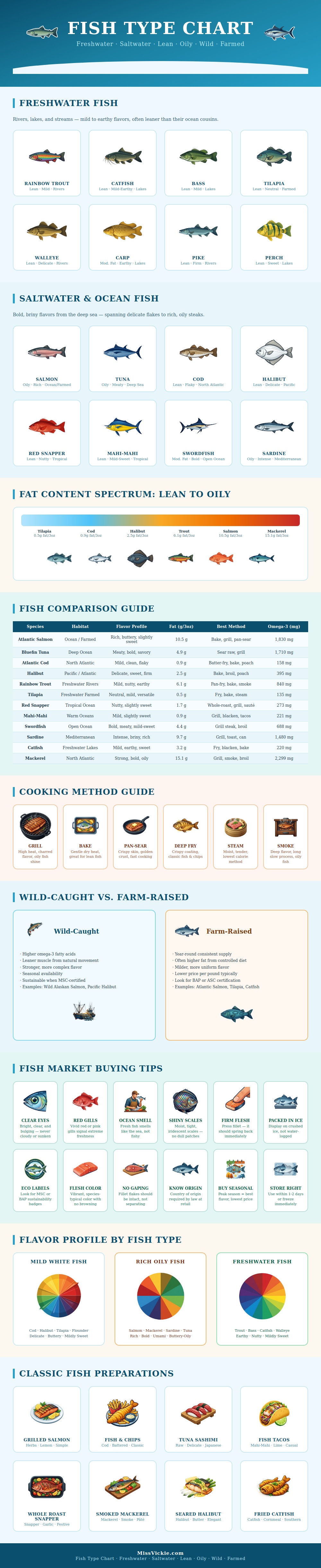
Fish should be treated as different ingredient. Each fish has its own fat content, its own habitat, and therefore need to be approached accordingly. There’s also fresh water vs. Salt water, which matters to some degree, but more importantly, there is the fat spectrum. You should think of fish flesh like meat. Leaner fish shouldn’t be cooked the same way than fattier fish. Baking delicate cod fillet the way you’d sear a plump salmon, for instance, won’t work. To help put your species in order, here is a visual guide that puts them on a spectrum of ultra-lean to oh-so-oily.
How to Cook Fish Based on Fat Content
Very lean fish include tilapia and cod. They’re not exactly juicy inside. Because they don’t have much naturaly fat, their flesh needs protection when being cooked with some kind of added fat or gentle heat. Oily fish, such as mackerel and sardines, is already full of natural fats that keep them from drying out in the pan. Knowing where your fish falls on this spectrum changes how you’ll prepare the fillet.
For instance: The ideal way to cook the fish is based off its fat content. If there isn’t much fat to act as a buffer, like with lean fish, it will burns fast over direct heat. Without the protection of fatty goodness, your dish will turn into soggy mess. Like cardboard. Because steaming and poaching are moist but don’t require any added stress to the flesh, white fish is excellent cooked this way.
Conversely, the high heat is good for oily fish; the fat melt a bit and adds depth to the flavor. For example, a thick steak of swordfish might be too heavy if it steamed, so consider grilling it instead to keep it from sticking and bring out the strong, meaty flavor that oily varieties offer.
But that fish also matters: Is it from a farm? Is it wild? Wild fish are usually leaner, as they swim great distances in colder water; burning off their energy stores to make flesh firmer with an even stronger taste. Because they’re raised in captivity and fed a constant diet, farmed fish has a subtler flavor and higher fat levels. There’s no clear winner here; instead, let your intended outcome determine what you want. A wild catch will deliver greater depth of flavor, while a farmed fish can serve as a subtle background to rich sauces. Look for sustainability labels (such as BAP or MSC) to ensure your purchase supports sustainable farming.
When purchasing fish, don’t only look at the “sell by” date; go with your nose and eyes. If you buy whole fish: are the gills red and the eyes clear? When you gently press into the flesh, is it firm and does the indent dissapears quickly? Does it smell fresh (like being at the beach) instead of rancid (old wet dog) or like ammonia? Assuming the fish passes these tests, you’ll be off to a good start in preparing them. To keep them as fresh as possible, store them on ice in refrigerator and use them within two days of purchase. You should of used ice to keep it fresh.
The secret to cooking fish is in learning to respect its biology. Oily fish are your friends; cook them on direct fire and treat them accordingly. Lean fish require tenderness and a gentle hand. When you get past the fight with the ingredient’s biology, the panic at the seafood counter subsides and you’re left knowing exactly how every type will behave under heat. Confidently choosing what you want to work with.