Eggs For Pancakes Calculator
Estimate whole eggs, egg size swaps, binder richness, dairy balance, egg-free replacements, batter yield, and serving tables for silver-dollar, classic, fluffy, and diner-style pancakes.
🥞 Pancake Egg Presets
Choose a batch size, then adjust pancake diameter, recipe style, egg size, dairy amount, and binder richness.
⚖ Pancake Batch Details
Your pancake egg plan
Enter your pancake count and recipe style to size the eggs and batter.
Egg and Binder Breakdown
Batter and Serving Breakdown
📏 Pancake Size and Batter Yield Grid
Batter volume changes with ladle shape, batter thickness, griddle temperature, and how far the batter spreads before setting.
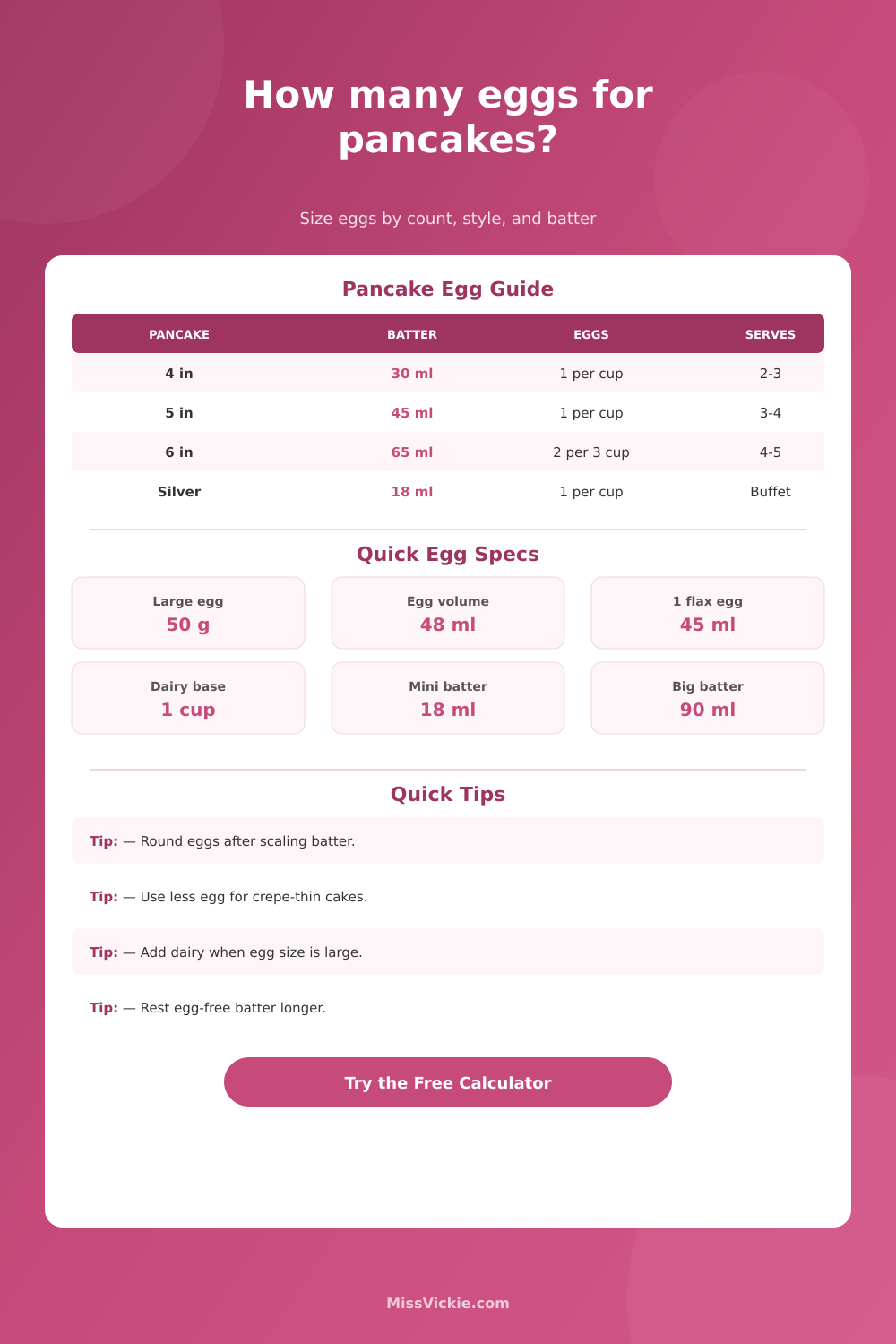
🥚 Egg Size Conversion Table
| Egg Size | Edible Weight | Approx Volume | Large Egg Equivalent | Pancake Use |
|---|---|---|---|---|
| Small egg | 38 g | 37 ml | 0.76 large egg | Round up sooner in full batches. |
| Medium egg | 44 g | 43 ml | 0.88 large egg | Good for lean or thin batters. |
| Large egg | 50 g | 48 ml | 1.00 large egg | Most pancake recipes are written for this size. |
| Extra-large egg | 56 g | 54 ml | 1.12 large eggs | May need a splash more dairy in small batches. |
| Jumbo egg | 63 g | 61 ml | 1.26 large eggs | Best for big batches or extra-rich batter. |
🥣 Recipe Style Egg Ratio Table
| Recipe Style | Egg Ratio Baseline | Dairy Behavior | Texture Goal | Best Adjustment |
|---|---|---|---|---|
| Classic all-purpose pancakes | 1 large egg per 1 cup flour | About 1 cup dairy per cup flour | Tender, stackable, lightly springy | Balanced richness works for most breakfasts. |
| Fluffy buttermilk pancakes | 1 large egg per 1.1 cups flour | Buttermilk thickens during rest | Tall and soft with gentle tang | Use the auto dairy target and rest 8 minutes. |
| Rich diner-style pancakes | 1 large egg per 0.85 cup flour | More dairy keeps the crumb tender | Golden, flexible, slightly custardy | Extra-large eggs can over-set tiny batches. |
| Thin tender pancakes | 1 large egg per 1.4 cups flour | Looser pour and fast spread | Thin, bendable, less cakey | Choose lower-egg richness if stacking with fillings. |
| Whole grain pancakes | 1 large egg per 0.95 cup flour | Whole grain absorbs more liquid | Sturdy but still moist | Add dairy after resting if batter thickens. |
| Protein pancakes | 1 large egg per 0.7 cup dry mix | Needs moisture from dairy or yogurt | Firm and high-protein | Use rich only if the batter has enough dairy. |
🌿 Egg-Free Replacement Table
| Swap | Amount Per Egg | Best Pancake Style | Texture Effect | Rest Note |
|---|---|---|---|---|
| Flax egg | 1 tbsp ground flax plus 3 tbsp water | Whole grain, classic, hearty | Nutty and slightly denser | Gel 5 to 10 minutes before mixing. |
| Mashed banana | 1/4 cup mashed banana | Sweet breakfast stacks | Moist, sweet, more browning | Rest 10 minutes so flour hydrates. |
| Applesauce | 1/4 cup unsweetened applesauce | Kids pancakes and soft stacks | Tender but less springy | Use a slightly thicker batter. |
| Aquafaba | 3 tbsp chickpea liquid | Light dairy-free pancakes | Airier but less rich | Whisk foamy before adding. |
| Yogurt | 1/4 cup plain yogurt | Buttermilk-style pancakes | Tangy and moist | Reduce other dairy slightly. |
👥 Serving Table by Pancake Count
| Service Plan | Classic 5 Inch | Large 6 Inch | Silver-Dollar | Typical Eggs |
|---|---|---|---|---|
| Breakfast for 2 | 6 pancakes | 4 pancakes | 16 minis | 1 to 2 large eggs |
| Family of 4 | 12 pancakes | 8 pancakes | 32 minis | 2 large eggs |
| Brunch for 8 | 24 pancakes | 16 pancakes | 64 minis | 4 large eggs |
| Meal prep stack | 30 pancakes | 20 pancakes | 80 minis | 4 to 5 large eggs |
| Crowd griddle | 60 pancakes | 40 pancakes | 160 minis | 8 to 10 large eggs |
💪 Pancake Egg Nutrition Grid
About 6.3 g protein and 4.8 g fat before dairy, flour, or toppings.
A common family-batch amount for classic 5-inch pancakes.
Mostly fat and fiber from ground flax, with a denser bite.
Replaces one egg with sweetness, moisture, and extra browning.
💡 Pancake Egg Tips
Do not think of egg in pancake batter as a fixed amount. Do not follow a strict set of rules for every batter or else you’ll end up with a flat and crumbly disk or a stack of rubbery cake.
Eggs is structural, binding flour and liquid into a single unit and providing lift by thickening as the pancake cooks. Don’t overdo it. Too much egg will form a dense protein network and turn your breakfast into a tire. Don’t under-do it either, or you’ll have no hope of flipping the cake without it falling apart.
How to Choose the Right Amount of Eggs
How much egg? That varies based off the amount of batter you’re making, the desired size of each cake, and how the other ingredients in the mix react together. By simply plugging in your desired pancake diameter and number of pancakes, the calculator does all the math for you. It saves you from guessing at conversions and ratios.
It also factors in that making six huge diner style pancake will take more binders than trying to make a dozen large silver dollar sized ones. It even factors in egg size, something more people should pay attention to. I mean really, how much protein and liquid do you think is in a small egg compared to a jumbo? If you swap out jumbo eggs for a recipe calling for large eggs, you’re actualy adding more liquid and binder than the flour can handle. And what happens then? You get dense, heavy pancakes that lack airiness instead of the airy crumble you’re after.
So the basic ratio comes from recipe style. But the last touch-up should of come from your palate. In fluffy buttermilk pancakes, where the acid reacts with baking soda to provide lift, the egg is there for structure. Those kinds of batters tend toward delicacy and need a normal or maybe slightly leaner egg ratio to avoid toughness. On the other end of the spectrum, a rich diner pancake is custard-like and dense. It needs. And can takes, more eggs to get that classic tender feel.
With this tool, you’ll adjust the richness slider. This tells the computer how much you want your finished pancakes to be light (cakey) or substantial (a big, hearty bite). It alters the balance of starches to proteins before any eggs are cracked open.
Surprisingly enough, milk also have a part in all this. Whether it’s yogurt, buttermilk, or straight up milk, it’s what keeps the flour hydrated while generating the steam needed for leavening. But here’s where it gets tricky: how much egg you add depends on how much milk (or butter milk or yogurt) you add. Too much liquid? You’ll want fewer eggs; they’ll be harder to bind, resulting in guminess. Too little liquid? More egg protein will help hold it together. That’s where the tool comes into play.
It takes all of these factors into account so that the eggs and the dairy don’t get in each other’s way. Instead, they support each other, helping to balance the moisture levels and create that perfect texture. This is particularly helpful with whole grains which tend to soak up liquids more easily and make the batter seem either too dry or even crumbly without the right amount of both elements.
If you don’t eat eggs: Don’t think that you can simply substitute volume for volume. Substitutes lack the coagulating properties of egg whites. That’s why pancakes aren’t as fluffy when made without eggs, and may be slightly more dense. The other substitutes (like applesauce, mashed banana, or flax eggs) will add some binding and moisture, but won’t cause coagulation. That’s why there’s an estimate for added rest time, to account for how long it takes the starches to thicken and the gluten to develop. Without eggs, your batter isn’t going to hold together until you let it rest.
It depends on the development of gluten to bind everything, plus starch gelatinization. Skipping this step results in too-runny batter which then spreads flat in the pan like a crepe instead of rising into a pancake.
There’s another sneaky variable: batter yield. Testing out mixtures always results in a loss to both the griddle and the mixing bowl. Adding a buffer to the overall volume guarantees enough remaining batter to produce the desired quantity of pancakes. Sounds like a math problem, but this is just good practice masquerading as an equation. People are wont to underestimate their yield, resulting in you having to make a second, smaller batch of pancakes for those who’ve been waiting the longest time. Inevitably, there’ll be inconsistencies and waste. Add a percentage for these factors into your estimation. Little things matter, especially when timing a breakfast for multiple people.
What is the takeaway? The key is balance when it comes to perfect pancakes. In one bowl, you’ve got leavening, fat, liquid, and protein, and all those elements needs to be controlled. If you can keep the egg as the glue holding everything together, then texture becomes yours to control, whether you’re whipping up a big batch for a brunch party or simply a quick weeknight stack for two.
The calculator gets you started, but ultimately, it’s your taste buds (and eyes) that will give you the final judgment call. Does the batter seem too loose? Add some extra richness. Is it feeling tight? Splash in a bit more dairy. Remember, you’re going for tender and golden, not an act of structural engineering.
Get started with the numbers… But go into the kitchen and cook with instinct.