How Much Water in Egg Wash Calculator
Calculate the right water, egg, and finished wash amount for pie crust, puff pastry, rolls, brioche, pretzels, savory bakes, and crumb coatings.
Pick a baking scenario, then fine tune the wash strength, surface area, coats, and leftover allowance.
Egg Wash Breakdown
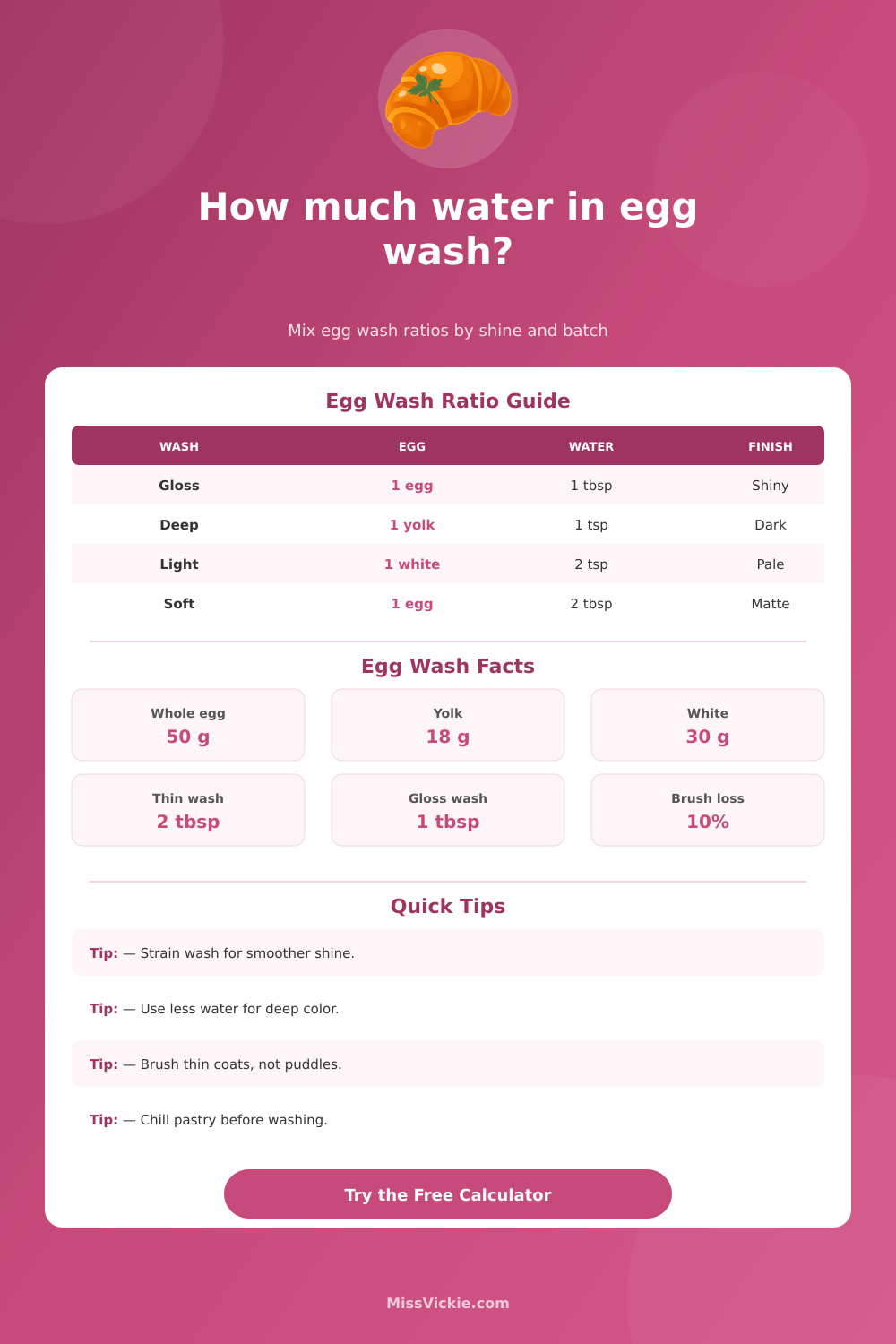
| Egg Wash Style | Base Egg Amount | Water Amount | Best Use |
|---|---|---|---|
| Standard glossy whole egg | 1 large egg, about 50 g | 1 tbsp / 15 ml | Pie crusts, rolls, puff pastry, and everyday bakes. |
| Deep golden yolk wash | 1 large yolk, about 18 g | 1 tsp / 5 ml | Brioche, laminated pastry, rich dinner rolls. |
| Pale egg white wash | 1 large white, about 30 g | 2 tsp / 10 ml | Seeded breads, crisp crackers, light pastry tops. |
| Thin soft whole egg wash | 1 large egg, about 50 g | 2 tbsp / 30 ml | Delicate pastries where color should stay gentle. |
| Whole egg plus yolk glaze | 1 egg plus 1 yolk, about 68 g | 1 tbsp / 15 ml | Bakery-style sheen with a deeper brown finish. |
| Crumb binder wash | 1 large egg, about 50 g | 2 to 3 tbsp / 30 to 45 ml | Cutlets, fried coatings, and bread crumb stations. |
| Finish Goal | Water per Whole Egg | Texture Effect | Watch Point |
|---|---|---|---|
| Very deep color | 1 to 2 tsp / 5 to 10 ml | Thicker wash, faster browning, more egg flavor. | Brush thinly to avoid streaks. |
| Glossy standard | 1 tbsp / 15 ml | Easy to brush with a shiny browned crust. | Best all-purpose starting ratio. |
| Thin even coat | 1.5 tbsp / 22 ml | Spreads smoothly across flaky pastry. | May brown slightly lighter. |
| Soft matte look | 2 tbsp / 30 ml | Gentler color, less sticky surface. | Avoid soaking seams or scored cuts. |
| Crumb binder | 2.5 tbsp / 37 ml | Loose wash that wets flour and crumbs. | Use more for dipping than brushing. |
| Bake or Food | Typical Area | Wash Needed | Water Note |
|---|---|---|---|
| One 9 inch double crust pie | 65 to 85 sq in | 1.5 to 2 tbsp wash | About 1 tsp water if using half an egg. |
| 12 dinner rolls | 95 to 130 sq in | 2 to 3 tbsp wash | About 2 tsp water for a glossy half batch. |
| Half sheet puff pastry | 150 to 180 sq in | 3 to 4 tbsp wash | About 1 tbsp water in one whole egg. |
| Two sandwich loaves | 140 to 180 sq in | 3 to 4 tbsp wash | Thin wash helps avoid dark patches. |
| 8 hand pies | 110 to 150 sq in | 2.5 to 3.5 tbsp wash | Allow extra for sealed edges. |
| 6 cutlets for crumbs | 180 to 260 sq in | 6 to 9 tbsp wash | Binder ratios use much more water. |
| Measure | Metric Volume | Egg Wash Use | Practical Cue |
|---|---|---|---|
| 1 teaspoon water | 4.9 ml | Yolk wash or partial egg batch. | Enough to loosen a single yolk. |
| 2 teaspoons water | 9.9 ml | Light white wash or half whole egg. | Good for a small pie or tart tray. |
| 1 tablespoon water | 14.8 ml | Classic amount for 1 whole egg. | Whisks smooth without getting watery. |
| 2 tablespoons water | 29.6 ml | Soft whole egg wash or binder. | Better for broad trays and dipping. |
| 1 large egg | About 50 g | Makes roughly 65 ml before water. | Usually enough for one to two trays. |
| 1 egg plus 1 tbsp water | About 80 ml | Standard mixed wash batch. | Brushes about 220 sq in once. |
Whole egg with 1 tablespoon water gives dependable color, sheen, and easy brushing.
Yolk wash browns quickly and looks rich, so it needs less water and a lighter hand.
Egg white wash dries thinner and works well when seeds need a sticky surface.
A wetter egg wash helps flour and crumbs cling before frying or baking coated foods.
An egg wash is a liquid mixture that bakers applies to dough to alter its crust color and texture. The amount of water in the egg wash is one of the most important aspect of making an egg wash. Adding too much water to an egg wash will produce a crust that is pale and flatly.
Adding too little water to an egg wash may produce a crust that has patchy area of color and is sticky to the touch. Thus, understanding the effect of water on an egg wash is essential for bakers to achieve the desired crust color and texture. The water in an egg wash thin the proteins and the fats in the egg.
How Much Water to Use in an Egg Wash
Depending on the amount of water added to the egg, the crust can brown to different colors. Using more water produce a lighter crust color then using less water. The baker must choose the amount of water that is used in the egg wash according to the type of dough that will be baked and the desired crust color.
The different parts of an egg will create different result when the water is added to the dough. Using a whole egg will produce a moderate shine to the baked good. Using an egg yolk will produce a darker crust color than using a whole egg.
The fat and pigment content of an egg yolk will require less water to produce a dark brown crust color. However, using an egg yolk in an egg wash may cause the crust to brown too quick when applied too thick to the dough. Using egg whites will produce a crisp crust.
Additionally, the white part of an egg will help the seeds and sugars remains on the crust without adding too much color to the crust. Some bakers use a whole egg and an extra egg yolk in the batch of dough. The surface area of the baked goods will ultimately determine the amount of egg wash needed.
A tray of twelve dinner rolls will have more surface area than a single nine inch pie. You can use a calculator that determines the amount of egg wash needed by entering the length and width of the baked items or the number of batch of dough to be baked. Using the calculator will ensure that there is enough egg wash to coat all of the batches of dough without wasting ingredient.
The way that the egg wash is applied will also change the amount of egg wash that is use. Using a light pastry brush will apply less egg wash per inch of baked product than a heavy application. Some of the egg wash will get stuck to the pastry brush and sides of the mixing cup.
To account for this lost egg wash, a small additional amount of water and eggs should be added to the total amount of egg wash that was calculate with the calculator. This small additional amount of egg wash will ensure that there is enough egg wash to apply to the entire batch of dough. The temperature of the dough and the baking process will alter the action of the egg wash.
Cold dough will hold a thin layer of egg wash better than warm dough. A room-temperature egg wash will spread more easy on the dough than an egg wash that is too cold. Using two light application of egg wash will produce better results than one heavy application.
The first application will allow the egg wash to set slightly before the second application to sit on top of the first layer of egg wash. Many baking mistake are made using the same ratio of egg to water for all types of dough. Using the same ratio of egg to water on a seeded loaf of bread will cause the seeds to slide off the loaf.
Adding too much water to the egg wash will remove too much water from the brioche dough. Applying a thick layer of egg wash on puff pastry will produce dark streak on the pastry. Using a reference table that demonstrates how the amount of water to the amount of eggs will change the result of the egg wash will allow the baker to properly match egg wash to each type of dough.
Understanding the relationship between the ingredients in the egg wash, the surface area of the dough, and the desired crust color and texture is essential to create quality baked goods. Once the bakers understand the relationship between each of the ingredients and the effect that they will have on the crust, the calculator of the amount of egg wash will provide a starting point for the batch of dough. If the amount of water is set correct in relation to the amount of egg and the surface area of the dough, the crust will have the desired color and texture.