🍝 Dry to Cooked Pasta Calculator
Convert dry pasta to cooked weight and volume for any pasta type and serving size
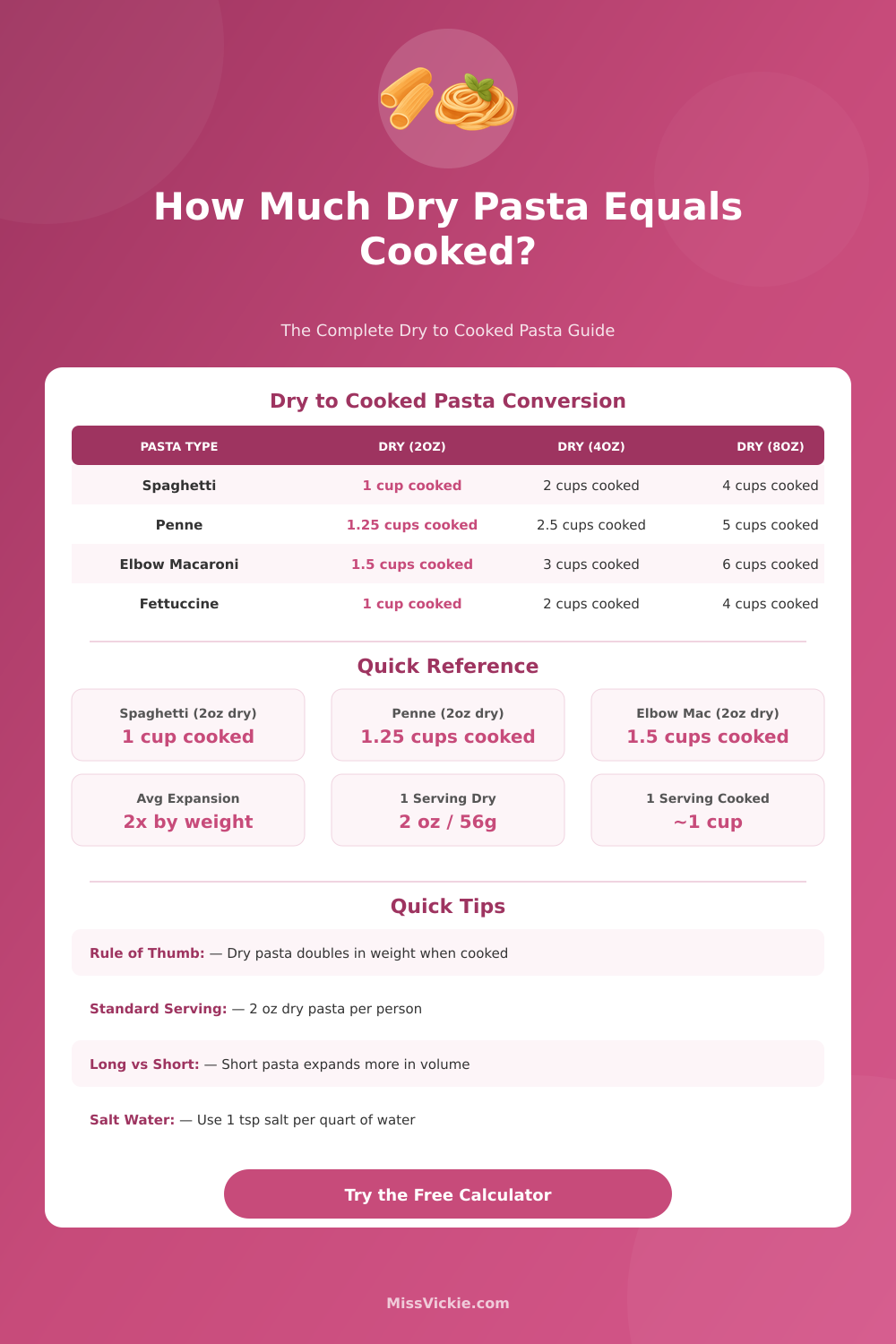
| Pasta Type | 2 oz dry | 4 oz dry | 8 oz dry | 16 oz (1 lb) dry |
|---|---|---|---|---|
| Spaghetti / Linguine | 4 oz / 1 cup | 8 oz / 2 cups | 16 oz / 4 cups | 32 oz / 8 cups |
| Fettuccine | 4 oz / 1 cup | 8 oz / 2 cups | 16 oz / 4 cups | 32 oz / 8 cups |
| Angel Hair | 4 oz / 1 cup | 8 oz / 2 cups | 16 oz / 4 cups | 32 oz / 8 cups |
| Penne / Ziti | 5 oz / 1.25 cups | 10 oz / 2.5 cups | 20 oz / 5 cups | 40 oz / 10 cups |
| Rigatoni | 5 oz / 1.25 cups | 10 oz / 2.5 cups | 20 oz / 5 cups | 40 oz / 10 cups |
| Elbow Macaroni | 6 oz / 1.5 cups | 12 oz / 3 cups | 24 oz / 6 cups | 48 oz / 12 cups |
| Rotini / Fusilli | 5.2 oz / 1.3 cups | 10.4 oz / 2.6 cups | 20.8 oz / 5.2 cups | 41.6 oz / 10.4 cups |
| Farfalle (Bow Ties) | 5.2 oz / 1.3 cups | 10.4 oz / 2.6 cups | 20.8 oz / 5.2 cups | 41.6 oz / 10.4 cups |
| Medium Shells | 5.6 oz / 1.4 cups | 11.2 oz / 2.8 cups | 22.4 oz / 5.6 cups | 44.8 oz / 11.2 cups |
| Orzo | 4.8 oz / 1.2 cups | 9.6 oz / 2.4 cups | 19.2 oz / 4.8 cups | 38.4 oz / 9.6 cups |
| Servings | Dry Pasta (oz) | Dry Pasta (grams) | Cooked Weight (approx) |
|---|---|---|---|
| 1 person (side dish) | 1.5 oz | 42g | ~3 oz |
| 1 person (main dish) | 2 oz | 56g | ~4 oz |
| 2 people | 4 oz | 113g | ~8 oz |
| 4 people | 8 oz (1/2 lb) | 227g | ~16 oz |
| 6 people | 12 oz | 340g | ~24 oz |
| 8 people | 16 oz (1 lb) | 454g | ~32 oz |
| 10 people | 20 oz | 567g | ~40 oz |
| 12 people | 24 oz (1.5 lb) | 680g | ~48 oz |
| Dry Pasta | Cooked Weight | Cooked Volume | Servings |
|---|---|---|---|
| 50g | ~100g | ~0.75 cup | 0.5 serving |
| 75g | ~150g | ~1.1 cups | ~1 serving |
| 100g | ~200g | ~1.5 cups | ~1.5 servings |
| 200g | ~400g | ~3 cups | ~3 servings |
| 250g | ~500g | ~3.75 cups | ~4 servings |
| 500g | ~1000g | ~7.5 cups | ~8 servings |
Pasta is a type of food made from a dough of wheat flour mixed with water or eggs. It is formed into sheets or other shapes, then cooked by boiling or baking. Pasta was first made with durum wheat.
It is a product available in different shapes like spaghetti, round, butterfly, and short types in the market
Pasta: Types, How to Cook, and Easy Recipes
There is fresh pasta and dried pasta. Fresh pasta cooks faster than dried pasta. The difference between the two is freshness.
A fresh pasta recipe can use four ingredients, flour, eggs, olive oil, and salt. One recipe calls for one part semolina, one part durum, and two parts 00 Farina, using one egg per 100 grams of flour, a pinch of salt, and fixing the consisteny with warm water.
Expensive pasta is pushed through bronze rather than teflon, which gives a better surface. The drying process is also more complex, which gives a better texture when cooked. There are easy ways to tell good pasta simply by looking at it and its label.
Pasta only needs a few simple things. It should be cooked in a large pot with a lot of boiling water; not simmering, boiling. The water needs to be salty like the ocean.
Adding salt to pasta water is important. A good serving size is two ounces of dry pasta per person. That is about a cup of cooked pasta.
Measuring out two ounces of dry pasta can get hard when dealing with small shapes like bow tie and macaroni. Depending on the shape, pasta will roughly double in size when cooked.
In Italy, pasta is often served as a primo, which is a first course, with a meat, seafood, or vegetable course called a secondo coming after that. Italians are very portion aware, and it is common to be asked how much pasta you want in grams.
Universal shapes like spaghetti and penne will always lead the dried pasta world. Spaghetti is a sure choice for dishes like meatballs. There are all kinds of great pasta dishes.
One way is cooking uncooked noodles directly in a pan in tomato juice, added little by little like risotto. Leaving the pasta alone in an even layer allows the noodles to both burn and form crunchy bits like the edges of a lasagna.
A nice summer recipe involves cutting cherry tomatoes in half and letting them soak for a few hours with olive oil, basil, garlic, salt, and pepper, then tossing with cooked pasta and grated parmesan. Another light pasta uses cooked fennel and juicy fresh tomatoes, and sometimes seafood. Whole wheat small pasta shells work well with beans because the beans fit into them nicely.
Even tri-coloured spiral pasta can become a favorite since it is colorful and has vegetables inside.
For families, making pasta can be a labor of love and a family event including the children in the procces.