MissVickie kitchen calculator
Dry Brine Calculator
Calculate dry brine salt by weight, convert it to the salt brand on your counter, estimate brining time by meat type and thickness, and check sugar, aromatics, yield, and sodium per serving.
🧂Dry brine presets
Start with the closest food, then adjust the weight, thickness, salt style, sugar, aromatics, yield, and serving count.
⚖Brine setup
Converts weight and thickness fields.
Sets the recommended salt rate and timing curve.
Weight before trimming, in pounds.
Thickness in inches for the slowest part to season.
Volume changes a lot by crystal size.
Percent is salt weight divided by raw meat weight.
Used only when manual is selected.
Optional brown sugar, white sugar, or maple sugar by meat weight.
Pepper, herbs, citrus zest, garlic powder, or spice blend.
Nutrition estimate only; actual absorption varies.
Used for cooked yield and serving math.
Splits sodium and cooked yield across plates.
Changes the practical advice and uncovered rest note.
Dry brine plan ready
Salt, volume, timing, and serving estimates update from the fields above.
Full breakdown
Kitchen note
📊Brine result helpers
📘Dry brine reference tables
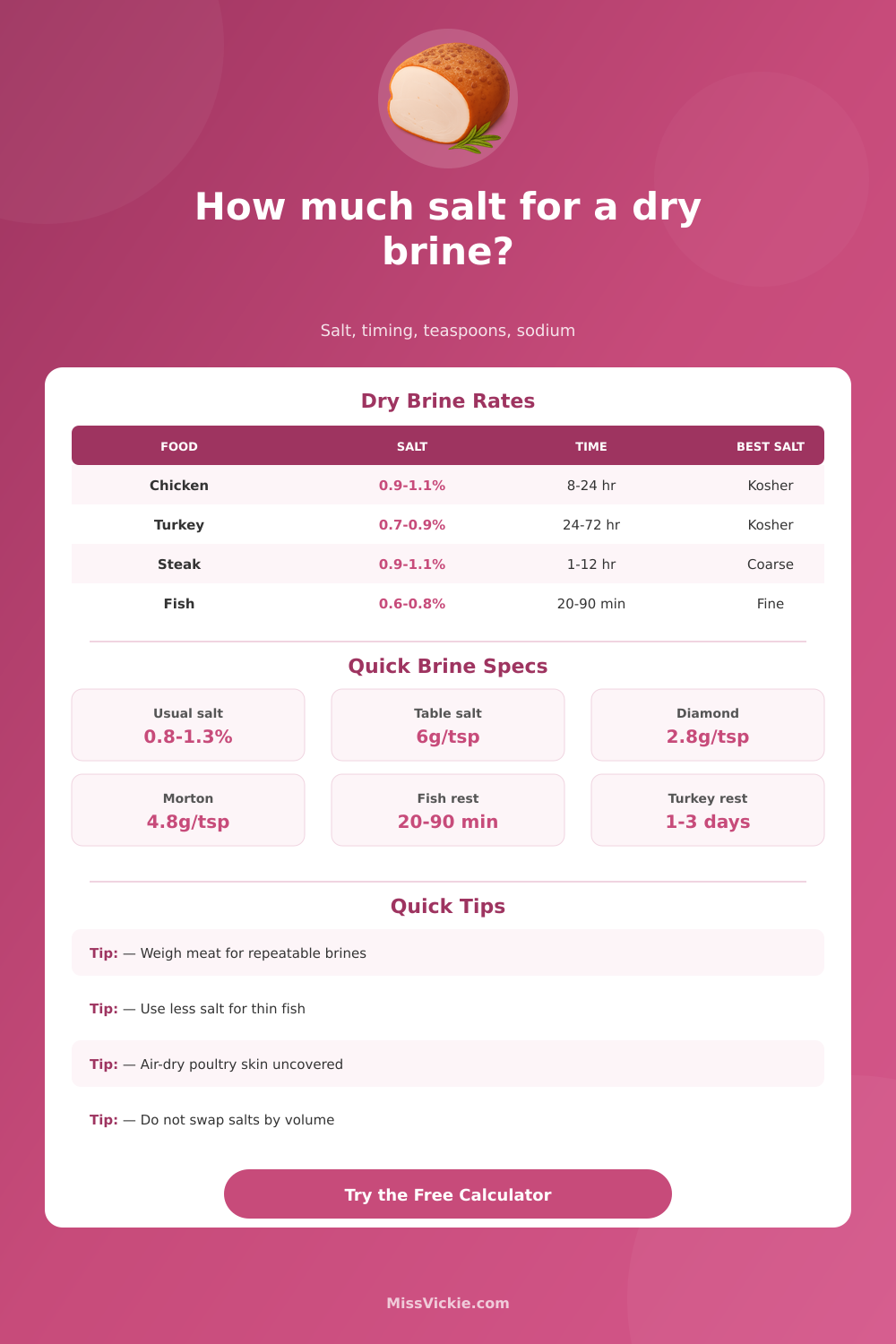
Recommended salt rates by food
| Food | Light | Standard | Assertive |
|---|---|---|---|
| Fish fillet | 0.55% | 0.70% | 0.85% |
| Whole turkey | 0.70% | 0.85% | 1.00% |
| Chicken pieces | 0.80% | 1.00% | 1.15% |
| Pork chops | 0.90% | 1.10% | 1.25% |
| Brisket or beef roast | 1.05% | 1.25% | 1.40% |
Salt volume conversion
| Salt | Approx g per tsp | What changes |
|---|---|---|
| Diamond Crystal kosher | 2.8 g | Large flakes, very light by spoon. |
| Morton kosher | 4.8 g | Denser crystal; use less by volume. |
| Fine table salt | 6.0 g | Dense and uniform; easiest to oversalt by spoon. |
| Fine sea salt | 5.7 g | Close to table salt for volume math. |
| Coarse sea salt | 5.0 g | Variable; weigh it when possible. |
Timing guide
| Food | Minimum | Usual window | Upper limit |
|---|---|---|---|
| Fish fillet | 20 min | 30-60 min | 90 min |
| Steak or chop | 1 hr | 4-12 hr | 24 hr |
| Chicken pieces | 4 hr | 8-24 hr | 36 hr |
| Whole chicken | 8 hr | 12-36 hr | 48 hr |
| Turkey or brisket | 24 hr | 36-72 hr | 96 hr |
Serving and sodium reference
| Planning item | Rule of thumb | Calculator use |
|---|---|---|
| Raw serving | 6-8 oz meat | Check cooked yield per serving. |
| Salt sodium | 393 mg per g | Total salt times sodium fraction. |
| Absorption | 65-85% | Adjusts nutrition estimate. |
| Cooked yield | 55-88% | Depends on bones, skin, and roasting loss. |
| Seasoning blend | Salt plus sugar and aromatics | Shows total rub weight to mix. |
⚔Comparison grid
📝Two dry brine tips
Dry brining is a process whereby salt is applied to the surfaces of the meat so that the salt can move into the interior of the meat. The salt can move into the interior of the meat because the salt can travel along the muscle fiber that comprise the meat. As the salt moves into the interior of the meat, two things occur: the protein in the meat change in relation to how much water they hold by the movement of salt, and the salt prepares the surface of the meat to brown when exposed to heat.
Additionally, the success of dry brining depends upon an amount of salt that is applied to the meat, and how long the meat is allowed to sit with that salt before it is cooked. Weight is the most reliable way to measure the meat. Volume measurements of salt can lead to inconsistency in the amount of salt that is applied to the meat, and the type of salt that is used can change the volume measurements of the salt.
Dry Brining Meat: How Much Salt, How Long, and Why
Additionally, using weight allows the cook to determine the amount of sugar and aromatics that are to be added to the meat. The weight also allows for the cook to determine the length of time that the meat should sit prior to being cooked. The thickness of the meat is another critical factor in dry brining.
Salt travels at a steady rate through the muscle of the meat. A thin fish fillet will take less time for the salt to reach the center of the fish fillet then a turkey breast. For example, a fish fillet will only need to sit in the dry brine for one hour, while a turkey breast may need to sit for two days.
A calculator allows for the cook to input the thickness of the meat to calculate how long it will take for the salt to reach the center of the meat. Sugar is often added to the meat to balance the salt that is applied to the meat. Additionally, the sugar will help the meat to brown through the process of caramelization.
The amount of sugar that is applied to the meat is less than the salt, and the amount should be between a quarter and a full percent of the weight of the meat. Aromatics is different than the salt because the aromatics will not penetrate the meat. Aromatics can only coat the surface of the meat, and the aromatics will only flavor the crust of the meat.
Thus, the cook can add many aromatics to the meat without changing the flavor of the interior of the meat. Another factor that cooks often ignore is the absorption percentage of the salt. Not every gram of salt that is applied to the meat will be absorbed by the interior of the meat.
Some of the salt will remain on the cutting board, or on the rack upon which the meat is resting. Additionally, some of the salt will remain on the surface of the meat. The amount of salt that is absorbed by the interior of the meat is between two-thirds and ninety-five percent of the total amount of salt that was applied to the meat.
The absorption percentage of the salt will change the amount of sodium that will be present in each serving of the meat. The last factor to consider is the yield of the meat. Factors like bones in the meat, the presence of skin, and the methods of roasting or smoking will impact the yield of the meat.
For example, if the meat is boneless, it will lose less weight during cooking then if the roast contains bones. Additionally, the calculator can convert the raw weight of the meat to the number of servings of cooked meat that will result from roasting. Thus, the cook can determine if there is enough meat to feed everyone that will eat the roast.
Fish will follow a different set of dry brining rules than beef or poultry. The muscle of fish is much more loosely than beef or poultry. Additionally, the rate of salt uptake by fish is much faster.
For this reason, the dry brining time for fish will be much shorter then for beef or poultry. The skin of poultry will require a different time for dry brining than beef or pork. The skin benefits from drying out and resting uncovered.
This drying of the skin will allow for the skin to crackle when cooked. Thus, dry brining for fish and poultry will require separate profile on a dry brining calculator. One of the most common mistake that cooks make is treating all types of salt the same when measuring them by the spoon.
For example, flaked salt will be less dense than table salt. Thus, one spoon of flaked salt will contain less salt than one spoon of table salt. The calculator will account for the type of salt that is to be used so that cooks dont have to memorize the different densities of salt.
Another of the most common mistakes cooks make is adding salt to a spice rub prior to dry brining the meat. Instead, the percentage of salt should be kept separate from the spice rub. The rub may contain additional salt, but it is up to the cook to decide whether to add salt to the rub along with the dry brining salt.
This allows for the cook to taste the rub to make sure that they are not adding too much salt to the rub. Finally, there are a few variables in the kitchen that may impact the dry brining process other than those that is accounted for in the calculator. For example, the weight of the meat can change based off whether the meat is directly from the refrigerator, or whether it has sat out for twenty minutes.
Other variables to consider include the humidity in the kitchen, and the likelihood that a refrigerator that is full of food will circulate the air differently than if it were empty. These variables are ignored in the calculator, but may have an impact upon the outcome of dry brining the meat. One of the habits that is most useful for cooks is to weigh the meat, and to use the same percentage of salt for each cut of meat.
By using the same percentage of salt, cooks will eventually discover a pattern in the way in which the meat react to the salt. While the calculator can expedite the process of dry brining the meat, the cook will eventually learn which settings on the calculator are to be trusted, and which are to be changed according to the type of roast that is to be prepared.