
If you’ve ever been to a bar, there’s a decent chance you’ve seen a bartender drop an orange peel onto an Old Fashioned. And if you’re like me, you was wondering what purpose did it serve besides looking cool. Well, actualy, it changes how you smell what you’re about to sip.
Garnishes is often treated as an afterthought. Many consider them a visual accessory tacked-on at the finish line. But this is not a wise move. An effective garnish finishes off a drink’s taste. It serve the same function as a mixer or ice cube.
Why Garnishes Matter
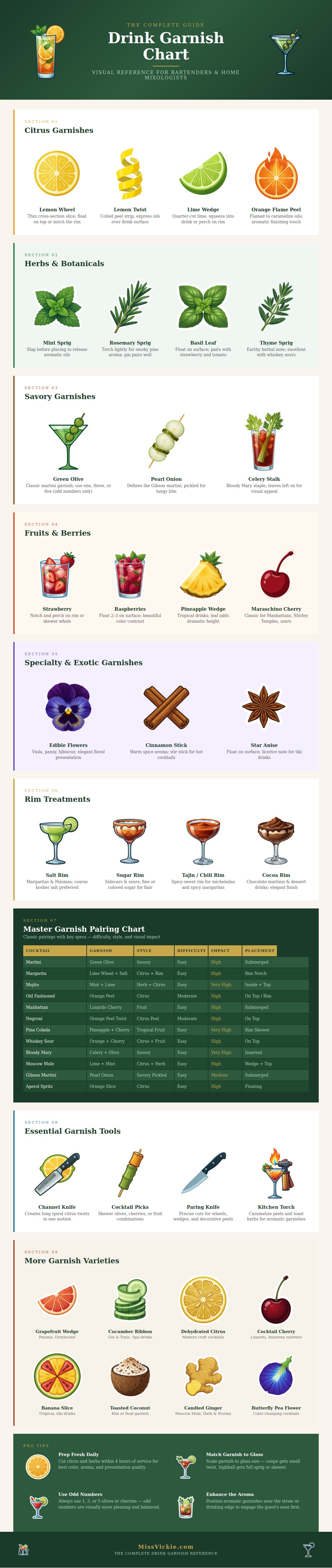
Instead of pouring on top of the drink, citrus releases its oils. Twist a lemon and the essential oils spray around the drink. They transport aroma up to your nose. Your brain is primed for upcoming acidity in your glass.
Between the wedge, the wheel, and the twist, there is a distinction. A wheel provide both color and buoyancy. A wedge encourages the guest to squeeze their lime or lemon juice right into beverage. Sensory experience dictates the decision. If it’s about brightness, opt for a twist. If the guest want more sourness, hand them a wedge.
Then there are herbs, which work on another level. Don’t throw some mint into the shaker, it’ll look like plastic. Before you put it in the glass, slap it; breaking open plant cells will release volatile compounds therein. Gin shares its origins in plants, which is where the botanicals comes from. Rosemary plays nicely alongside it, though its smokiness adds another dimension. Lightly torching it deepens that piney note. Because it engages your nose, the taste feel richer then the liquid alone would allow.
On the savory side, think of some pearl onions or olives. What are they doing? Adding texture. And saltiness. Savory garnishes can makes drinks better. A good example is a Gibson Martini. Why use an odd number of olives? It is not because it’s superstitious. It’s because odd numbers are more natural to our eyes. The asymmetry look purposeful.
Celery in your Bloody Mary? Mandatory. It is crunchy against smoothness of the drink. Makes it feel more like a meal.
With a rim, you dictate the initial impression of the cocktail. On a Margarita, that salt rim doesn’t merely contribute salt. When it hits your tongue, it neutralize the acidity from the limes. The right rim pairs with the right profile. Try cocoa for dessert cocktails. Spicy drinks needs a Tajin rim. Sweet sours want a sugar rim. They all tell the drinker where they’re headed next before they ever put their lips to the glass. You’re priming there palate.
To make that choice, there are pairing guidelines. Traditional garnishes match classic cocktail. Understanding why those pairings work is what matters. An Old Fashioned uses orange peel. That oil cut through bold whiskeys. A Mojito has mint and lime. Why? Freshness is key to the drink. Don’t worry about remembering all of the combos. Just know the logic. For example, aromatic garnishes for contrast goes well with bold drinks. Herbs for complexity complement fruity drinks.
Many believe that tools are everything. That is not true. Skill always trumps equipment. Use a paring knife to make an exact twist and avoid pith. White pith is bitter. Yellow zest has the flavor. Use a channel knife for consistency in how you carry out your ideas. Prepare as much as possible ahead of time. Herbs stored correctly retain their color. Cut citrus four hours before serving. A wilted mint sprig will kill a drink quicker than a poor recipe.
Stick to the basics. Learn to place olives, learn to wedge, learn to twist. Then play around. Dehydrated fruits? Exotic flowers? Whatever you do, don’t think of adding color for instagram likes. Think about enhancing flavor. And that slice of orange isn’t garnish. It’s a piece of the puzzle. You should of treated it like one.