Desserts Per Person Calculator
Plan how much cake, pie, cupcakes, cookies, brownies, ice cream, pudding, or mini pastries to serve per guest, with buffet and appetite adjustments.
🍰 Dessert Planning Presets
Choose a real hosting scenario, then adjust guests, dessert style, appetite, event length, children, and backup portions.
⚖ Guest And Dessert Details
Dessert plan ready
Enter the guest count and dessert style to calculate portions.
Portion Breakdown
Serving Notes
📋 Common Dessert Serving Sizes
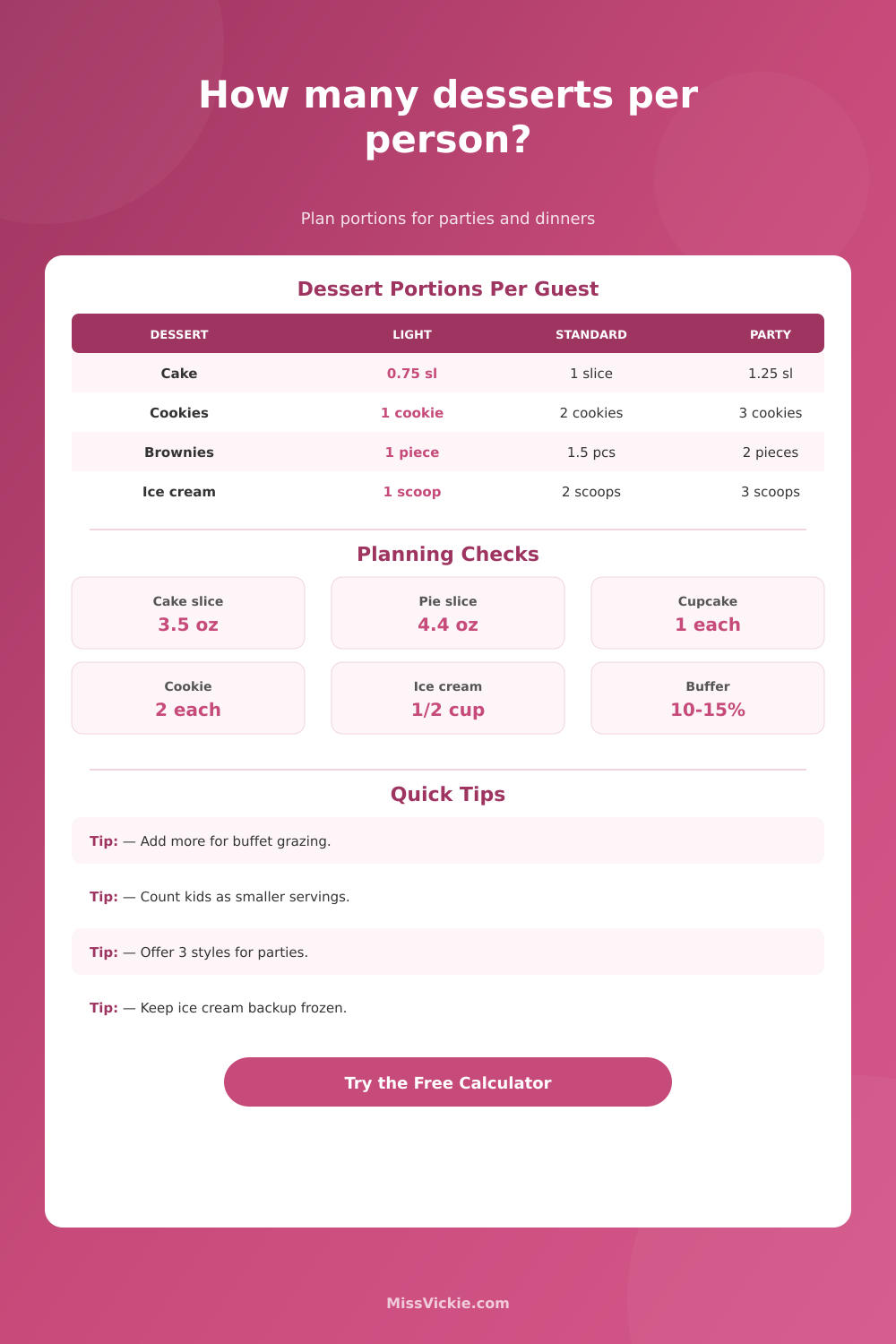
These planning sizes reflect common catering and home baking portions: roughly 100 g cake, 125 g pie, 75 g cupcake, 30 g cookie, 50 g brownie piece, and 1/2 cup scoop portions.
📖 Dessert Reference Tables
| Dessert Type | Standard Per Adult | Approx Weight | Container Yield | Best Use |
|---|---|---|---|---|
| Layer or sheet cake | 1 slice | 3.5 oz / 100 g | 9 x 13 inch pan: about 15 party slices | Birthdays, family dinners, office celebrations |
| Pie, tart, or cheesecake | 1 slice | 4.4 oz / 125 g | 9 inch pie: 8 slices; cheesecake often 12 slim slices | Holiday meals, coffee service, plated dessert |
| Cupcakes | 1 cupcake | 2.6 oz / 75 g | 1 dozen per tray or bakery box | Kids parties, birthdays, portable dessert tables |
| Cookies | 2 cookies | 2.1 oz / 60 g | 24 medium cookies per half sheet tray | Potlucks, school treats, mixed dessert tables |
| Brownies or dessert bars | 1.5 pieces | 2.6 oz / 75 g | 9 x 13 inch pan: 24 small bars or 12 large bars | Office trays, picnic desserts, dense sweets |
| Ice cream or gelato | 2 scoops | 1 cup / 132 g | 1 quart: about 8 half-cup scoops | Ice cream socials, cake sides, sundae bars |
| Pudding, mousse, or trifle | 1/2 cup | 4.4 oz / 125 g | 1 quart: about 8 half-cup portions | Buffets, make-ahead cups, soft dessert service |
| Mini pastries or petit fours | 2 pieces | 2.8 oz / 80 g | 24 to 36 pieces per party tray | Weddings, receptions, tea tables, sampler platters |
| Guest Count | Cake Slices | Pie Slices | Cookies | Ice Cream Scoops |
|---|---|---|---|---|
| 4 guests | 4 to 5 slices | 4 to 5 slices | 8 to 10 cookies | 8 to 10 scoops |
| 8 guests | 8 to 10 slices | 8 to 10 slices | 16 to 20 cookies | 16 to 20 scoops |
| 12 guests | 12 to 15 slices | 12 to 15 slices | 24 to 30 cookies | 24 to 30 scoops |
| 25 guests | 25 to 32 slices | 25 to 32 slices | 50 to 65 cookies | 50 to 65 scoops |
| 50 guests | 50 to 65 slices | 50 to 65 slices | 100 to 130 cookies | 100 to 130 scoops |
| 100 guests | 100 to 130 slices | 100 to 130 slices | 200 to 260 cookies | 200 to 260 scoops |
| Serving Situation | Portion Multiplier | Variety Advice | Backup Rule | Practical Note |
|---|---|---|---|---|
| Plated after a heavy dinner | 0.85 to 0.95 | One dessert is usually enough | 5 to 10 percent | Cut neat portions before serving so slices stay consistent. |
| Counter service after a normal meal | 1.00 to 1.10 | One main plus a small second option | 10 percent | Guests may take slightly larger pieces when serving themselves. |
| Open dessert buffet | 1.15 to 1.35 | Two or three choices keep the table balanced | 10 to 15 percent | Smaller portions reduce waste and var guests sample more. |
| Reception grazing table | 1.25 to 1.55 | Three to five mini options work well | 15 to 20 percent | Longer open time increases repeat visits and bite-sized snacking. |
| Kids party treat table | 0.75 to 1.15 | Cupcakes, cookies, and bars are easiest | 10 to 15 percent | Plan some extra because dropped or half-eaten portions are common. |
| Serve plus take-home boxes | 1.25 to 1.60 | Choose sturdy items such as cookies or bars | 15 to 20 percent | Keep box portions separate from the dessert table count. |
| Dessert | Volume Conversion | Weight Conversion | Make-Ahead Note | Holding Note |
|---|---|---|---|---|
| Ice cream | 1 quart gives about 8 half-cup scoops | 1 scoop averages about 66 g | Pre-scoop for fast service if freezer space allows | Keep backup tubs frozen and rotate small batches to the table. |
| Pudding or mousse | 1 quart gives about 8 half-cup cups | 1 half-cup serving averages about 125 g | Portion into cups the day before service | Hold chilled until the last practical moment. |
| Cookies | 24 medium cookies fit on many half sheet trays | Medium cookies average about 30 g each | Bake or freeze dough portions ahead | Refresh uncovered cookies only briefly so they do not dry out. |
| Brownies | 9 x 13 inch pan cuts 24 small bars | Small bars average about 50 g each | Chill before cutting for cleaner edges | Use smaller squares for buffets and larger bars for boxed treats. |
| Cake | 9 x 13 inch pan yields about 15 party slices | Party slice averages about 100 g | Frost and chill before slicing if layers are soft | Keep frosted cakes covered until display time. |
🗂 Dessert Table Comparison Grid
Best for plated dinners, birthdays, and simple family meals.
Plan each dessert at about three-quarters of full demand.
Make smaller portions so guests can sample without waste.
Use more total pieces because bite-size sweets invite repeats.
💡 Dessert Planning Tips
When it dawns on you that you’ve invited 12 guests yet prepared only one tiny loaf of banana bread, you freak out. One glance at the crumbly loaf and you’re doing math in your head. If you cut it straight down the middle, it’ll produce slices as thin as paper. Worse, there’s no guarantee everyone will get a slice: Someone might take seconds while leaving others with not even a crumb. That’s when intuition goes right out the window, arithmetic is the hero here.
Plug in your dessert type and number of guests into the tool above and it does math for you. It rescues you from wondering if you’ve made a 9-inch pie big enough for a gathering (answer: not really) or just large enough to cause an argument. Instead of freaking out, it translates your vague worry into solid quantities of bars, scoops, and slices. Then you can bake without fear.
How to Get the Right Amount of Dessert
Home bakers make one fundamental error: they think we all consume the same. It’s a holiday roast! Everything is different now. After a large meal of protein and veggies, your guests will be too full for sweets. Sure, they might have big eyes, but calculator isn’t blind; it factors in the context of the meal before dessert is even placed on table. Since you’re feeding them a giant turkey dinner, there’s no need to multiply that plate by as much. Those plates are already bursting at the seams.
And it makes sense. We don’t just eat cake in a vacuum. We eat cake after whatever else is on our plate. To ignore the main course means wasting food. Half-empty bowls of leftover cake goes bad in the fridge. But when you’re having a coffee date or serving light brunch, dessert IS the main event. You gotta increase portions to fill this gap. There’s a difference between a plate and a bite-sized square, folks. That’s the difference between a main attraction and side dish.
But there is another important factor: density and texture. Three slices of airy angel food cake won’t fill up your belly like single, dense fudge brownie will. To account for this, calculator considers how many pieces you want to eat, and then reduces amount accordingly if it’s something lighter, or increases it if its heavier. For example, a half cup of ice cream doesn’t feel like a half cup of pudding. Ice cream expands while melting in the bowl. It creates an illusion of volume. Cookies shrinks and become hard. They provide some crunch but very little substance. We must consider how desserts affects our stomachs.
This means you can’t just sum normal portion sizes when serving various kinds of desserts (for example, a combination of cake and cookies). The fact that you’re having multiple kinds now becomes a limit. One thing we did notice is that guests end up trying a little of everything. Portions become smaller and more individual. If there are other desserts, the main one shrinks on calculator because grazing table consists of bite-sized items instead of full servings.
Things get even more complicated when you throw in kids. Kids at a birthday party? They inhale whole cupcakes. Leave them all over the table with crumbs. Kids at a formal meal? They nibble on one cookie then return to play time. The calculator splits up adult versus child guests. Unless this is a specifically kids’ party, it gives less weight to kids’ meals. That way you’re not going to buy ten pounds of frosting because there were a bunch of toddlers at your party that didn’t touch the icing.
It is a little thing, yes. But it is important. You should of wanted to avoid waste and you definitely don’t want to break the bank.
Veteran hosts know a trick: the power of the buffer zone. No matter how carefully you calculate, life will happen. A last-minute addition shows up with a friend. A piece comes off the cutting board. The ice cream starts melting more quicker than expected. Ten or fifteen percent is not being paranoid; it’s insurance. This buffer zone is built into total number in calculator. It provides you with extra food to serve without making table look overstuffed. If someone wants seconds they can be served from buffet table without needing a midnight run to the grocery store.
With proper planning, the dessert table seems abundant but not chaotic. There’s never any panic about “where’s the banana bread loaf?” Everyone’s getting their fair share. There’s probably even leftovers for breakfast the next day. And that balance between restraint and generosity… That’s what transforms hosting from tiring to effortless.