MissVickie dough temperature tool
Desired Dough Temperature Calculator
Calculate the water temperature that brings bread, pizza, sourdough, enriched dough, and preferment-heavy formulas to a controlled final dough temperature after mixer friction and batch size effects.
Bakery presets
Choose a starting point, then edit every field. The preset changes target dough temperature, flour temperature, room temperature, preferment temperature, friction factor, mixer type, water temperature, hydration, preferment share, and batch size.
Temperature and formula inputs
Water temperature target
Mixing math will update as you type.
Calculation breakdown
Method diagnosis
DDT reference tables
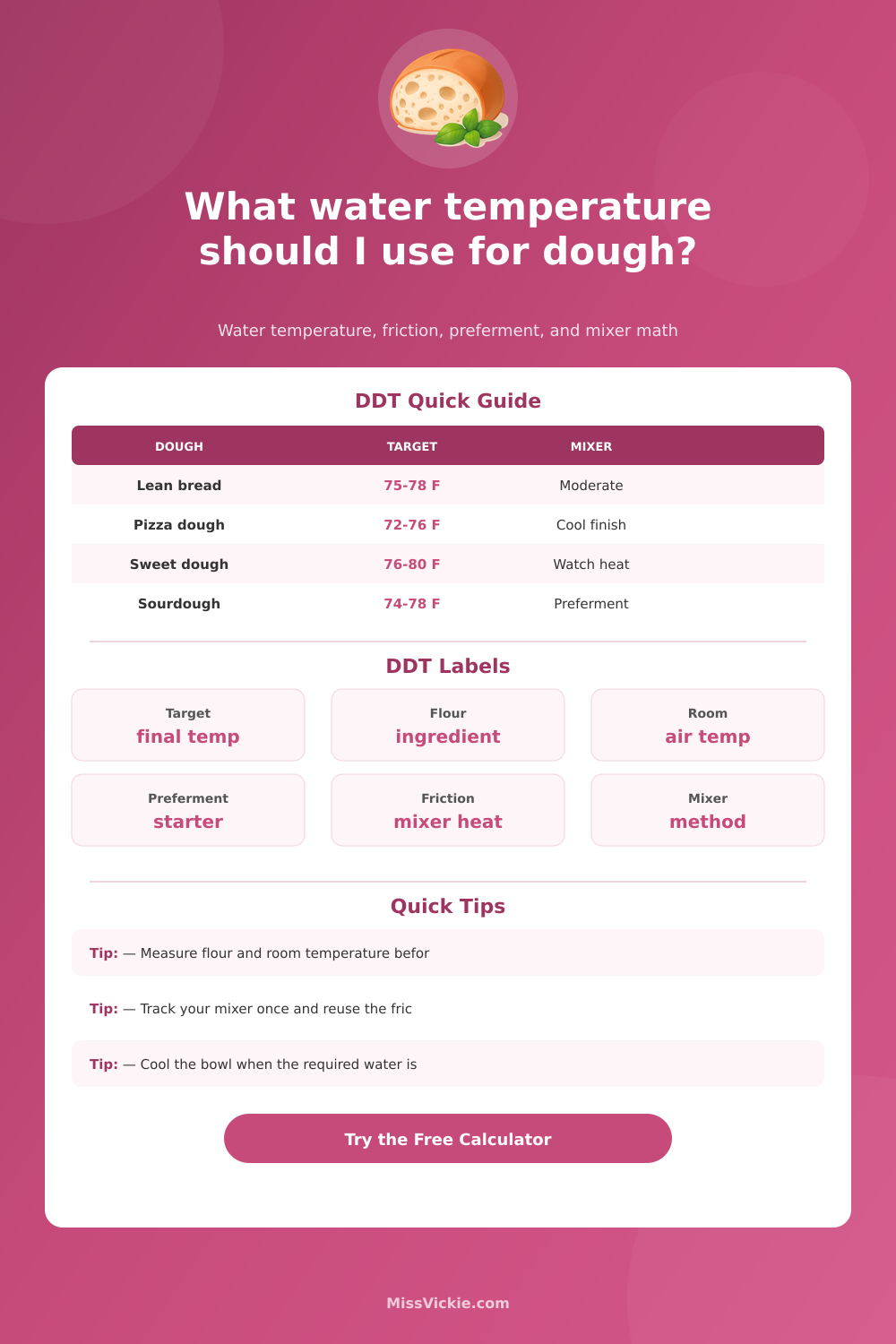
Typical target dough temperatures
| Dough style | Common DDT | Why it matters |
|---|---|---|
| Lean sandwich bread | 75-78 F | Balanced gluten strength and predictable proofing. |
| Rustic baguette | 74-77 F | Keeps fermentation lively without rushing flavor. |
| Cold ferment pizza | 70-75 F | Lower finish helps long refrigeration stay controlled. |
| Enriched brioche | 76-80 F | Butter and sugar slow yeast, but friction can spike quickly. |
| Whole wheat | 74-78 F | Bran warms and ferments fast, so avoid excessive heat. |
Friction factor starting points
| Method | Start with | Adjust when |
|---|---|---|
| Hand mix and folds | 4-8 F | Long slap-and-fold sessions warm more than gentle folds. |
| Spiral mixer | 12-18 F | Large batches and high second speed add heat. |
| Planetary mixer | 16-24 F | Small bowls and tight doughs heat fast. |
| Home stand mixer | 18-26 F | Friction rises with high speed and long kneading. |
| High-speed intensive | 24-32 F | Use colder water and shorter checks. |
Water temperature interpretation
| Required water | Kitchen meaning | Practical move |
|---|---|---|
| Below 40 F | Formula is fighting warm flour or too much friction. | Chill flour, bowl, preferment, or reduce mixing intensity. |
| 40-55 F | Cold but realistic for warm rooms. | Use refrigerated water or an ice-water blend. |
| 56-75 F | Comfortable bakery range. | Measure accurately and mix as planned. |
| 76-90 F | Warm water may speed fermentation. | Confirm yeast tolerance and avoid overheating enriched dough. |
| Above 90 F | Room or flour may be too cold for the target. | Warm the room, temper flour, or lower the DDT target. |
Preferment share guide
| Preferment flour | Temperature impact | Best practice |
|---|---|---|
| 0% | Straight dough calculation. | Use flour, room, friction, and water only. |
| 10-20% | Noticeable but easy to correct. | Measure levain or poolish temperature directly. |
| 25-35% | Preferment temperature strongly steers DDT. | Do not guess; a warm levain can overshoot quickly. |
| 40%+ | Preferment dominates the mass. | Retard, temper, or feed earlier to control heat. |
Mixer method grid
Best for sourdough folds, autolyse workflows, and small batches where the dough warms slowly.
Efficient gluten development with moderate heat; verify friction once for each speed schedule.
More bowl drag and hook heat, especially with stiff dough or smaller home-style batches.
Fast development can overshoot unless water, bowl, and flour start cool.
Two practical DDT tips
How this DDT calculator thinks
Desired dough temperature is the baker's way of deciding the water temperature before the dough goes into the mixer. Flour, room, preferment, and friction all contribute heat, while the final mix water is the easiest ingredient to adjust. A straight dough often uses the classic three-factor formula: target dough temperature times three, minus flour temperature, room temperature, and friction factor. Prefermented dough needs a deeper weighted model because a levain, poolish, biga, or sponge carries both flour and water at its own temperature.
This calculator estimates the required water temperature by weighting flour mass, preferment mass, final water mass, and ambient bowl influence, then subtracting mixer friction. The batch size fields also estimate total formula water, preferment water, final mix water, salt weight, enrichment weight, and total dough weight. Use the result as a bakery set point, then confirm by probing the dough immediately after mixing.
Dough temperature are important in the baking of bread because the temperature of the dough affect the fermentation of the dough and the development of the gluten within the dough. If the dough temperature is too high, the dough will ferment too quickly. If the dough temperature is too low, the dough will ferment too slow.
Dough temperature can be controlled by controlling the temperature of the water that is added to the flour mixtures. The water temperature is the most adjustably variable in the recipe, as the flour, the air in the room, and the preferment have already contribute to the temperature of the dough. Therefore, using the correct water temperature will ensure that the bulk fermentation of the dough take place on a schedule that you control, and that the resulting loaves of bread are not too dense or too sour in flavor.
How to Control Dough Temperature
Many people believe that dough temperature is a single variable that should be controlled and adjust. However, dough temperature is actualy the result of several different variables. The temperature of the flour that is used can impact the dough temperature, as flour can be cold from being stored in a pantry.
The temperature of the air in the room in which the dough is mixed impact the dough temperature. The temperature of the preferment that is used can impact the dough temperature. Finally, friction that is created when the mixer mixes the dough can impact the dough temperature.
Therefore, the impact of friction mean that the dough temperature variable must be accounted for in the calculation of the water temperature that should be used. To calculate the correct water temperature, it is necessary to enter the temperatures of each of the variable into the calculator. The baker should measure the temperature of the flour.
The baker should measure the temperature of the air in the room. The baker should measure the temperature of the preferment. Finally, the mixers should measure the friction that is created.
The measurement of the finished dough will allow for the friction factor to be measured for the specific mixer that are used in the kitchen. The preferment share is a variable that must be accounted for in the calculation, as the flour and water contained in the preferment is separate from the water that is added to the flour. For instance, if the preferment share is 20%, then it is necessary to account for 20% of the preferment in the recipe.
If room temperature is assumed instead of measuring the temperature of the preferment, the dough will be too warm. Thus, it is necessary to measure the preferment temperature to ensure that the dough temperature calculation is accuracy. The tables provides different target temperatures for different types of dough and different types of mixers.
These tables are not exact measurements, but they are helpful regarding the different types of dough that require different temperatures to achieve the best result. For instance, pizza dough can be fermented in cold temperatures so that the effect of refrigeration is maintained. Brioche contains ingredients that slow the fermentation process, so it can be fermented to warmer temperatures.
While the tables provide these starting temperatures, the measurements of the different variable will help to adjust the target water temperature. In the case that the calculator requires warm water, it is possible to blend ice water with the warm water to reach the target temperature. If warm water is required, it may be helpful to lower the temperature of the room in which the dough is mixed, or reduce the amount of mixing of the dough.
Pouring hot water into warm dough will create a dough temperature that is too high. The calculator will display the target water temperature if too hot or too cold water are required. Any adjustments to the other variables will ensure that the target temperature of the dough is met.
Batch size is a variable that must be accounted for in the calculation. The bowl in which the dough is mixed also has a thermal mass that can impact the temperature of the dough. The batch size of the recipe is entered into the calculator to help determine the final dough temperature.
By comparing the calculation of the dough temperature to the target temperature, it is possible to determine whether the water temperature should be adjusted. Some of the most common mistake in baking can involve neglecting some of these variables. For instance, the temperature of the room and the flour may be measured, but the temperature of the preferment is ignored.
Another common mistake is in ignoring the friction factor altogether; each mixer add heat to the dough through mixing. Finally, it is common for bakers to measure the final dough temperature at the end of mixing; by waiting too long after mixing, the temperature will begin to even out with the room temperature. Therefore, it is important to probe the dough after mixing to determine the actual dough temperature.
Overall, the use of this type of calculator will allow for the baker to create a feedback loop in the baking process. By entering each of the variables into the calculator, the calculator will provide the target water temperature. After mixing the dough, the baker will measure the dough temperature and will adjust the friction factor.
By repeating this process, the baker will have create a reliable tool for the specific kitchen. The water temperature is the primary tool that can be used to control the dough temperature, and by controlling the dough temperature, baker can ensure that the dough follows the baking plan that has been created for that batch of dough.