Deep Fry Shrimp Time Calculator
Estimate deep fry timing for raw or frozen shrimp using count size, peeled or shell-on prep, batter or breading, oil temperature, batch load, target texture, servings, drain time, and a 145°F seafood safety check.
🍤Fried shrimp presets
Choose a common shrimp fry setup, then fine tune shrimp count size, shell state, coating, oil temperature, fresh or frozen state, batch load, target texture, serving count, and rack drain time.
⚖Units
🔥Shrimp size, oil, and batch setup
🍳Starting state, coating, and finish
Shrimp frying estimate
Detailed frying breakdown
Use a thermometer for the thickest shrimp.
📊Shrimp count size reference
Best for panko, coconut, and skewers.
Common basket shrimp and platters.
Fast browning, watch closely.
Shortest cook, easiest to overcook.
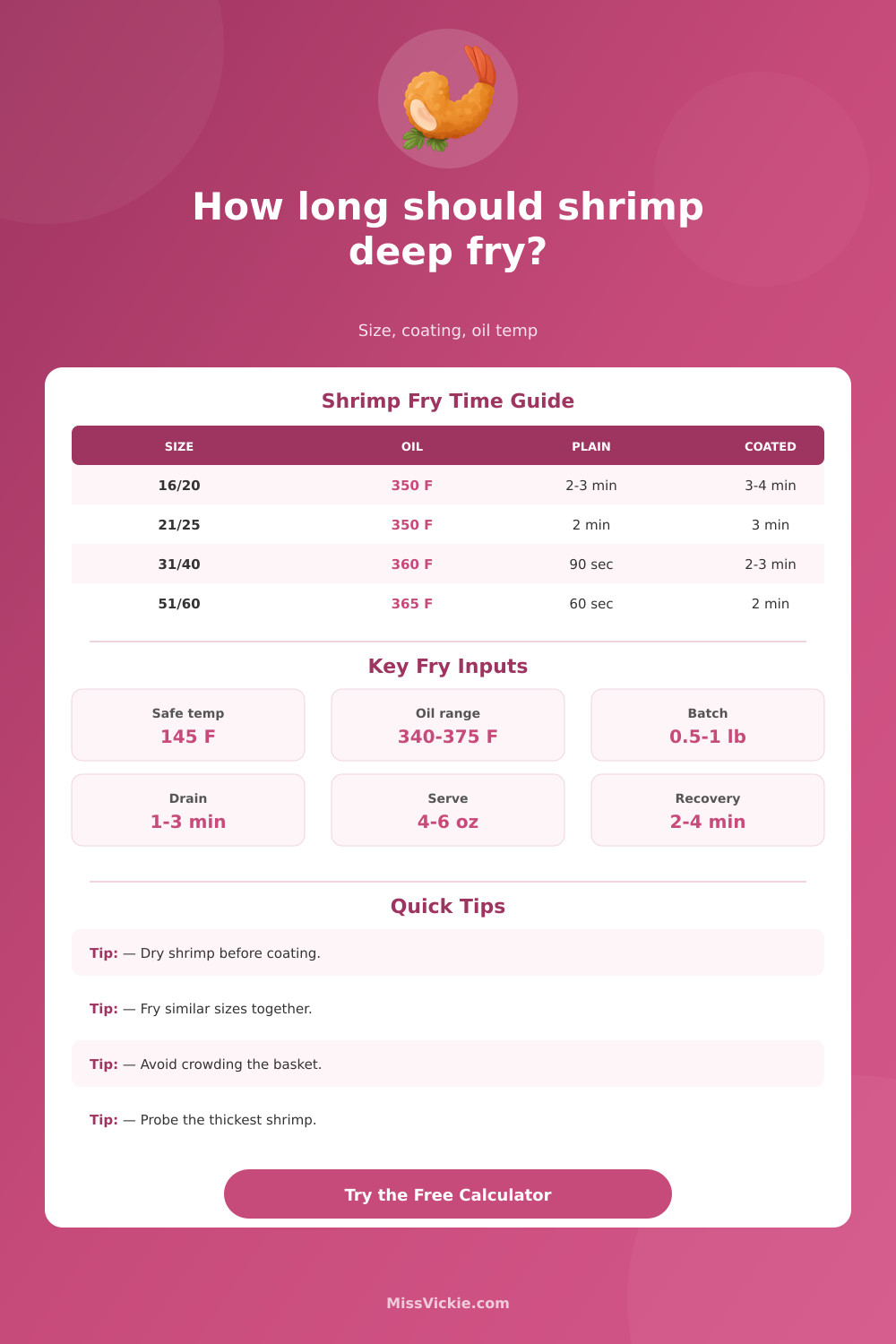
🌡Deep fry shrimp timing table
| Shrimp size | Best oil temp | Plain or flour | Battered or breaded | Check point |
|---|---|---|---|---|
| U10 to U15 colossal or jumbo | 340–350°F | 2.5–3.5 min | 3.5–5 min | Thickest curve, 145°F |
| 16/20 extra jumbo | 345–355°F | 2–3 min | 3–4 min | Opaque center, firm C shape |
| 21/25 jumbo | 350°F | 1.75–2.5 min | 2.75–3.75 min | Probe largest shrimp |
| 26/30 large | 355°F | 1.5–2.25 min | 2.5–3.25 min | Golden crust, opaque meat |
| 31/40 medium | 360°F | 1.25–2 min | 2–3 min | Do not wait for tight curl |
| 41/50 to 51/60 small | 360–365°F | 1–1.75 min | 1.75–2.5 min | Remove as soon as crisp |
🍝Serving and batch table
| Serving plan | Raw shrimp per person | Best count size | Batch note | Texture note |
|---|---|---|---|---|
| Appetizer with sauce | 3–4 oz | 26/30 or 31/40 | Small batches stay crisp | Tender, light crust |
| Main plate | 5–6 oz | 21/25 or 26/30 | 1 lb basket is steady | Classic golden |
| Po' boy sandwiches | 4–5 oz | 31/40 | Cook in wide single layer | Extra crisp |
| Coconut shrimp | 5–7 oz | 16/20 or 21/25 | Reduce crowding | Brown coconut gently |
| Party tray | 4 oz | 21/25 to 31/40 | Recover oil between loads | Tray-hold crisp |
| Popcorn shrimp bowl | 4–6 oz | 41/50 or 51/60 | Very short fry window | Remove before tight curl |
🧪Coating and safety notes
Safe seafood temperature: use 145°F in the thickest shrimp as the safety reference, especially for jumbo, shell-on, frozen, or heavily breaded batches.
Texture cue: shrimp should be opaque and curled into a loose C shape. A tight O shape usually means the batch ran too long.
Oil recovery: wait until the oil returns near the target temperature before loading the next basket, or the coating can turn greasy.
Drain method: drain fried shrimp on a rack so steam can escape and the underside stays crisp during the rest time.
Deep fried shrimp looks easy. But then it isn’t. Either you has rubbery tight little guys or pale, sodden shrimplets.
Shrimp size does matter: bigger are tougher to cook through. A 51/60 (or smaller) shrimp will differ from a 16/20 (or larger), cooked in the same oil at the same temp. Add a coating and gap grows. And if your shrimp is shell-on, that adds more insulation around meat, requiring additional minutes. Throw frozen shrimp into the mix, and you’ve got an even greater challenge since they’ll drasticly reduce the oil temperature. As they defrost inside fryer, they’ll also drip out moisture.
How to Cook Shrimp Perfectly
That’s where our calculator kicks in; it spits out numbers so you don’t have to puzzle over which variable impact the cooking time. Another aspect of cooking time is that kind of coating will affect how long it takes. Thicker coatings like coconut or panko keep shrimp away from heat longer until they set. Once they finally set, they stay out of harm’s way and don’t get overcooked. Lighter coatings, such as just a flouring, brown more quickley. But you can adjust these balances while using the tool. There’s no need to blindly follow some generic “timing” chart.
Temperature of oil plays into this balancing act. If it is too hot, the outside gets darkened before inside cooks to a safe temp. If it is too cool, coating soaks up oil before browning. Most cooks don’t realize how much batch size and load in the fryer can make a difference. If there’s too much in a single basket, it’ll crowd the oil, drop its temp and have hot spots. You’ll find some shrimp done before others even catch up. It’s almost always better to spread out exact same number of shrimp in two smaller batch. This also helps get consistency in terms of texture. Pushing them all through together isn’t as good.
And recovery time between batches will factor into the overall time. This is especially true for heavy breading or when cooking frozen shrimp, which take more heat from the oil. The goal is always the same: an opaque center that curls into a loose C shape and a coating that stays crisp once it hits the rack.
The coating is crisp. When? How long do we wait before starting to check? That’s where calculator comes in. It provides a realistic estimate, though ultimately, you need both the eye and thermometer. As soon as they’re both telling you that these shrimp are cooked through to the right temp, pull them from the fryer and let them drain on rack. Let them drain, then eat them.
That’s what this exercise does: combines a little calculation with rapid confirmation. Instead of relying on luck, you now have something you know you could of do reliably again.