Deep Fry Pork Tenderloin Time Calculator
Estimate pork tenderloin frying time for whole tenderloins, center logs, medallions, nuggets, and schnitzel-style flattened slices using thickness, breading, oil temperature, starting temperature, crowding, carryover, and 145°F after-rest doneness.
Choose a tenderloin setup, then adjust the thickness and fryer details. The timer is a first checkpoint; the pull temperature and rest finish the meat.
Tenderloin Fry Plan
Enter your cut details to estimate the first check, pull point, and total batch timing.
Calculation Breakdown
Frying Notes
| Tenderloin Shape | Typical Thickness | Recommended Oil | First Check | Expected Finish |
|---|---|---|---|---|
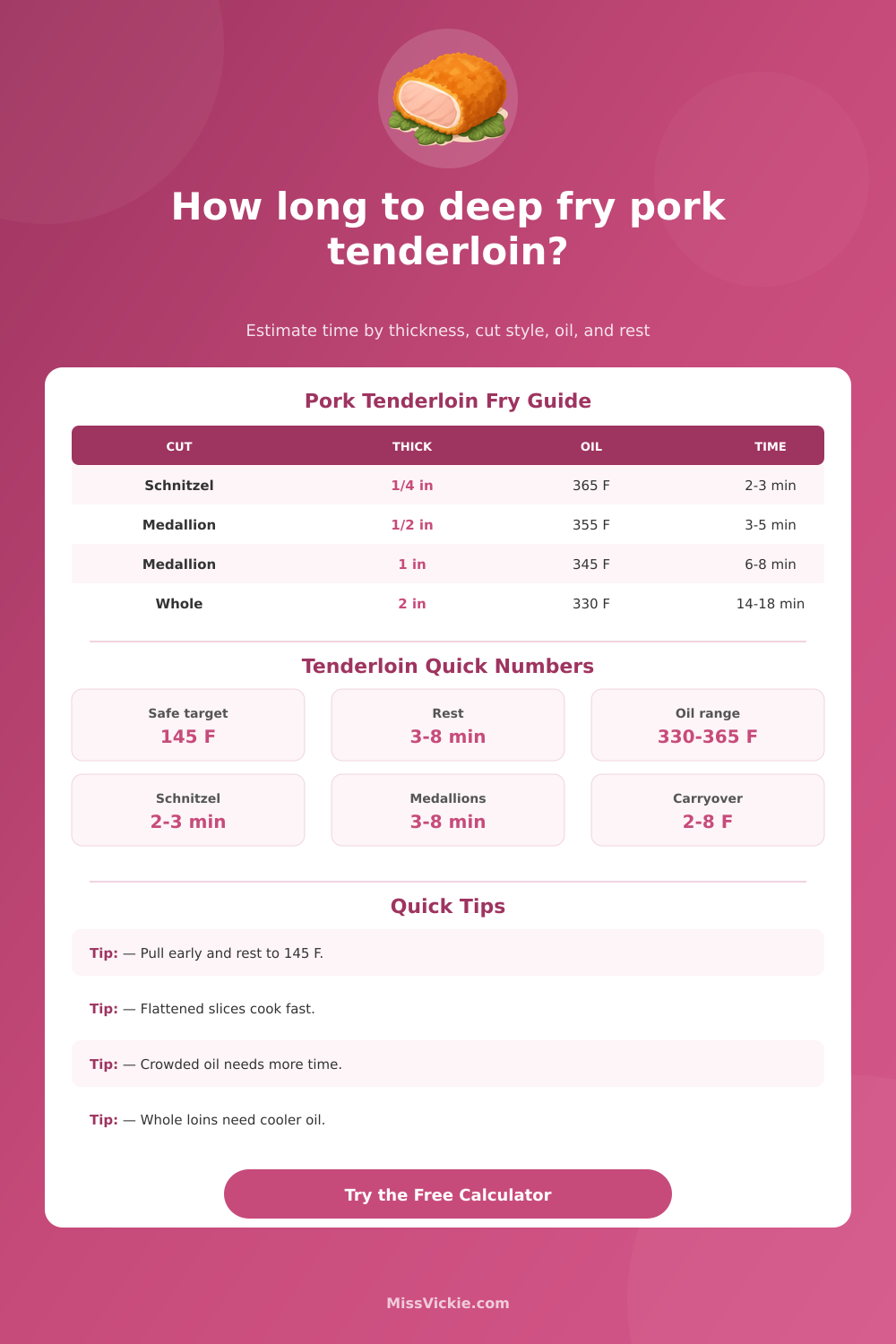
| Schnitzel-style flattened slice | 1/4 to 3/8 inch | 360 to 365°F | 1.5 to 2 minutes | 2 to 3 minutes |
| Sandwich tenderloin cutlet | 3/8 to 1/2 inch | 350 to 360°F | 2.5 to 3 minutes | 3 to 5 minutes |
| Entree medallions | 3/4 to 1 inch | 340 to 355°F | 4.5 to 5.5 minutes | 6 to 8 minutes |
| Whole trimmed tenderloin | 1.75 to 2.25 inches | 325 to 335°F | 11 to 13 minutes | 14 to 18 minutes |
| Coating Style | Timing Effect | Best Oil Range | Browning Cue | Use Case |
|---|---|---|---|---|
| Naked seasoned tenderloin | Fastest center heat | 345 to 360°F | Browned edges | Low-carb entree slices or meal prep. |
| Seasoned flour dredge | Baseline timing | 345 to 360°F | Even golden shell | Classic medallions and appetizer bites. |
| Buttermilk flour breading | Adds moderate time | 340 to 350°F | Craggy golden crust | Juicy nuggets or thicker sandwich slices. |
| Panko sandwich crust | Browns early | 335 to 350°F | Light crisp crumbs | Large flattened sandwich tenderloins. |
| Crowding Level | Likely Oil Drop | Time Change | Texture Risk | Better Move |
|---|---|---|---|---|
| Open basket | 5 to 12°F | Little change | Low | Keep pieces separated and moving freely. |
| Normal single layer | 12 to 22°F | Add a small buffer | Moderate | Allow oil to rebound before the next batch. |
| Tight single layer | 24 to 35°F | Add noticeable time | Soft crust | Split the batch for better browning. |
| Overloaded basket | 40 to 55°F | Unreliable timer | Greasy coating | Reduce pieces per batch before frying. |
| Pull Strategy | Pull Temperature | Rest Time | Expected Finish | Best For |
|---|---|---|---|---|
| Very thin schnitzel | 142 to 143°F | 2 to 3 minutes | 145°F | Fast sandwich cutlets and pounded slices. |
| Average medallions | 140 to 142°F | 4 to 5 minutes | 145°F | Entree medallions and party platters. |
| Thick logs or whole tenderloin | 137 to 140°F | 6 to 8 minutes | 145°F | Larger pieces with more carryover heat. |
| Firmer service target | Target minus carryover | 5 to 8 minutes | 150°F+ | Meal prep or diners who prefer less pink. |
Fastest finish; check almost as soon as the crust turns golden.
Needs crisp coating without drying the lean center.
Best balance of browned outside and juicy 145°F rest finish.
Use cooler oil and a thermometer; crust color is not enough.
Food safety note: use a reliable thermometer for final doneness. This calculator estimates timing for fully thawed pork tenderloin pieces and does not replace temperature checks.
Very Lean: Pork tenderloin is a lean meat with almost no fat. Because heat penetrates by thickness rather than by mass, it’s easy to overcook this cut. A thinner slice will cook quicker then an equal-weight medallion that’s thicker. Weight isn’t enough; there’s no way to guess.
By entering your own variables into the calculator above, it crunches the numbers for you so you can concentrate on what’s going on in the fryer, not just the time. The breading shifts the flow of heat within the meat. With naked pork there’s no barrier between the oil and the muscle, so it cook rapidly. The heavy panko crust is an insulator; the exterior browns but interior lags behind. To avoid dryness, take breaded pieces out slightly before you think they’re done. If you wait until they are a dark golden brown, the middle will probably be dried out.
Tips for Frying Pork Tenderloin
Cramming a bunch of things into a fryer basket won’t make them crispier. Putting too much stuff in will lower the oil temp since cold food soak up heat quicker than a burner can replenish. The time on calculator shows that loss by increasing it to match. If the steam isn’t billowing out, then you’re already at a disadvantage in the frying game. Overheating your oil and prolonging cook time are not as good as splitting into batches.
Respect carryover cooking: When you take the pork out of the oil, the heat from the outside works its way into the center. If you pull it when it hits 145 degrees in your hand, by the time it hits the plate it’s around 152, which is too hot for such a tender cut. Instead, try for 138-140 in the fryer, letting residual heat complete the work. A rest buffer built right into the tool ensures that you’ll get close to sweet spot.
The amount of thickness is far more important than total weight. A whole loin will require a cool bath of oil to keep from burning while the center hit safe temperatures. A thin slice of schnitzel must be on a hotter surface, so it’ll crisp fast. These variables give you a road map to follow with home appliances that vary in how well they holds a steady temp. The estimated window should tell you where to test first, but double-check with an instant-read thermometer.
So what? The goal is to be crisp on the outside and tender inside. But frying’s a race: how fast can you cook through without burning the outside? It’s a battle of how heat moves, and you could of won both ways.
Use tempered meat (you don’t want to shock the oil so much). Don’t crowd the pan because it lowers the temperature. Have confidence in math of carryover. Letting the pork rest on a rack will make it juicy at the end, not dry.