Deep Fry Cod Time Calculator
Estimate cod fry time from loin or fillet thickness, beer batter or breadcrumbs, oil temperature, thawed or frozen moisture, batch size, drain rest, oil recovery, and a 145°F opaque-flaking finish.
Choose a cod scenario, then adjust the exact thickness, coating, oil, moisture, and batch plan. Cod loin behaves differently from thin tilapia or denser catfish because the center is thick, flaky, and easy to over-steam under batter.
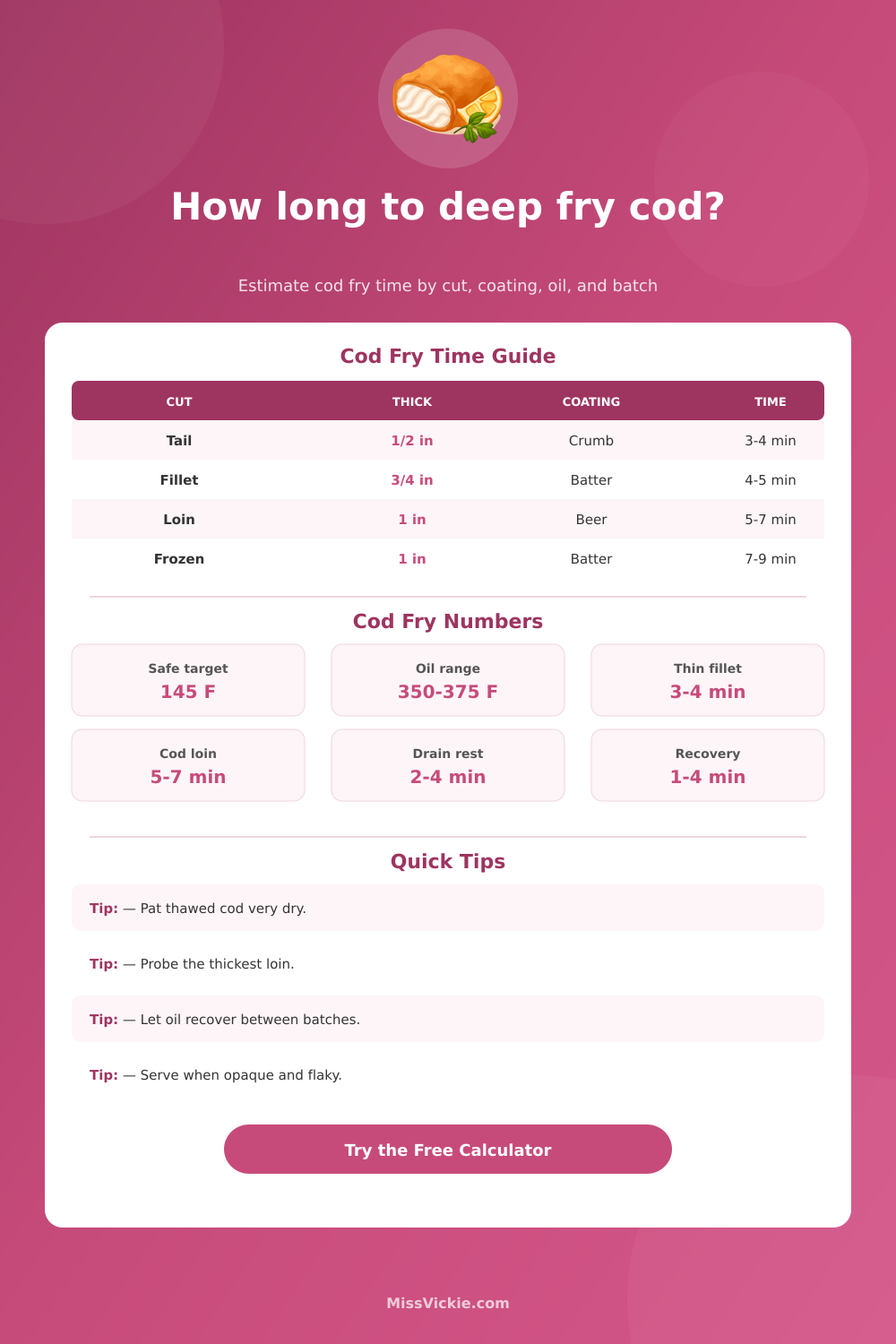
| Cod Shape | Typical Thickness | Best Coating | Oil Temperature | Estimated Time |
|---|---|---|---|---|
| Thin tail fillet | 1/2 inch | Flour or fine crumb | 365–375°F | 3–4 minutes |
| Center fillet | 3/4 inch | Fine crumb, panko, thin batter | 355–365°F | 4–5 minutes |
| Cod loin block | 1 to 1 1/4 inches | Beer batter or panko | 350–360°F | 5–7 minutes |
| Large frozen loin | 1 to 1 1/2 inches | Thin batter after wiping frost | 350°F recovery focus | 7–9 minutes |
| Variable | Fastest Setup | Slower Setup | Why It Matters | Adjustment Clue |
|---|---|---|---|---|
| Coating | Flour or fine crumb | Thick beer batter | Batter insulates cod and holds steam | Add about 10–20% |
| Moisture | Fresh or fully blotted thawed cod | Wet thawed or glazed frozen cod | Water cools oil and can loosen batter | Add 5–45% |
| Batch size | Roomy single layer | Crowded basket | Cod releases moisture quickly | Add 1–4 min recovery |
| Oil temperature | 360°F for battered fillets | Below 345°F or above 380°F | Low oil gets greasy; hot oil browns early | Probe center sooner |
| Service Size | Cod Pieces | Usual Batches | Drain Setup | Serving Note |
|---|---|---|---|---|
| Dinner for 2 | 2 to 4 loins | 1 batch | Rack over sheet pan | Serve immediately with chips |
| Family meal | 6 to 8 pieces | 2 batches | Warm rack, no paper pile | Fry cod after fries finish |
| Small gathering | 12 to 16 pieces | 3 to 4 batches | Hold at low oven briefly | Keep batches loose and crisp |
| Party tray | 24+ pieces | 6+ batches | Multiple racks | Use smaller pieces for pace |
Needs center-temperature attention because the outside can brown before the middle flakes.
Finishes faster than loins and breaks easily, so use a gentler basket and shorter window.
Often tolerates cornmeal and slightly longer frying without falling apart like tender cod.
Usually cooks faster than cod loin, especially in small fillets with fine breadcrumbs.
| Check | Good Sign | Warning Sign | Action |
|---|---|---|---|
| Internal temperature | 145°F at thickest point | Cool center under brown crust | Return for 30–60 seconds |
| Flaking | Opaque flakes separate easily | Translucent center resists flaking | Fry briefly and recheck |
| Batter surface | Set and crisp after draining | Soft, pale, or oil-heavy | Raise oil or reduce batch size |
| Oil recovery | Back near target before next batch | Stuck below 340°F | Pause and skim loose crumbs |
Use an instant-read thermometer in the thickest cod piece. The calculator estimates timing, but final doneness is 145°F or opaque flesh that flakes easily.
To figure out how long to cook your fish (for whatever situation you’re in), simply reference the calculator at the top of the page. That way, you won’t have to guess if it will take 5 minutes or 7 minutes based off thickness. Once you understand how it works, the physics of it, you know how to cook better even when you aren’t looking at the calculator.
How does it work? It’s all about thickness and insulation. If you have a very thin piece of fish, such as a tail fillet lightly floured, then heat moves easy from the oil to the middle… It doesn’t travel far, and it will be done fast. In this case, there isn’t much of a barrier.
How to Cook Fish Correctly
Take a thick loin of cod wrapped in a heavy coating of beer batter. Now that beer batter is a protector; it shields the fish from the boiling-hot oil below. It makes the fish cook slower but also make it tastier. It takes time for the heat to reach the fish’s dense flesh through all that crust. In order for the batter to get hot enough so you know the fish within is cooked, you have to wait. Because batter doesn’t pass heat through immediately, the outer part tend to burn while the inner part stay raw. Time becomes more important then just temperature here.
The other big factor is moisture. If you put frozen cod right into the fryer it will immediately drop the oil’s temperature. Instead of browning the fish, the oil will use its energy boiling off the water on the fish’s surface. That means longer waiting time and a soggy exterior instead of a crisp shell. The fish may be frozen, thawed or fresh; that information influence how long they cook. For thermodynamic reasons, you need to get the water off the fish before cooking. What do you think: do you want your oil touching water or protein?
The outcome also depends on batch size. Many home chefs makes the mistake of cramming the frying basket with as much fish as possible since they think it’s more efficient. Unfortunately, when you plop a bunch of fish into hot oil, the fish immediately start releasing water and lowers the oil temp. If you add too much at once, the fish will steam rather than fry. Give the fish room to let steam out and let air take its place.
Try frying two smaller batches, which gives the oil time to come back up to temp between each round. The resulting crust is better then the pale, oily mess that results from dumping everything all at once in one big batch.
Doneness depends as much on internal temp as it does time. The safe zone, when the flesh of cod goes from translucent to opaque. Is 145 degrees Fahrenheit. At that point, the fish will flake gently under the prongs of a fork. Though the outside may appear well done (the crust gets dark fast), the inside could still be raw; don’t trust your eyes. An instant-read thermometer inserted into the middle of the thickest portion of the fillet is the only way to be sure.
When entertaining, plan your frying order. Fry thicker loins before thinner ones (they’ll fry best when the oil is hot) and reserve the thinner tails for last. They cook quicker and tolerate cooler temps better.
When you pull the fried cod out of the fryer let them sit. Remaining heat is still cooking the fish at this point. As it transfers towards the middle of the fillet the fish cook more. By letting it sit on a wire rack while draining all that steam escapes instead of being trapped between the bottom crust and your catfish. That will make a crispy shell go mush in seconds. Letting it rest will also allow the fish to hold its shape and the juices redistribute.
Patience is a virtue when frying; so is controlling your temperatures and respecting how thick your cod fillets are.