Daily Sugar Intake Calculator
Estimate added sugar, natural sugar, drink sugar, snack sugar, teaspoons, percent of a daily limit, and a practical meal split for everyday nutrition planning. This is general planning language, not a medical diagnosis.
Quick presets
Pick a starting pattern, then adjust the labels and serving counts to match your day. Presets are planning examples, not diet rules.
Your daily sugar entries
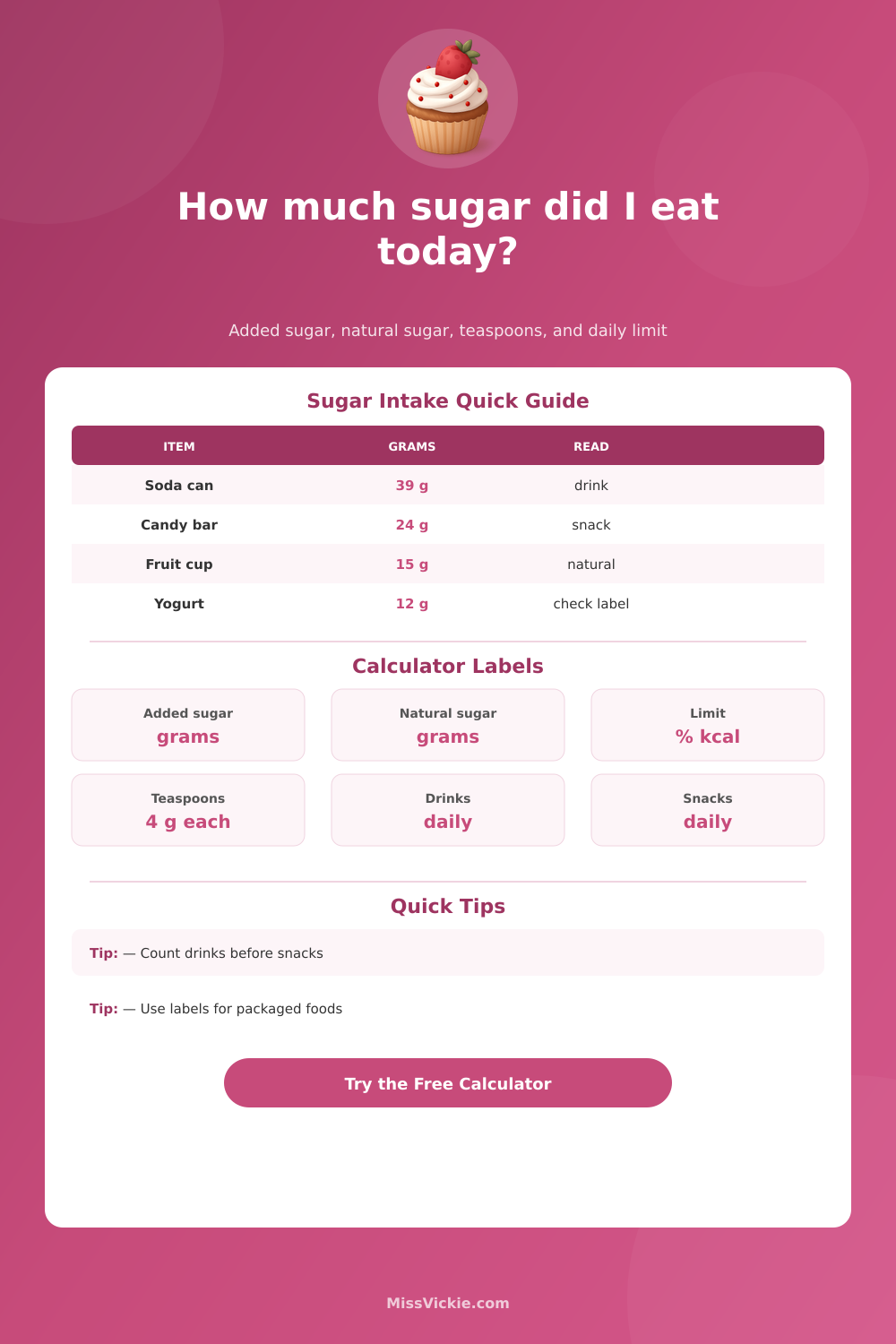
Use grams from nutrition labels when possible. Added sugar means sugar added during processing, cooking, or sweetening; natural sugar means sugar naturally present in fruit, dairy, and similar foods.
Daily sugar summary
Run the calculator to see your intake against your selected limit.
Added sugar
0 g
0 teaspoons
Total sugar
0 g
includes natural sugar
Limit used
0%
daily added sugar limit
Remaining
0 g
added sugar room
Breakdown
Meal split
Comparison grid
These cards compare your added sugar against common planning landmarks. They are one-card summaries instead of a wide chart, so they stay readable on phones.
Reference: sugar labels
Use these stacked rows when reading labels. Each row is a single idea, so it avoids the cramped feeling of a wide nutrition table.
Reference: planning ranges
These are broad planning examples for everyday label awareness. Personal needs vary, and the calculator lets you choose the percent limit that fits your own plan.
Reference: source patterns
A deep sugar audit is usually less about one number and more about where the number comes from. The source label helps decide what to adjust first.
Reference: meal timing
Meal split is not a rule; it is a planning lens. It helps you see whether most sugar is appearing before lunch, at snack time, or in the evening.
Two practical tips
Sugar is present in many diffrent foods. Sugar can be found in foods that are obviously sweet but also in foods that dont taste sweet. Many people find it difficult to track the amount of sugar that they consume because sugar is hidden in many foods.
To be able to track sugar intake, individuals must be able to distinguish between added sugar and natural sugar. Added sugar is the type of sugar that individuals use to calculate the limits that they will consume daily. Natural sugar is found in whole foods.
Know the Difference Between Added Sugar and Natural Sugar
Natural sugar is often found alongside fiber, water, or protein that makes an impact on the body in relation to how it is processing the natural sugar found in these foods. The distinction between added sugar and natural sugar is vital to understanding added sugar’s impact on the body. Only added sugar is compared to the percentage of calories that an individual consume daily.
To calculate the amount of sugar that an individual will consume, the individual must separate the added sugar from the natural sugar that is consumed daily. Added sugar is the sugar that will impact the percentage limit that an individual calculates for themself. Natural sugar is consumed with other nutrients.
By separating these two type of sugar, individuals will be able to see which type of sugar has an impact on their total sugar intake. Drinks are one of the significant sources of sugar intake for individuals. These drinks can have a fast impact on an individual’s total sugar intake.
Sugary drinks contains a significant amount of sugar compared to the amount of sugar that most desserts have. Additionally, sugary drinks dont create a feeling of fullness in the body. Due to the lack of fullness that these drinks can create, individuals can finish the drink without realizing how much sugar they have consumed.
Snacks also contain sugar but in different servings. Due to the small amount of snacks, individuals can consume many snacks that will impact their total sugar intake. The time that individuals consume their meals can also impact the effect that sugar has on the body.
Meal timing is a factor that is not included on the nutrition label. If an individual consumes the majority of their sugar intake before lunch, they will have less sugar intake for the remainder of the day. By moving a drink that contains sugar to the time when they consume their meal, the sugar will be consumed with the food that they eat and will have an impact on the body in a different way.
Such information can be seen on the calculator that makes these distinctions visible to the individual. Many individuals will choose 10 percent as the limit for added sugar because of the recommendation from health and nutrition professionals. Other individuals may choose a limit that is more strict or more lenient based on the type of activity that they perform daily.
The calculator will not choose a limit for the individual but will display how the food that they consume will impact the limit that they choose for themself. A specific number of grams of sugar is not used for the calculator because the target number of calories that an individual will consume will change with their age and the type of activity that they perform daily. The percentage allows for more flexibility in the sugar intake for individuals.
To track the sugar that an individual consumes daily, they must read the nutrition label of the products that they consume. The nutrition label will have specific lines that tell the individual the amount of sugar that is in the product. The total sugar will have natural and added sugar.
However, the added sugar line will have the number that must be used to calculate the limit of the added sugar that an individual will consume daily. The serving size is another vital component of the nutrition label. Some products may contain more than one serving.
If the product contains two servings, the individual will have to multiply the amount of sugar by two to ensure that they doesnt undercount the amount of sugar that they will consume daily. Other components of the nutrition label that should of been read are the ingredient list. Ingredients like cane syrup or fruit juice contain added sugar and should be accounted for in the individual’s total daily sugar intake.
It is common for individuals to treat all sugar the same but this is not something that should be done. While a piece of fruit and a cookie may contain the same amount of sugar, they will not have the same impact on the body. The fruit will contain natural sugar and fiber while the cookie contains added sugar.
By keeping these two types of sugar separate, individuals will be able to see the difference in the source of their sugar intake. Using the information from the sugar calculator, individuals can make small adjustments to their diets. For instance, if the drink that they consume contains the most sugar, they can choose to replace that drink with water.
Additionally, if the snacks that they consume contain the most sugar, they can adjust the snacks that they consume daily to lower their total sugar intake. These types of changes are based off the observations of the sugar numbers that are calculated for each individual. By separating the added sugar from the natural sugar in the food that they consume, individuals will be able to recognize the patterns in their sugar intake.
By recognizing these patterns, they can adjust their diets to ensure that they remain within the limit that they have chosen for themself.