MissVickie nutrition planner
Daily Salt Intake Calculator
Estimate a full day of sodium from food labels, servings, meals, salty sources, and activity. The calculator converts sodium milligrams to salt grams, teaspoons of salt, daily reference percent, and a practical meal-by-meal breakdown.
Choose a starting preset
Pick the closest day, then edit every field. Presets are planning examples, not targets.
Daily setup
Used only for percent comparison.
Enter your own planning reference if needed.
Breakfast, lunch, dinner, snacks, drinks.
Shown in the explanation.
General sweat sodium planning only.
Workout, outdoor heat, active job.
Adjusts the sweat add-on.
Teaspoons added while cooking or at the table.
Food sources and servings
Enter sodium per serving from a label or estimate, servings eaten, and which meal it belongs to. Use the source type to see where the day is coming from.
Your daily salt estimate is ready
The result will update as you edit foods, servings, meals, and activity.
Breakdown
Largest food sources
Stacked reference cards
These one-column reference rows keep the guidance readable on mobile and avoid wide tables.
Sodium to salt conversions
Food-source clues
Meal planning checks
Activity and sweat note
Comparison grid
Two practical tips
A daily salt intake calculator allow an individual to track the amount of salt that they consume each day. Many individuals does not realize the amount of salt that they consume each day until they employ a daily salt intake calculator. A daily salt intake calculator is helpful for providing an individual with a complete picture of the amount of salt that they consume in a single day.
To use a daily salt intake calculator, individuals must input the types of food that they consumed each day along with the sodium content of each of those food products. In addition to these foods, the daily salt intake calculator will also ask for the number of servings of each of those foods that was consumed. The calculator will also ask for the amount of salt that was added to the foods while cooking or while eating.
How to Use a Daily Salt Intake Calculator
Other field within the salt intake calculator will ask for the activity level of the individual each day along with the amount of time that they spent sweating. Daily salt intake calculators convert the sodium content of the foods into salt content in gram. The calculator also provides a percentage of the chosen reference value for the sodium content.
In addition, the daily salt intake calculator can break down the total salt intake of each individual according to the meals that that individual consumed that day. The daily salt intake calculator distinguish between the concepts of salt and sodium. While the food products will contain sodium content that is listed on the food labels, the daily salt intake calculator allow an individual to understand the total amount of salt in there diet.
Salt contains sodium chloride, which includes both sodium and chloride content. The daily salt intake calculator is beneficial in that the sodium content in a food product will be represented as a more great amount of salt if that salt intake calculator is used. The individual can convert the salt content into the number of teaspoons of salt that were consumed during the day with the daily salt intake calculator.
Not all foods contains the same amount of sodium. Foods like restaurant meals and dressings contains sodium but may impact the total sodium intake of an individual in different manner than other food products. Fields within a daily salt intake calculator allow individuals to categorize each of the food products that they consumed according to the source of that food.
For instance, most packaged foods contains sodium as a preservative. The same is true of the sodium content in restaurant meals. Condiments also contain high amounts of sodium yet individuals rarely measure them when they eat.
Foods like bread and grains also contain a high amount of sodium because individuals consume these foods regularly. The meal count field within the daily salt intake calculator allow individuals to analyze the meals that they consumed during the day. If the number of meals is entered into the field, the calculator will divide the salt content by the number of meals that was consumed.
This allows individuals to understand if one meal contained the majority of the salt that they consumed that day. If this is the case, the individual can change that meal when they eat again in the future. The activity and sweat field within a daily salt intake calculator are used to account for the fact that the sodium needs of an individual change with the amount of activity that they perform each day.
As individuals exercise, they lose sodium along with the fluids that is lost through sweating. Fields for these measurements allow the body to calculate the amount of salt that is lost through sweating. This portion of the daily salt intake calculator does not substitute for the advice of a physician but does provide individuals with context for their bodys sodium intake.
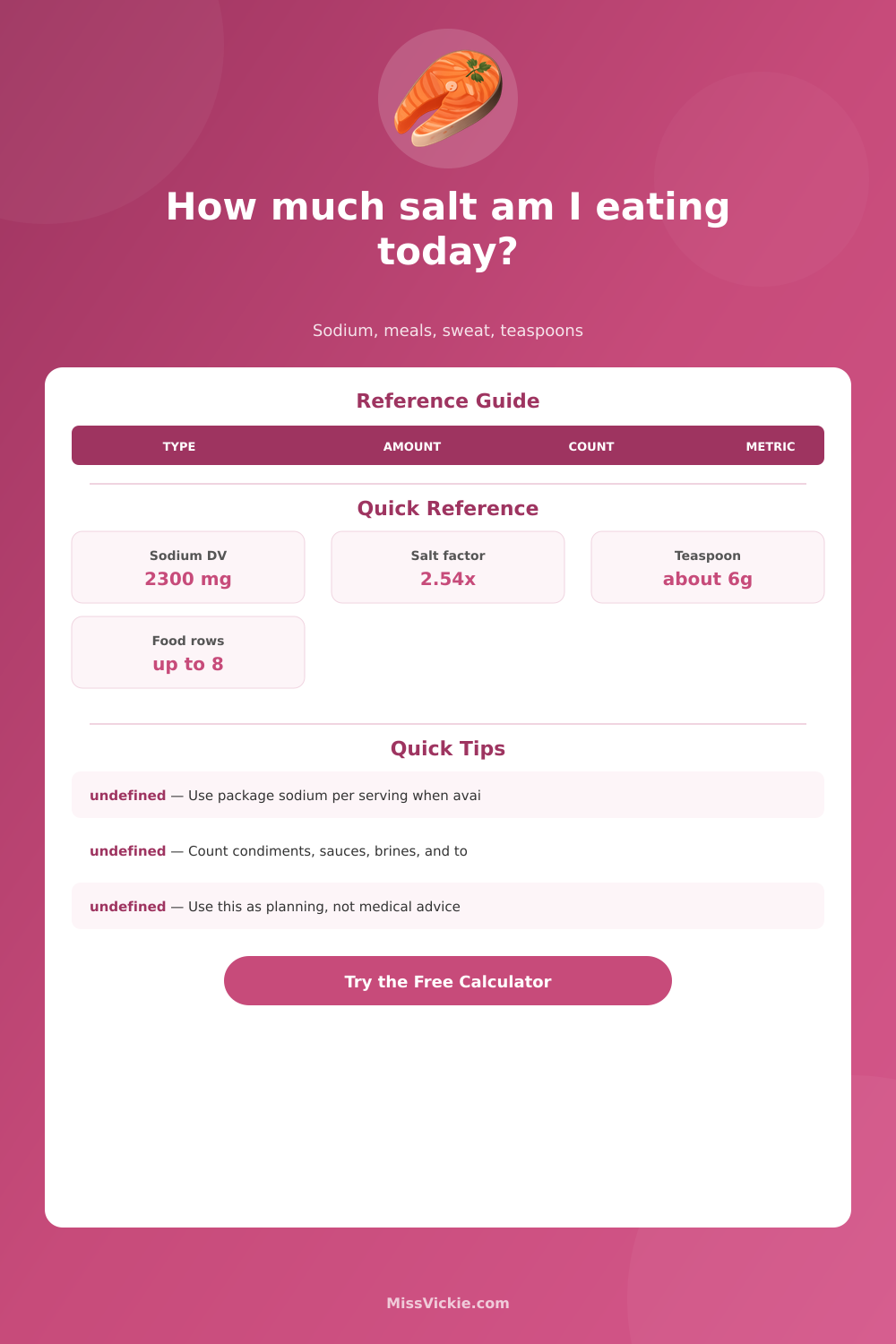
In addition to the fields for the sodium content of the meals that an individual consumes, there is a field within the daily salt intake calculator for the added table salt that is consumed by an individual. Individuals sometimes forget to account for the table salt that is added to food while they are eating or while cooking meals for themselves. One teaspoon of salt is equal to six grams of salt.
By including this field in the daily salt intake calculator, individuals ensure that the salt intake that is calculated is not lower than that which they actualy consume. Within the daily salt intake calculator, individuals can choose a reference value for the sodium content of their diet. A standard reference for sodium is 2300 mg.
Individuals can choose a lower reference value if a physician has prescribed a lower target for their sodium intake. The percentage value that is represented within the daily salt intake calculator in relation to the reference value allow individuals to understand if the individual is consuming more or less salt than they should according to their goals. If the percentage value is high, the calculator can represent the salt content of each meal to show which foods that an individual should change in their diet.
In addition to calculating the amount of salt that an individual consumes during a day, these types of calculators can show individuals potential patterns in their dietary intake of salt. If individuals notice that foods like bread and deli meats is high in salt content, they can make dietary changes to choose foods that are low in salt content. The salt content calculations of the daily salt intake calculator will represent the changes that are made to diets even of small amounts.
The goal that individuals should of have when using a daily salt intake calculator is not to eliminate salt from their diets entirely but to make deliberate choices in the amount of salt that they consume each day.