Crepe Nutrition Calculator
Estimate per-crepe calories and macros from flour grams, egg count, milk type, butter or oil, sugar, crepe count, diameter, filling type, cooking loss, and serving size.
Choose a crepe style, then adjust batter ingredients, pan fat, filling, diameter, count, and cooking loss to match your pan and recipe.
Crepe Nutrition Breakdown
Per-crepe macro formula
Batch calories divided by crepe count, then filling is added according to the serving style.
| Ingredient | Calories | Carbs | Protein | Fat | Crepe Note |
|---|---|---|---|---|---|
| All-purpose flour, 100 g | 364 kcal | 76.3 g | 10.3 g | 1.0 g | Classic thin crepe base |
| Pastry flour, 100 g | 358 kcal | 77.2 g | 8.8 g | 1.2 g | Tender dessert crepes |
| Buckwheat flour, 100 g | 335 kcal | 70.6 g | 12.6 g | 3.1 g | Galette-style batter |
| Large egg, 1 each | 72 kcal | 0.4 g | 6.3 g | 4.8 g | About 50 g edible egg |
| Whole milk, 100 ml | 61 kcal | 4.8 g | 3.2 g | 3.3 g | Richer batter texture |
| Skim milk, 100 ml | 34 kcal | 5.0 g | 3.4 g | 0.1 g | Lower-fat crepes |
| Melted butter, 100 g | 717 kcal | 0.1 g | 0.9 g | 81.1 g | Flavor and browning |
| Granulated sugar, 100 g | 387 kcal | 100.0 g | 0.0 g | 0.0 g | Sweet crepe batter |
| Filling | Calories | Carbs | Protein | Fat | Typical Portion |
|---|---|---|---|---|---|
| Fresh berries, 100 g | 57 kcal | 14.0 g | 0.7 g | 0.3 g | 30 to 60 g per crepe |
| Sliced banana, 100 g | 89 kcal | 22.8 g | 1.1 g | 0.3 g | 40 to 80 g per crepe |
| Fruit jam, 100 g | 278 kcal | 68.9 g | 0.4 g | 0.1 g | 15 to 25 g per crepe |
| Chocolate hazelnut spread, 100 g | 539 kcal | 57.5 g | 6.3 g | 30.9 g | 15 to 30 g per crepe |
| Whipped cream, 100 g | 257 kcal | 12.5 g | 3.2 g | 22.2 g | 20 to 40 g per crepe |
| Sweet cream cheese, 100 g | 342 kcal | 4.1 g | 5.9 g | 34.2 g | 25 to 50 g per crepe |
| Ham and cheese, 100 g | 260 kcal | 2.2 g | 18.0 g | 19.0 g | 50 to 90 g per crepe |
| Mushroom spinach, 100 g | 65 kcal | 6.0 g | 3.2 g | 3.2 g | 60 to 100 g per crepe |
| Batch Style | Crepe Count | Flour Range | Egg Range | Liquid Range | Nutrition Use |
|---|---|---|---|---|---|
| Small dessert | 4 to 6 | 60 to 90 g | 1 egg | 150 to 220 ml | Good for filled crepes |
| Breakfast for four | 8 to 10 | 110 to 150 g | 2 eggs | 280 to 360 ml | Per-crepe macro tracking |
| Savory dinner | 6 to 8 | 130 to 180 g | 2 to 3 eggs | 300 to 420 ml | Plan heavier fillings |
| Party stack | 20 to 30 | 300 to 450 g | 5 to 7 eggs | 800 to 1100 ml | Average batch calories |
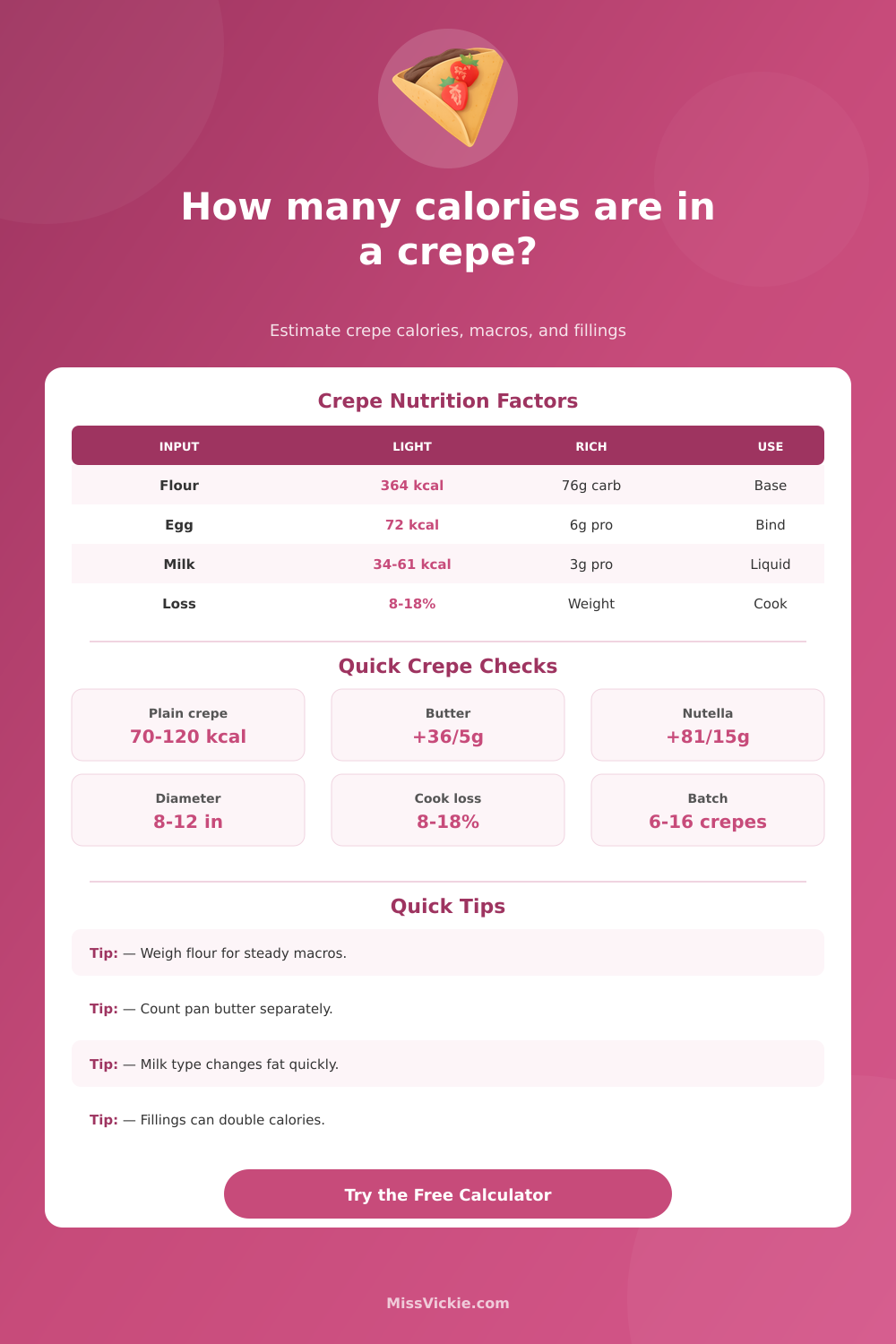
Crepes are only as rich or healthy as the ingredients in them and the number eaten. A light version use flour, milk, and eggs to make thin pancakes. Heavy: The ingredients you use and how much of them end up on the plate can make a crepe heavy enough to count as a full meal. It’s all about what’s in the mixture and the serving sizes.
One plain crepe with some fruit makes for a good treat, whereas one filled with sweet things and topped with butter is a pretty hefty meal. After you plug in your own inputs, the calculator spits out the correct numbers. Just input your flour weight, egg count, milk type, added fat, sugar, crepe count, diameter, filling choice, and cooking loss.
Why Ingredients Change Crepe Calories
Why do these factors matter? Each one alters the macros and calories. If you scoop flour rather than weigh it, you’re going to have a wildly different outcome. Most carbs comes from flour, so why not know exactly how much flour is in there? Eggs add protein and structure without much volume. Milk impacts fat content immediately. Oil/butter introduces concentrated calories after the water evaporate during cooking.
Consider also cooking loss. Water from the batter turns into steam and rises into the air. You end up with a lighter finished product with fewer calories, but all those calories stay in the pan. So even if a cooked crepe feels lighter in your hands it still packs a punch when it comes to calories. Also consider that a larger-diameter crepe distributes same amount of batter over more area, changing the distribution of macros per serving as well as quantity of filling you’ll want to consume.
Total nutrition varies most by filling. Ham and cheese or chocolate spread can equal or surpass the crepe’s calories, while just a few berries keep it on the low end. To allow for clear comparison, plain and filled servings is calculated separately. And the number depends on batch size. Cook twelve crepes at once (or even more!) and small amounts of pan fat per crepe add up.
Whether your resulting numbers will be for a plain crepe, a filled crepe, or some combination of both depend on how you serve them. That’s where most of us go wrong: We lump all crepes together. In truth, a crepe stuffed with sugar and cream cheese acts different than a crepe filled with fresh fruit and reduced-fat milk.
Make an honest estimate by adjusting the inputs to match your specific recipe. When you know which ingredients contribute what, the numbers no longer seem arbitrary. They reveal how a subtle change in pan fat or milk type can alter your day’s total. This clarity makes tracking less of a guessing game; and more useful.
You should of used moddern ingredients for best result. Actually, it is naturaly easy to make mistakes with furnitures like this. One might recieve different results if they use too much sugar. If you want a luxurius meal, you could of added even more butter based off your preference.