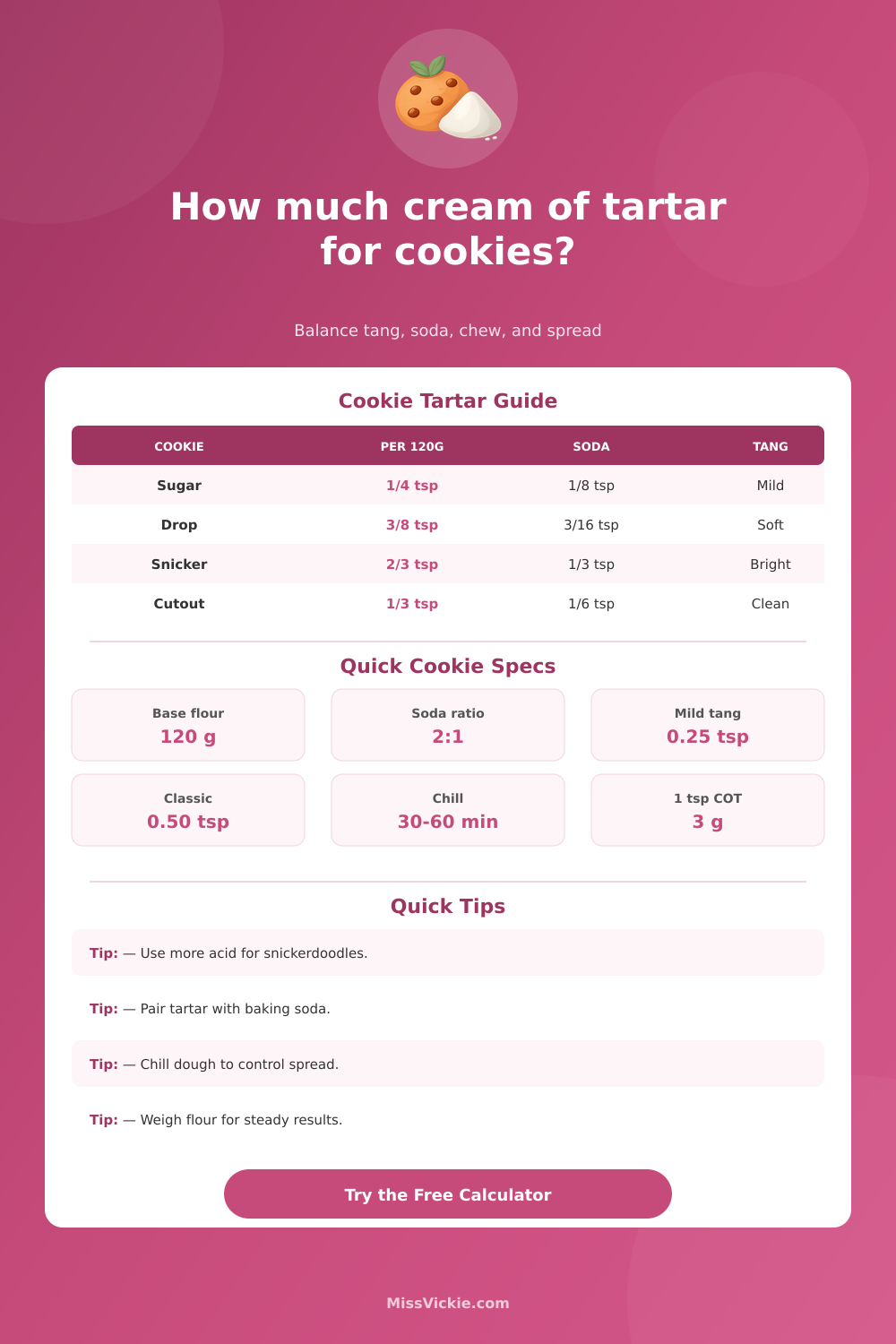
Cream of tartar is an ingredient that serve two different purposes in cookie dough. The first is that it provide a tangy flavor to the dough, and the second is that it reacts with baking soda to create the lift that the dough need to properly set. If the amount of cream of tartar is not correct to the other ingredient, the baking soda can impart a soapy flavor to the cookies, so the baker must use the correct amount of cream of tartar to ensure flavor balance.
The amount of cream of tartar that should of been used in a batch of cookies is dependent upon several different variable. The main variable to consider is the weight of the flour that will be used in the batch of cookies. Each gram of flour require a specific amount of cream of tartar to ensure flavor and texture consistency in each batch of cookies.
How Much Cream of Tartar to Use in Cookies
With the weight of the flour as the starting point for a batch of cookies, other variables can be considered to determine the appropriate amount of cream of tartar. One of those variables is the tang level that is to be use in the cookies. Tang level indicate the strength of the flavor that cream of tartar will impart to the cookies.
A mild tang level will not interfere with other flavor that may be included in the batch of cookies, such as vanilla or chocolate. A classic tang level, in contrast, will impart flavor to flavors like cinnamon and sugar. The baker should choose the tang level before determines the amount of cream of tartar, because the tang level is the main variable that determines how much cream of tartar should be used in the recipe.
Another variable that will impact the amount of cream of tartar that is needed is the amount of baking soda that is include in the batch. Cream of tartar is acidic, while baking soda is basic; the cream of tartar must neutralize the baking soda. Two part cream of tartar to one part baking soda by volume is a common starting point for recipes that use both ingredients.
However, if the recipe also uses brown sugar or molasses (ingredients that are acidic), then the baker will need to reduce the amount of cream of tartar, to balance the flavor of the cookies. The amount of cream of tartar that is used will impact the texture of the batch of cookies. Using more cream of tartar than recommended, or chilling the cookie dough for a longer time, will result in cookies that are thicker with a crackly top.
Using less cream of tartar than recommended, or not chilling the cookie dough at all, will result in cookies that spread more when baking, causing the edges of the cookies to brown more quick. The calculator that is provided will provide one recommended amount of cream of tartar that can be used, so that bakers dont have to calculate the impact that texture-related variables will have upon the recipe. Due to the potential for different environmental variable in different kitchens, the amount of cream of tartar that is used in a batch of cookies will need to be adjusted for variables like humidity, oven temperature, and the type of flour that is used.
Each of these can impact the way that cookie dough spread, or how much liquid is absorb by the flour. To account for these variables, the calculator includes the amount of cream of tartar per cookie. This figure is a helpful figure that bakers can use to ensure that the flavor remains the same, even when the batch of cookies change in size.
These different factors can be used to assist bakers who would like to adapt a recipe that another individual created. For instance, if the cookies created by a recipe are flavoring flat, the reference table can be used to determine how much more cream of tartar can be added. If the batch of cookies spreads too much on the baking sheet, the calculator can be used to determine if more cream of tartar should be used, or if more chill time can be provided to the cookie dough.
While the use of the calculator for cream of tartar can help bakers to create a batch of cookies that contains the flavor and texture that they desire, it is still necessary to bake a few test cookies. Test cookies can help bakers to ensure that the cookies will behave in the oven in which they will be baking the batch of cookies. By using the calculator to determine the amount of cream of tartar that will be used in the batch of cookies, the baker can ensure that the first batch of cookies will be closest to the flavor and texture that they desire.
Any alteration to the batch of cookies can be made after the baking of the test cookies, such as changing the chill time for the dough or the type of sugar that is used. However, the amount of cream of tartar will remain the same.