Milk acidity, powder, rest, and swap math
Cream of Tartar for Buttermilk Calculator
Estimate cream of tartar for a buttermilk substitute by milk volume, milk fat, target acidity, recipe type, rest time, powder strength, clump prevention method, and lemon or vinegar equivalent.
Choose a kitchen scenario, then adjust milk volume, fat level, acidity, and mixing method to match the recipe.
Batch Breakdown
| Target | Cream of Tartar per Cup Milk | Lemon or Vinegar Equivalent | Best Recipe Fit |
|---|---|---|---|
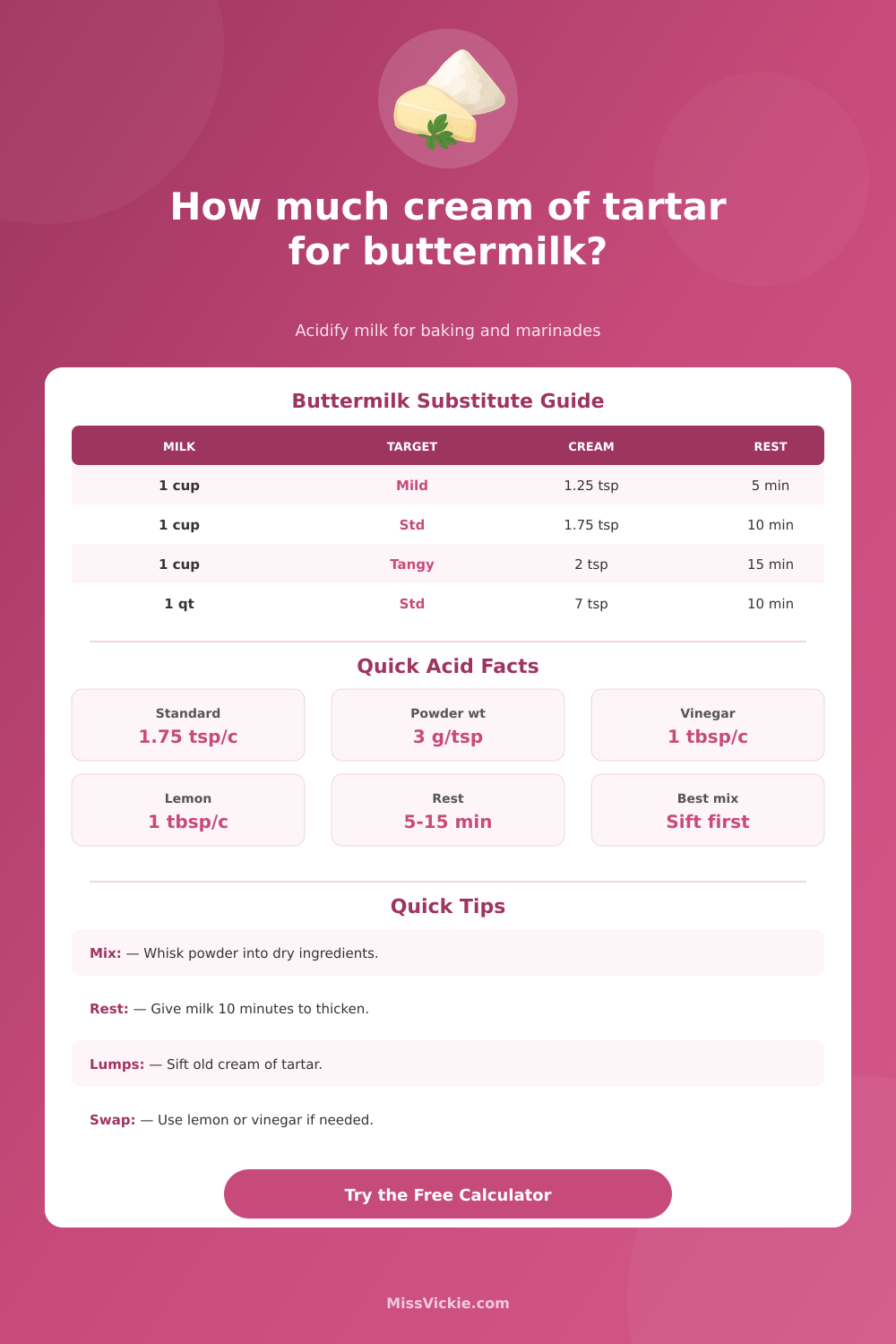
| Mild tenderizing | About 1 1/4 tsp | About 2 tsp liquid acid | Cakes, muffins, and recipes with delicate flavor. |
| Standard substitute | About 1 3/4 tsp | About 1 tbsp liquid acid | Pancakes, waffles, biscuits, quick breads, and cornbread. |
| Tangy cultured-style | About 2 tsp | About 1 1/4 tbsp liquid acid | Soda bread, ranch, marinades, and high-soda batters. |
| Strong soda reaction | About 2 1/4 tsp | About 1 1/2 tbsp liquid acid | Use only when the recipe has enough baking soda to balance it. |
| Recipe Type | Adjustment | Rest Goal | Mixing Note |
|---|---|---|---|
| Pancakes or waffles | Standard | 5 to 10 minutes | Whisk powder into dry mix for even leavening. |
| Biscuits or scones | Slightly higher | 5 minutes | Keep milk cold and avoid overworking dough. |
| Cakes or cupcakes | Slightly lower | 10 minutes | Choose mild acidity if vanilla flavor is delicate. |
| Soda bread | Higher | Use after mixing | Balance with the baking soda already in the recipe. |
| Fried chicken marinade | Tangy | 15 to 20 minutes | Use full-fat milk or diluted evaporated milk for body. |
| Milk Volume | Standard Cream of Tartar | Lemon Juice or 5% Vinegar | Exact-Volume Note |
|---|---|---|---|
| 1/2 cup milk | 7/8 tsp | 1 1/2 tsp | For liquid acid, remove the same amount of milk first. |
| 1 cup milk | 1 3/4 tsp | 1 tbsp | Cream of tartar adds almost no liquid volume. |
| 2 cups milk | 3 1/2 tsp | 2 tbsp | Whisk thoroughly and rest before judging thickness. |
| 1 quart milk | 7 tsp | 1/4 cup | Large batches need sifting or a slurry to prevent specks. |
| 1 liter milk | About 7.4 tsp | About 4.2 tbsp | Metric batches are easiest to weigh in grams. |
Best for pancakes, biscuits, muffins, cornbread, and any batter with flour.
Whisk powder with two tablespoons of milk, then stir it into the rest.
Works for small fresh batches, but clumps can stay visible in cold milk.
Useful for marinades and dressing bases when extra foam is acceptable.
Cream of tartar is anothers ingredient that you can use as a substitute for buttermilk. Cream of tartar is a powder that contains tartaric acids. By using cream of tartar, you can turn regular milk into a liquid that mimics the property of buttermilk because cream of tartar will lower the pH level of the milk.
Lowering the pH level of the milk allow baking soda to react correctly with the ingredient in your recipe, tenderizes the protein in the milk, and adds a tangy flavor to your recipe. Using cream of tartar as a substitute for buttermilk is one of the cheaper alternatives to buy buttermilk. The amount of cream of tartar that you need will depend on the type of milk that you use in your recipe.
How to Make Buttermilk with Cream of Tartar
The type of milk that you use will impact the thickness of the milk once it is mixed with the cream of tartar. If you use whole milk, which contains a high fat content, you will need to use a standard dose of cream of tartar. Skim milk has a low fat content so you need to be more specific with the amount of cream of tartar that you use because the milk may taste flat otherwise.
Plant milks will also react different than cream of tartar so you will need to select the type of milk that you are using in your recipe in order to recieve the accurate amount of cream of tartar that are required to make your recipe turn out properly. Another ingredient that will play a key role in determining the amount of cream of tartar that you need for your recipe will be the type of recipe that you are creating. If you are making pancakes or biscuits, those recipes can tolerate high level of acidity that the cream of tartar will add to the milk.
However, if you are making a delicate vanilla cake, high levels of acidity may alter the flavor of the final product so you will want to use a recipe selector so that you can adjust the amount of cream of tartar to suit the type of recipe that you are creating. Rest time is another factor that many people overlook when they make buttermilk by using cream of tartar. Cream of tartar dissolves slow when it is added to milk that is cold from the refrigerator so giving the mixture a period of rest allows the cream of tartar to dissolve completely.
The cream of tartar needs time to rest so that the milk can begin to thicken. The readiness score will tell you if the buttermilk substitute is ready to use. This score takes into account the number of minute that the mixture rested, the type of milk that is being used, and the method in which it is mixed.
A high score means the buttermilk substitute is ready to use but a low score means it need more time to rest. Another factor to consider is how to avoid the formation of clump of cream of tartar. If you add cream of tartar directly to your milk, it may create small hard speck in your liquid.
To avoid this occurrence, you can sift the cream of tartar along with other dry ingredients in your recipe. By sifting the cream of tartar along with your dry ingredients, not only will the cream of tartar be evenly dispersed throughout your recipe but the risk of forming clumps will also be eliminate. If you choose to use this method, the calculator will recommend a lower amount of cream of tartar since less cream of tartar will be wasted due to the formation of clumps.
An alternative to using cream of tartar is using lemon juice or vinegar as a substitute. Both of these ingredient also contain an acidity level that will allow them to react with baking soda in your recipe. When used as a buttermilk substitute, however, lemon juice and vinegar will add additional volume of liquid to your recipe.
This additional volume can be compared to the amount of cream of tartar that you would use in your recipe. For most baking recipes, the extra liquid will not make a difference. However, for recipes like thick dressings or chicken soaks, the extra liquid from using lemon juice or vinegar will matter so you will need to measure an equal amount of milk to account for this added liquid.
The temperature to which the milk is heated also will have an impact on the effectiveness of the cream of tartar. Using milk from the refrigerator will slow the reaction of the cream of tartar but keep the biscuit dough tenderly. Using warm milk will help the cream of tartar dissolve faster so warm milk will be beneficial in recipes like a marinade.
The temperature of the milk can also be set in the calculator so the recipe will take into account the effect that the temperature will have on the thickness of the buttermilk substitute that is create. Finally, the calculator allows you to make a choice on the amount of cream of tartar that you want to use. If you want a more mild flavored baked product, you can choose less cream of tartar.
However, if you want an ingredient that will add more acidity to your recipe, you can let the milk and cream of tartar sit for the full fifteen minutes as recommended by the calculator. Thus, this buttermilk substitute allow cooks and bakers of all skill levels to control the level of acidity and the thickness to their recipes. It allows people to prepare their recipes without having to purchase a carton of buttermilk.