Cupcake frosting calculator
Cream Cheese Frosting for Cupcakes Calculator
Estimate cream cheese frosting for cupcake tops, filled centers, swirl height, piping tip loss, powdered sugar firmness, cream cheese to butter ratio, room temperature risk, and overage.
🧁Quick cupcake frosting scenarios
Pick a real cupcake setup, then adjust the count, filling, swirl height, ratio, sugar level, tip, and serving temperature.
🍰Cupcake count and frosting style
Frosting plan breakdown
📏Typical frosting per cupcake
🧁Recipe ratio reference
More cream cheese flavor, softer piping, best chilled.
Good cupcake flavor with enough butter for clean swirls.
More butter improves structure for taller frosting peaks.
Pipe-stable bakery-style balance for rosettes and transport.
📋Cupcake frosting style table
| Style | Standard cupcake | Best tip or tool | Use when |
|---|---|---|---|
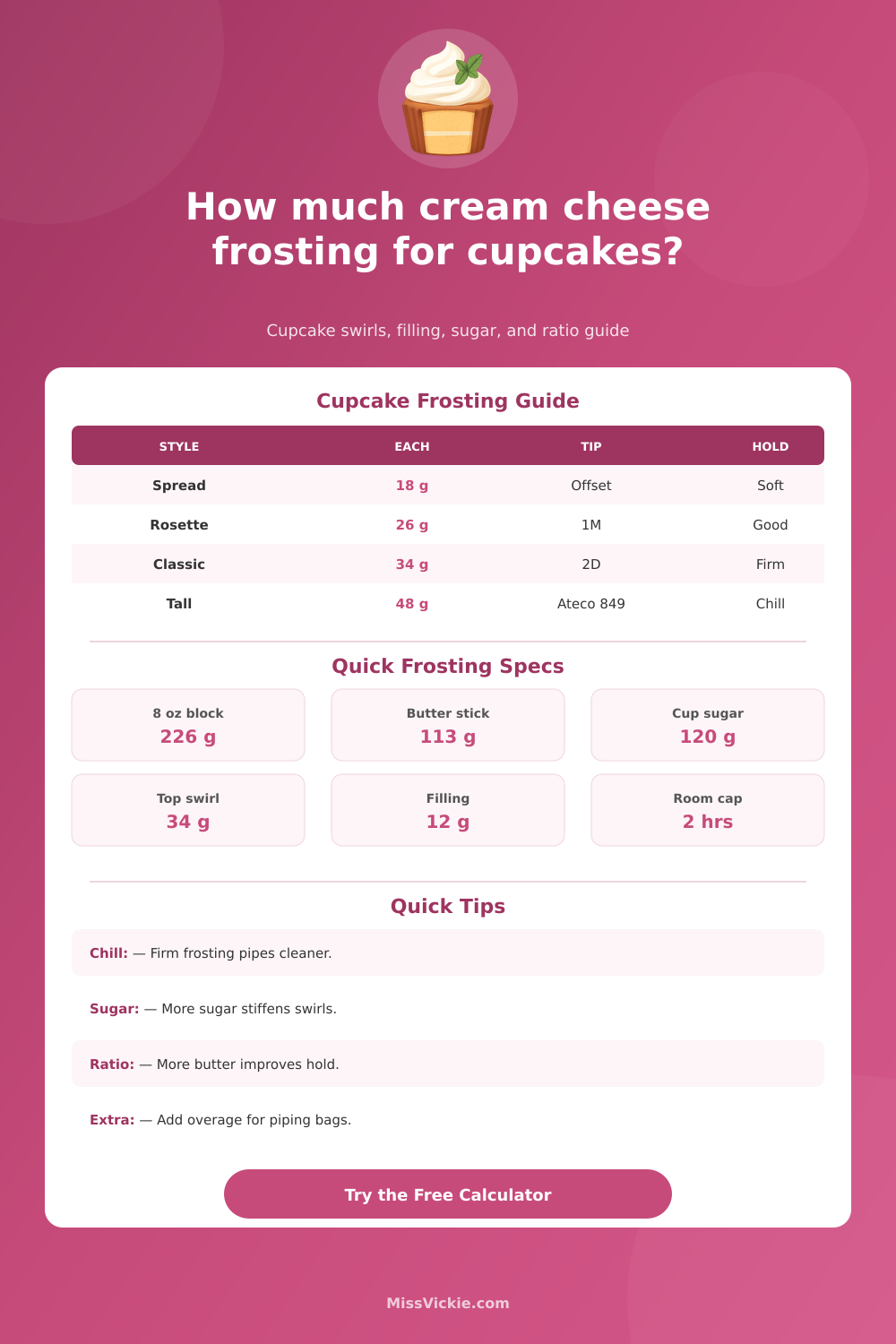
| Thin spread | 18-24 g each | Offset spatula | You want a lighter tangy layer without a tall dome. |
| Flat rosette | 24-30 g each | Open star 1M | You want visible ridges but a low cupcake box profile. |
| Classic swirl | 30-38 g each | 1M, 2D, or round tip | You want the familiar bakery cupcake amount. |
| Ruffle swirl | 34-44 g each | Petal or ruffle tip | You need extra frosting for ridged detail and movement. |
| Tall swirl | 46-60 g each | Ateco 849 or large star | You want height, drama, and a chilled frosting structure. |
🥣Ingredient conversion table
| Ingredient | Common kitchen measure | Metric weight | Calculator note |
|---|---|---|---|
| Cream cheese block | 8 oz package | 226 g | Use full-fat brick style for strongest frosting body. |
| Unsalted butter | 1 stick or 1/2 cup | 113 g | Soften to cool room temperature before mixing. |
| Powdered sugar | 1 cup spooned | 120 g | Sift for smoother piping and fewer tip clogs. |
| Vanilla extract | 1 teaspoon | 5 ml | Add after fat is smooth so the emulsion stays even. |
| Fine salt | 1/8 teaspoon | 0.75 g | Small amounts sharpen cream cheese flavor. |
🧁Common batch quantities
| Cupcake batch | Classic swirl only | Classic plus filling | Recommended overage |
|---|---|---|---|
| 12 standard cupcakes | 410-460 g frosting | 540-610 g frosting | 10-12% for a home bag |
| 24 standard cupcakes | 820-920 g frosting | 1.08-1.22 kg frosting | 12-15% for color tests |
| 36 party cupcakes | 1.25-1.4 kg frosting | 1.65-1.85 kg frosting | 15% for batch variation |
| 60 event cupcakes | 2.05-2.3 kg frosting | 2.7-3.05 kg frosting | 15-20% for service backup |
🌡Room temperature and piping notes
Cream cheese frosting require a specific balance of flavor and texture. Cream cheese frosting must be tangily enough to complement the cake yet firm enough to maintain it’s piped shape. If the cream cheese frosting are too soft, the frosting will slump and collapse onto the cupcakes as they is placed on the table.
To avoid this problems, consider how each ingredient ratio and the amount of sugar will affect the stability of the cream cheese frosting before you begin to mix it. A calculator for cream cheese frosting will account for the specific variables that affects the total amount of cream cheese frosting you will need for your cupcakes. The amount of cream cheese frosting you need will depend on several variable.
How Much Cream Cheese Frosting You Need for Cupcakes
The first is the number of cupcakes you will frost. Next is the size of the cupcake. Mini cupcakes will require less frosting then jumbo cupcakes.
Another variable is the frosting style. A tall swirl require more frosting than a flat rosette frosting design. The type of piping tip will also affect the total amount of cream cheese frosting needed.
A ruffle tip will require more cream cheese frosting than a smoothly round piping tip. The calculator include a way to account for each of these variable. Another variable that affects the total amount of cream cheese frosting required is whether or not the cupcakes will be filled.
Some people choose to core the cupcakes and pipe the frosting into the center of the cupcake. Others will not include a filling for the cupcakes. If you decide to include a filling, you will need more cream cheese frosting.
Additionally, cream cheese frosting soften faster than buttercream frosting. Therefore, cream cheese frosting could become liquid or weep when the cupcakes is left out of the refrigerator for too long. Use the room temperature serving time to adjust the hold score for the cream cheese frosting.
The ratio of cream cheese to butter and the amount of powdered sugar will determine the texture of the cream cheese frosting. Using more cream cheese than butter will result in a frosting that is more tangily tasting. This ratio will also result in a softer cream cheese frosting.
Using more butter in the ratio will result in a sturdier cream cheese frosting. The amount of powdered sugar will also affect the texture of the cream cheese frosting. More powdered sugar will result in a frosting that is easier to pipe yet require more structural support from the frosting.
The calculator will show the weight of the sugar and fat blend so you can consider the effect of this ratio on your cream cheese frosting. Finally, include an overage percentage in your calculation. An overage percentage is an extra amount of cream cheese frosting that will account for the cream cheese frosting that will remain in the mixing bowl or piping bag.
Most baker will find that they will need to add twelve to fifteen percent extra cream cheese frosting to the recipe. This overage percentage will ensure that there is enough cream cheese frosting to color test the frosting and to fill any cupcakes that may be come uneven during the baking process. This overage percentage will also ensure that the cupcakes do not have thinner swirls then the first batch of cupcakes you pipe for the recipe.
The reference tables included on the page will provide you with additional context for the amount of cream cheese frosting that will be calculated. These tables will display the typical amount of cream cheese frosting needed for specific type of frosting. For instance, a dozen cupcakes with classic swirls will require a specific amount of cream cheese frosting.
However, a large tray of cupcakes with tall swirls will require considerably more cream cheese frosting. These tables will allow you to visualize the total weight of the cream cheese frosting prior to preparing the recipe ingredient. Small changes to a few variables will have a considerable effect on the total amount of cream cheese frosting required for the piping process.
For instance, if you change the ratio of cream cheese to butter to one that is sturdier, if you increase the amount of powdered sugar in the frosting, and if you increase the height of the swirls, you will need a considerable amount more cream cheese frosting. The cream cheese frosting calculator will make it so that these change is visible to the baker prior to mixing the ingredients. Before you begin to pipe the cream cheese frosting on your cupcakes, decide on the condition in which they will be served.
If the cupcakes will be left out of the refrigerator to remain at room temperature for more than one hour, use a ratio that is sturdier than typical with more powdered sugar. If the cupcakes will only be served indoors, after they have been piped, then you can use a cream cheese frosting that is more soft in texture and more tangy in flavor. Once you have decided on the serving conditions for the cupcakes, the cream cheese frosting calculator will perform the arithmetic for you so that you can focus on the flavor and the appearance of your cream cheese frosting.