🧀 Cottage Cheese Protein Calculator
Calculate protein, calories, and macros for any serving of cottage cheese
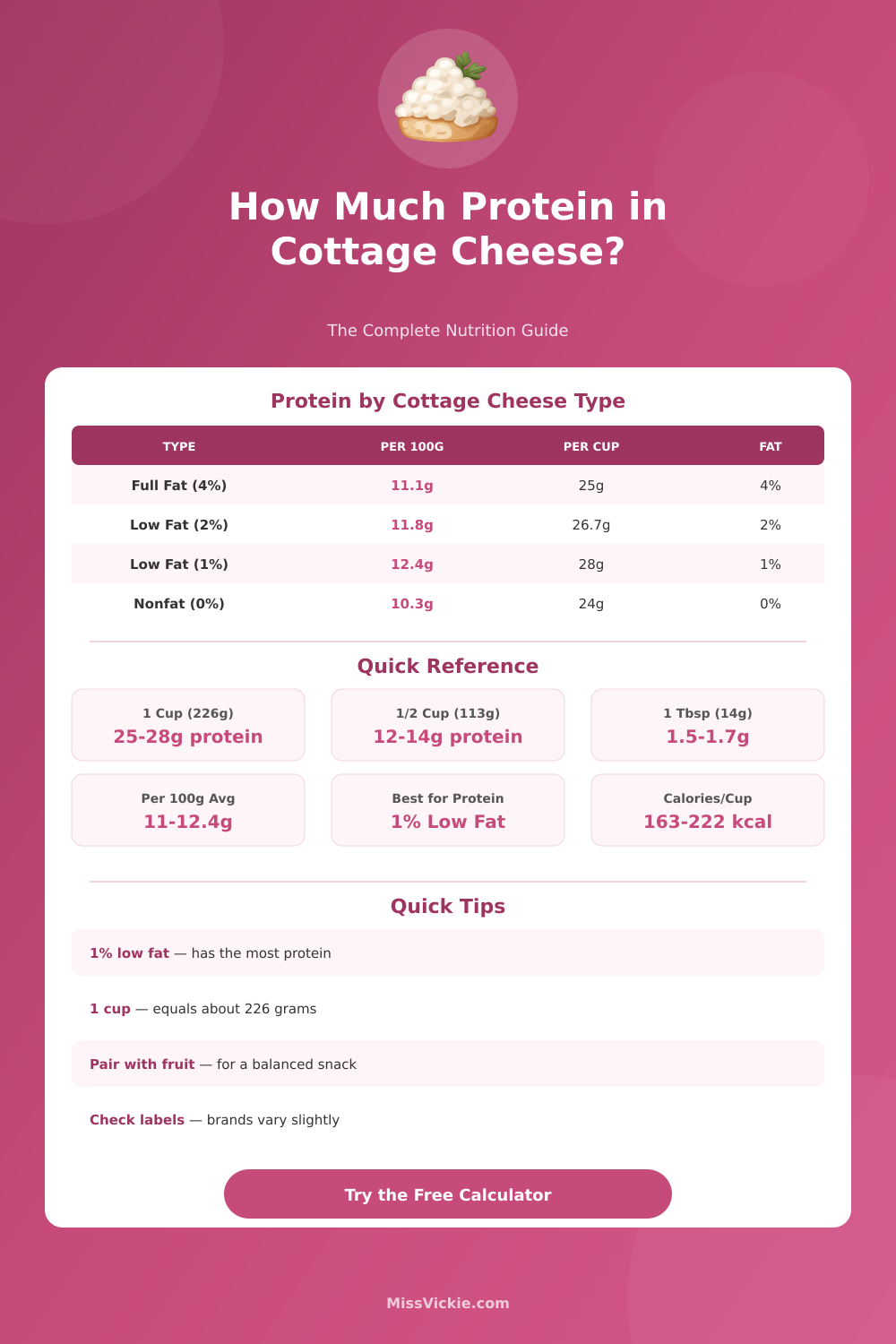
| Type | Protein | Calories | Fat | Carbs |
|---|---|---|---|---|
| Full Fat (4%) | 11.1g | 98 kcal | 4.3g | 3.4g |
| Low Fat (2%) | 11.8g | 86 kcal | 2.4g | 3.2g |
| Low Fat (1%) | 12.4g | 72 kcal | 1.0g | 2.7g |
| Nonfat (0%) | 10.3g | 62 kcal | 0.3g | 3.7g |
| Serving Size | Weight | Protein | Calories |
|---|---|---|---|
| 1 Tablespoon | 14g (0.5 oz) | 1.7g | 12 kcal |
| 2 Tablespoons | 28g (1 oz) | 3.3g | 24 kcal |
| ¼ Cup | 56.5g (2 oz) | 6.7g | 49 kcal |
| ½ Cup | 113g (4 oz) | 13.3g | 97 kcal |
| ¾ Cup | 170g (6 oz) | 20.1g | 146 kcal |
| 1 Cup | 226g (8 oz) | 26.7g | 194 kcal |
| 1.5 Cups | 339g (12 oz) | 40.0g | 291 kcal |
| 16 oz Container | 454g (16 oz) | 53.6g | 390 kcal |
| Measurement | Grams | Ounces | Cups |
|---|---|---|---|
| 1 Tablespoon | 14g | 0.5 oz | 0.063 cup |
| ¼ Cup | 56.5g | 2 oz | 0.25 cup |
| ½ Cup | 113g | 4 oz | 0.5 cup |
| 1 Cup | 226g | 8 oz | 1 cup |
| 100 Grams | 100g | 3.53 oz | 0.44 cup |
| 1 Pound | 454g | 16 oz | 2.01 cups |
Cottage cheese has been a staple in kitchen all over the world. It has a unique flavor and texture and has a wide amount of health benefit. If you are wondering how much protein in cottage cheese, you are not alone; it is one of the most common question asked of those who consume cottage cheese for it’s health benefits. Cottage cheese contain a significant amount of protein making it a favorite food for those who require high protein diet.
Making cottage cheese involves curdling the milk and removing the curds from the remaining whey. The protein content of cottage cheese vary depending on the fat content and the brand of cottage cheese. However, cottage cheese does contain one of the highest amounts of protein relative to other dairy products with portions containing between 12 and 25 gram of protein. Additionally, because cottage cheese contains all essential amino acid, it is considered to be a complete protein source and is recommended for an athletes and fitness enthusiasts looking to increase muscle mass.
Protein Content by Type and Serving Size
To understand how much protein is in cottage cheese, one must first consider the fat content of the cottage cheese product. For instance, full fat cottage cheese (with 4% milk fat) contain 11 grams of protein per 100 grams of the product. Low fat cottage cheese with 2% milk fat contains 12 grams of protein per 100 grams. The 1% low fat variety contains 12.4 gram of protein per 100 grams of product. Finally, nonfat cottage cheese contain 10 grams of protein per 100 grams of product. The USDA obtained these values and they may slightly vary from brand like Good Culture and Daisy.
A half cup (113 grams) of 2% cottage cheese contains approximately 13 grams of protein and 97 calorie. Portioning one cup (226 grams) of cottage cheese will provide 27 grams of protein, which is half the protein requirement for an average adult (whose requirement is 50-60 grams of protein per day). You can easily calculate these figures based off the portion size that you require for your diet. Cottage cheese is, therefore, a great source of protein for those following a ketogenic diet, paleo diet or bodybuilding diet.
The protein in cottage cheese is mainly casein protein which contain 80% of the protein content of cottage cheese. Casein protein is a slowly digesting protein which is beneficial to those who consume cottage cheese both before bedtime and during the day. Furthermore, cottage cheese contains minimal carbohydrate at 3-4 grams of carbohydrates per 100 grams of product. Other benefit of cottage cheese include protein, calcium, phosphorus and B vitamins. Additionally, cottage cheese also contains the fat-soluble vitamins A and B12.
Cottage cheese is similar to both Greek yogurt and chicken in protein content. Greek yogurt has similar amounts of protein yet contains more carbohydrate. Chicken breast contain more protein per calorie yet does not contain the same probiotic and creamy benefits of cottage cheese. For those who are dairy free or lactose intolerant, cottage cheese is the perfect product as it is easier to digest than other dairy products. One of the benefits of low fat cottage cheese (with 1% milk fat) is that over 60% of the calories of the product derive from protein.
There are several way to include cottage cheese into the diet such as adding it to smoothies for texture without the calories, adding it to salads or mixing it with fruits and nuts for a high protein breakfast containing at least 30 grams of protein per serving. Additionally, you can use it in savory dish such as dips, red pepper stews and even baked potatoes. However, be sure to use low sodium products as sodium content range from 300-400mg per 100 grams of cottage cheese.
Due to the added flavors and added fruit varieties of cottage cheese products, the protein content may be less than the standard form of cottage cheese. Therefore, it is recommended to use plain cottage cheese products to maximize the protein benefit of the dairy product. Store cottage cheese in the refrigerator and it will last for between 7-10 day. For those who are dairy free, there are alternatives such as pea- and hemp-based cottage cheese products. However, these products do not contain the same amino acid as dairy based cottage cheese products.
Overall, cottage cheese is a product that contains between 11-12 gram of protein per 100 grams of product depending upon the type of cottage cheese. Cottage cheese products are affordable, accessible and delicious; therefore, it is a product that everyone can benefit from and incorporate into their diet.