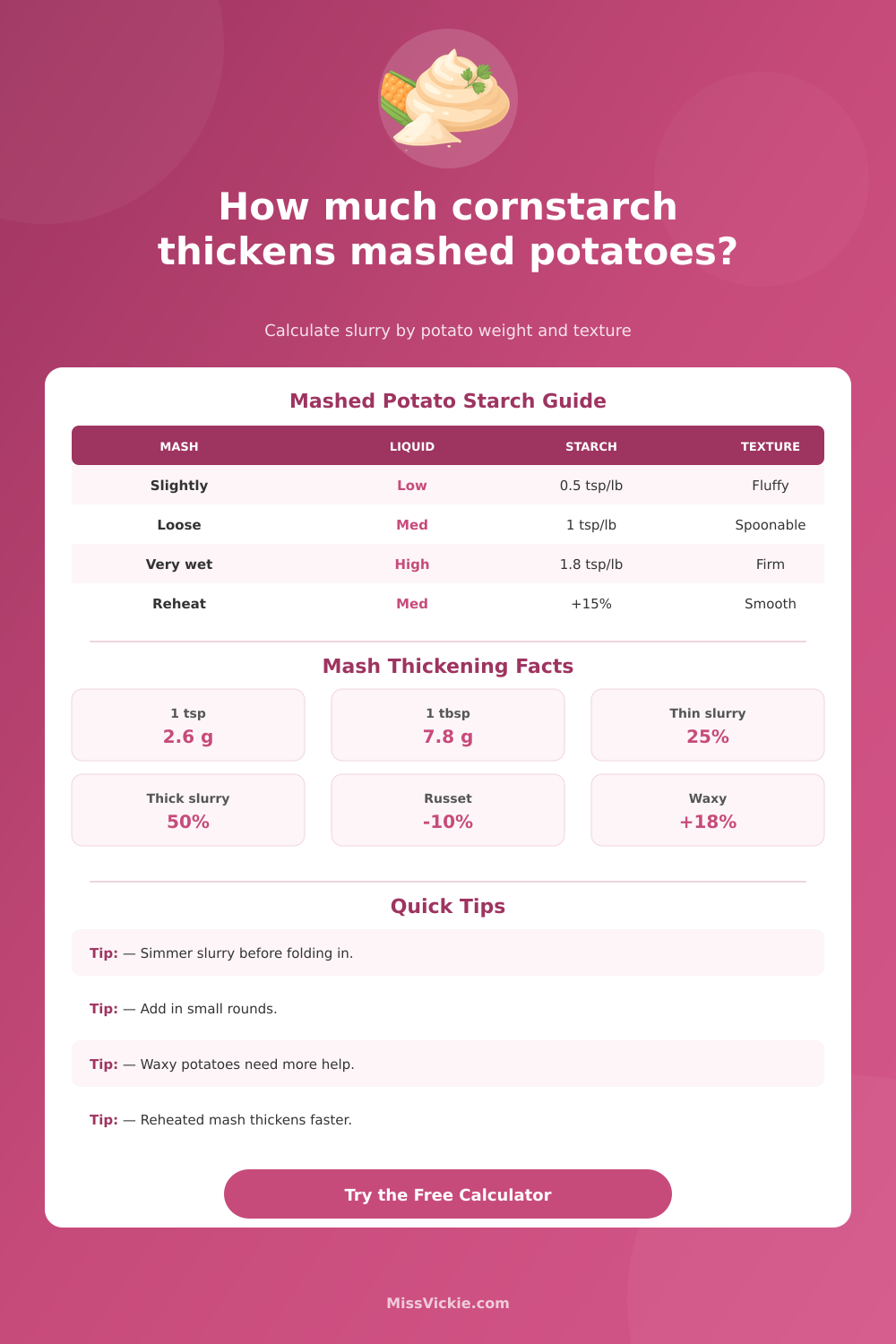
Cornstarch to Thicken Mashed Potatoes Calculator
Estimate cornstarch and slurry liquid for loose mashed potatoes by potato weight, potato variety, liquid added, butter or cream richness, serving count, looseness level, reheating method, slurry concentration, and final texture target.
Choose a real mashed potato situation, then adjust the potato variety, liquid, fat level, looseness, reheating method, and texture goal.
Mashed Potato Thickening Breakdown
High starch potatoes usually need the least cornstarch.
Creamy texture holds liquid but can soften with fat.
Waxy potatoes need more slurry to tighten.
Useful when the mash combines fluffy and waxy potatoes.
| Slurry Style | Starch To Liquid | Best For Mashed Potatoes | Texture Effect |
|---|---|---|---|
| Thin slurry | 1 part starch, 3 parts liquid | Delicate fluffy mash or small corrections | Gentlest thickening, adds more moisture |
| Standard slurry | 1 part starch, 2 parts liquid | Most soft mashed potatoes | Balances easy mixing with reliable thickening |
| Medium slurry | 2 parts starch, 3 parts liquid | Wet holiday mash with butter and cream | Thickens faster without much extra liquid |
| Thick slurry | Equal parts starch and liquid | Soupy mash, casserole topping, buffet pans | Strong correction, must be folded in carefully |
| Reheating Method | Starch Adjustment | Why It Matters | Calculator Use |
|---|---|---|---|
| Stovetop low heat | Base amount | Easy moisture evaporation and controlled mixing | Use for most fresh rescue batches |
| Microwave covered bowl | +8% | Steam stays trapped and can loosen the mash | Useful for leftovers and small bowls |
| Oven casserole dish | -5% | Surface evaporation helps firm the top | Good for baked side dishes |
| Slow cooker or warmer | +18% | Long holding pulls moisture back into the mash | Choose for potlucks and holiday holding |
| Steam table pan | +22% | Buffet heat and covered pans keep mash loose | Best for catering pans and service lines |
| Texture Target | Typical Starch Range | Mashed Potato Result | Best Serving Style |
|---|---|---|---|
| Fluffy mound | 0.4 to 0.8 tsp per lb | Light plateable potatoes that still look natural | Weeknight dinners and roasts |
| Smooth spoonable | 0.7 to 1.2 tsp per lb | Creamy side dish that holds a spoon trail | Holiday meals and gravy service |
| Pipeable ridges | 1.1 to 1.8 tsp per lb | Firm enough for swirls or Duchess topping | Piped sides and casserole borders |
| Buffet scoopable | 1.0 to 1.7 tsp per lb | Stays scoopable after warm holding | Potlucks, warmers, and service pans |
A disappointing batch of thin mashed potatoes is enough to ruin an otherwise perfect dinner (particulary if they are intended to be a bed for some meat or gravy). If this happens, most cooks reaches for a starch mixture to rescue their mashed potatoes, but how much should they add? That’s a question with many answers.
It varies depending on what type of potatoes were used. It also depends on the final consistency of the mix, such as whether it was dry or had lots of liquid and fat. Finally, it depends on how long it will remain warm or whether it will spend time in a buffet table. The trick is getting the ratio just right, so that recipe remains uncomplicated while also staying together.
How to Fix Thin Mashed Potatoes
How do you know if your batch will need some correction? Cornstarch is affected by both moisture and heat. Potato type, amount of liquid added early on (stock, cream, or milk), and whether the batch are richer (using half-and-half or even butter) all affect things. Different reheating techniques can also make a difference. Slow cookers soak up moisture and then release it back into the potatoes during long holding periods, while microwaving traps steam under a lid to slow down the cooking.
And lastly, what do you want the texture to be? If it’s supposed to be fluffy like a weeknight plate heap, it doesn’t need as much cornstarch as something destined for a casserole topping that has to withstand an hour at a steam table.
All you need is your potato type/weight, your amount of liquid, your dairy percentage, existing mushiness, how you’ll reheat, what consistency you want, and it will run the numbers and tell you exactly how much cornstarch to use. You don’t have to wonder if you’ve added too much (or too little) or how many tsp/pound. Instead, it looks at all those variables to know how much extra water to include when adding the thickener, based off just how thick or thin you want your food.
How much? Well… this depends on whether you’re making a really thin slurry, or a thick slurry. A thinner mix add more liquid, while a thicker one delivers stronger correction. The tool lets you choose your slurry concentration and will display the amounts per serving and how to divide the starch between several gentle additions, so no fear of glooping them in there, and a way to break off earlier if mashed potatoes firm up sooner then anticipated.
There are some practical tricks. First, warm your starch slurry so it releases all of its starch when it hits the potatoes. Add it slowly in small amounts instead of all at once. Allow time for each amount to take effect. Use the calculator’s estimate, but consider it a ceiling: Don’t exceed maybe two teaspoons per pound unless necessary. Potatoes that is held for a long time or are waxy tend to need more; soft russets and reheating on the stove tend to need less.
This is also true when making things in advance for freezer or scaling up for a potluck. Factors that might seem small for just one meal, like holding time, liquid load, and potato type, can be difference between something that holds up on a buffet and something that turns into soup by the second hour. The calculator helps keep those inputs in view rather than left to habit or memory.
Are you serving mashed potatoes as part of a special occasion (holiday) meal? Or is it just something to warm up your belly Tuesday night? Regardless, you’re aiming for a mash that complements the meal. And to do that, you’ll want them to match. That means a little pre-thinking so there’s no scramble later. You should of thought about this sooner.