
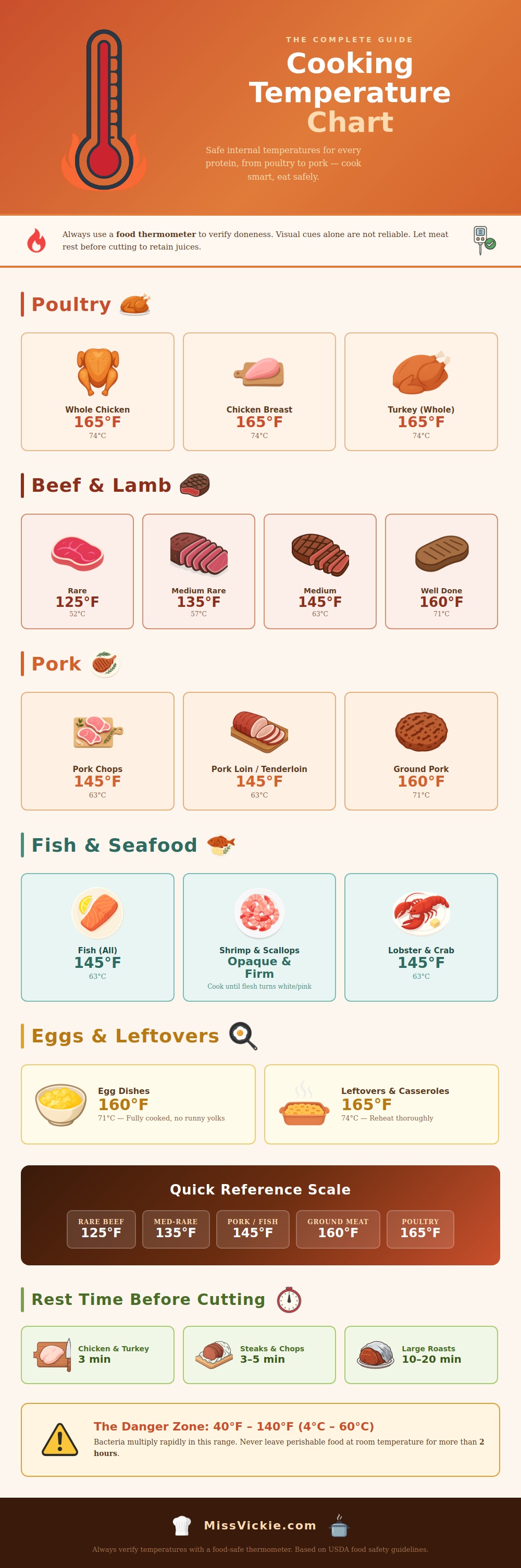
When you cook meat, birds or fish, the temperature genuinely matters Every kind of food requires its own safe cooking temperature, and reaching it depends on what you prepare and how you do it. Here is the catch: the color does not show whether it is genuinely cooked. What genuinely matters is the heat in the internal part of the meat, where the dangerous bacteria hide.
Food thermometer is your best assistant. It alone faithfully confirms that the meat reached the minimum safe internal temperature and that the germs died that could cause food poisoning. Most meats use a rest period after the cook.
Safe Temperatures for Meat and How to Check
Home has only three main temperatures to recall. Ground meat and eggs require 160°F. Birds reach 165°F. And fresh beef steaks, chops or roasts? They require 145°F.
Pork and ham also are at 145°F, give or take, that is around 65°C, if you think metric. If you heat something that already was cooked, like precooked ham or pork, put it until 165°F. Bacon slices are thin because of their size, but once they get crsipy, they are almost certainly safe to eat. Thicker beef bits, those for beef stew.
Benefit from higher temperature, around 195°F. That slow cook genuinely softens them.
For medium-rare steak you want between 130°F and 135°F. However the USDA chooses more careful way and advise beef, lamb and pork all reach at least 145°F. Notably however: bacteria on whole steaks stay mostly at the surface, so good sear in high heat here does the main work for food safety.
Whole chickens and other birds require 165°F. Control the thickest part of the chest, later ensure that both the thigh and the wing reached that temperature in their most internal spots. Dark meat occasionally goes a bit higher, around 170°F, but 165°F keep everything safe.
Here is something interesting: cook in lower temperature for longer indeed kill pathogens likewise well, and you receive better texture moreover. Sous vide does that genuinely easily. While roast, keep your oven at 325°F or more.
Temperature control is key for following recipes. Too high, and the edges burn while the centre stay raw.
All leftovers, regardless of their original safe temperature, must heat until 165°F. After chill foods become open to bacteria that was not here during the first cook. Reliable cooking thermometers, fridge thermometers and freezer thermometers in the kitchen simplify everythingthat.