
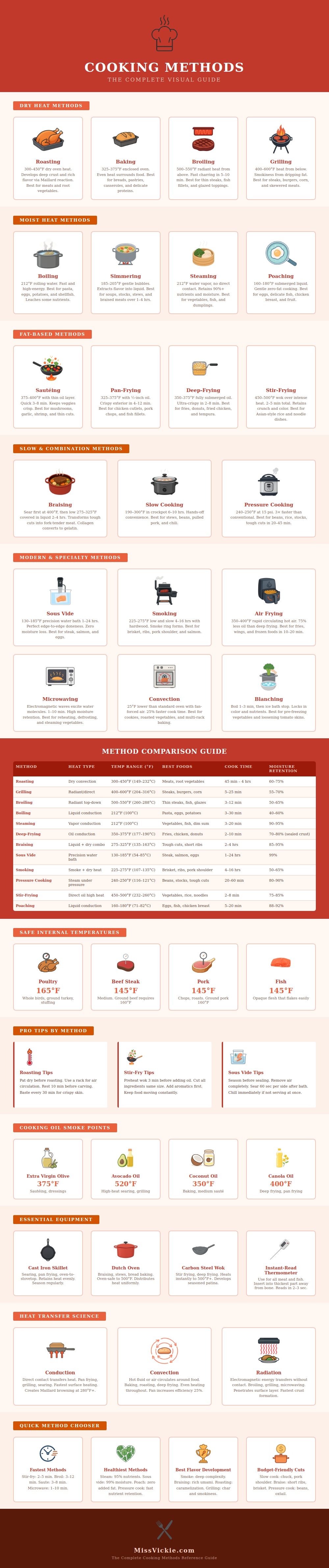
Cooking methods can be categorized according to how the heat are delivered to the food being cooked. When choosing a cooking method for a piece of food, it is important to understand how each type of heat will affect the food. Cooking methods can be classified as dry heats, moist heats, fat-based heats, or combination method.
Each cooking method can be used for a particular type of food, and each cooking method will have some effect upon the food that is cooked. Dry heat methods uses hot air or direct heat to cook foods. Dry heat methods often result in the formation of a brown exterior on the food.
Different Ways to Cook Food
Roasting uses steady temperature from the oven to cook foods like chicken or vegetables. Roasting allows for the outside of the food to brown while the inside of the food remains tenderly. Baking is a dry heat method that uses even warmth to cook dough or casserole dishes.
Baking allows for even heat distribution to the food to be cooked. Grilling uses flames from the burner below the food to cook the food, and often imparts a smoky flavor into the food due to fat dripping onto the flames. Broiling uses heat from above the food to cook the food rapid; it is often used for thin fish fillets or to broil bubbling glazes onto food.
Dry heat methods often have the potential to dry out lean meats if they are not closely monitored during the cooking process; it is important to pat the food dry prior to utilizing dry heat methods. Moist heat methods use liquid or steam to cook the food. Moist heat methods are often used to ensure that the food remains tender during the cooking process.
Boiling methods use hot water to create bubbles within the cooking liquid that is used to cook foods like pasta or eggs; nutrients can often leave the food and enter the cooking liquid during this process. Simmering methods use heat to gently cook liquids like soups; simmers allow for the flavors of the cooking liquid to meld together as the food simmers. Steaming uses hot water vapor to cook foods like vegetables or dumplings.
Because the food does not come in contact with the cooking liquid, the cooking vitamins is preserved. Poaching methods require the delicate food to be submersed in liquid that barely stir; poaching methods dont use any fat to cook the food. Moist heat methods will preserve the internal moisture of the food; moist heat methods are often used for nutritional benefits or to preserve the flavor of the food.
Fat-based methods use fat to transfer the heat to the food, allowing for the high speed cooking of the food. Sautéing methods use a small amount of fat to cook food quickly. Sautéing methods are often used to prepare vegetables or shrimp.
Pan-frying methods use more fat than sautéing methods to cook thicker foods like cutlets. Deep-frying methods submerge the food completely in fat for create a crisp shell around the food. Deep-frying methods are often used for french fries.
Stir-frying methods use a very hot pan to cook food rapidly. Stir-frying methods preserve the crispness of the food due to the rapid cooking process. Stoves use oils with high smoke points for stir-frying; oils with low smoke points will taste bitter when overheated.
Combination methods use both dry heat and moist heat methods to cook the food. Combination methods are often used for cooking tougher cut of meat. Braising methods use dry heat to sear the meat prior to slowly cooking the meat in liquid.
Slow cooking methods use low heat to cook food like chili; slow cooking methods are popular due to there convenience. Pressure cooking methods use pressurized steam to cook foods like beans very quickly. Sous vide methods use a water bath to cook food to an exact temperature; sous vide allows for even cooking of the food from edge to edge.
Smoking methods use low heat and smoke from wood to cook meat; smoking methods add flavor to the meat. Air fryers use hot air to cook foods like french fries, but require less oil than deep-fat fryers. Another important aspect of the cooking process is using internal temperature guides to ensure the food is cooked properly.
Foods like poultry should be cooked to an internal temperature of 165 degrees Fahrenheit; meats like steak should be cooked to an internal temperature of 145 degrees Fahrenheit for medium result. Using a thermometer will ensure that the food is not undercooked or overcooked. Additionally, various cooking equipment can be used to manage the heat of the food.
Cast iron pans and Dutch ovens, for instance, hold heat very effectively. Finally, if the cook chooses the cooking method according to the desired result (crispy food or juicy food), the cook will achieve the more desired end goal to the cooking process.